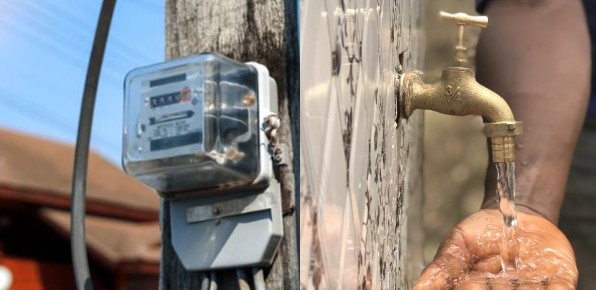
The Public Utilities Regulatory Commission (PURC) has announced significant increases in electricity and water tariffs, to take effect on 1 January 2026.
The decision marks the completion of the 2025–2030 Major Tariff Review, which sets utility charges for the next five years.
The Commission said the new rates are intended to keep utility companies financially viable while supporting the investment needed to maintain and expand essential services. Electricity tariffs will rise by 9.86% across all customer categories, while water charges will go up by 15.92%. The adjustments follow a series of investment hearings, public consultations, and regional engagements held earlier in the year.
In approving the new tariffs, the PURC considered factors such as the utilities’ regulated asset base for 2026–2030, industry competitiveness, and the impact on consumers. The review was also guided by key macroeconomic benchmarks, including an exchange rate of GHS12.0067 to the US dollar and an inflation target of 8%.
A revised generation mix was approved as part of the tariff decision, with thermal power projected to account for 78.79% of electricity supply, up from the current 70.75%. Hydro generation is expected to fall to 20.90% from 28.80%. The new framework also brings mini-grids into the tariff structure for the first time, as part of efforts to extend electricity access nationwide. The cost of providing uniform rates to island communities will now form part of the Volta River Authority’s revenue requirement.
Although the base tariffs are set for five years, the PURC will continue quarterly reviews to reflect movements in inflation, exchange rates, fuel costs and shifts in the generation mix. These reviews are designed to cushion utilities against external pressures while protecting consumers from sharp price shocks.
Under the new structure, residential lifeline electricity consumers using up to 30 kWh will see their tariff rise from 80.44 GHp/kWh in October 2025 to 88.37 GHp/kWh in January 2026. Non-residential consumers using more than 301 kWh will pay 224.65 GHp/kWh, up from 204.48 GHp/kWh.
For water, the residential band covering 0–5 cubic metres will rise from 528.18 GHp/m³ to 612.25 GHp/m³, while industrial users will see an increase from 2,828.36 GHp/m³ to 3,278.58 GHp/m³.
The PURC says it will continue to monitor service providers to ensure compliance with regulatory standards and the delivery of reliable services.