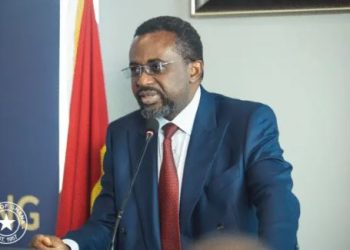
Private legal practitioner and convener of the Fix the Country Movement, Oliver Barker-Vormawor, has raised concerns over what he describes as a “shadow” austerity approach being implemented in Ghana, warning that its social consequences are beginning to surface.
In a detailed post on Facebook, Barker-Vormawor noted that while the government has not formally announced an austerity policy, his engagements with various ministries, agencies, and departments indicate that many are still awaiting budget releases from the Ministry of Finance.
“I think Cassiel Ato Forson is running a ‘shadow’ austerity economy; without saying so.”
“I say shadow because it has not been made express Government policy. Yet every ministry, agency or department I engage with tells me they are still expecting releases from Finance,” he wrote.
The civil rights activist acknowledged that the government’s restraint in spending reflects financial discipline, which he described as “perhaps the most disciplined I have seen our Government manage its finances.” However, he cautioned that in the absence of an explicit framework, social spending risks being deprioritized, potentially harming vulnerable citizens.
“The burden of this fiscal discipline is falling in the least visible places,” Barker-Vormawor explained. He cited examples including delayed National Health Insurance Scheme reimbursements, irregular LEAP payments, months-long waits for school feeding caterers, accumulating arrears at public universities, and disrupted district-level services.
He expressed concern that unlike past IMF-style austerity measures, which were publicly debated, the current approach is occurring through administrative throttling rather than declared policy. “We are getting the contractionary effect without the democratic conversation about what is being protected and what is being sacrificed,” he said.
Barker-Vormawor called for transparency in fiscal consolidation, urging the government to clearly outline which sectors are protected and the timeline for normalization of budget releases. He warned that austerity without a well-defined social compact could deepen inequality, forcing institutions to increase user fees or seek internally generated funds at public expense.
“Ghana has needed a credible signal that the era of fiscal indiscipline is over,” he wrote. “My hope is that fiscal credibility is not only built on expenditure cuts. It is also built on protecting the minimum conditions for dignity and productivity. If the adjustment crowds out social investment, we are stabilising the books while destabilising the society that the books are supposed to serve.”
Highlighting recent signs of strain, Barker-Vormawor noted that the Civil and Local Government Staff Association of Ghana (CLOSSAG) had indicated intentions to strike, and the Prisons Service had appealed to staff for patience over delayed allowances.
He emphasized that if the ruling National Democratic Congress (NDC) identifies as social democrats, the government should balance fiscal discipline with social and welfare commitments.
“Let’s not please capital interests only and give up on the social and welfare commitments of the Party.”