Chief Justice Paul Baffoe-Bonnie is facing widespread criticism from legal practitioners, civil society figures and other commentators following remarks he made about the performance of state-owned enterprises (SOEs).
The controversy follows comments made by the Chief Justice on Wednesday, September 2, 2026, during an official working visit to the Minerals Income Investment Fund (MIIF).
While commending MIIF and the Social Security and National Insurance Trust (SSNIT) for what he described as improved efficiency, the Chief Justice questioned Ghana’s performance under the previous administration, asking: “What really we have been doing in the past eight years?”
The remark has triggered debate over whether the head of Ghana’s Judiciary should publicly comment on the performance of successive governments, particularly in a politically charged environment.
Critics argue that the reference to the “past eight years” could be interpreted as a political assessment of the previous administration and potentially undermine perceptions of judicial neutrality.
Legal scholar and law professor Stephen Kwaku Asare, popularly known as Kwaku Azar, said the Chief Justice’s position requires a high degree of restraint because his public comments carry the institutional weight of the Judiciary.
In a commentary titled “The Burden of the Robe,” Prof. Asare acknowledged the appropriateness of praising a public institution for good performance but argued that the specific reference to the “past eight years” gave the comment a partisan dimension.
He stressed that although judges remain citizens with personal views, the judicial office places constraints on how they express those views publicly, particularly in the case of the Chief Justice.
Activist and legal practitioner Oliver Barker-Vormawor adopted a stronger position, saying: “Some truths are not for Judges to say.” He called on the Chief Justice to apologise over the remarks and go on early retirement.
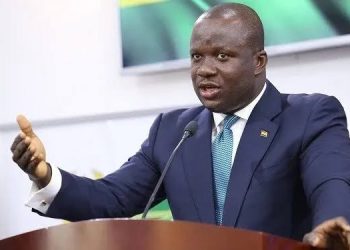
Meanwhile, Dr Steve Manteaw, Co-chair of the Ghana Extractive Industries Transparency Initiative, has urged the Chief Justice to desist from public commentary on government performance, arguing that the Judiciary’s credibility depends heavily on public confidence in its impartiality.
Former Information Minister Oppong Nkrumah has also questioned the appropriateness of the Chief Justice touring executive-managed state institutions, describing the development as unusual and raising concerns about the separation of powers.
The latest criticism has also renewed calls for clearer ethical standards governing public statements by judges and lawyers.
Chairman of the Constitutional Review Committee, Prof. H Kwasi Prempeh, in a separate intervention, argued that “a prescriptive, statutory code of ethics for judges and lawyers, transparently and independently enforced with prescribed sanctions and remedies, is long overdue.”