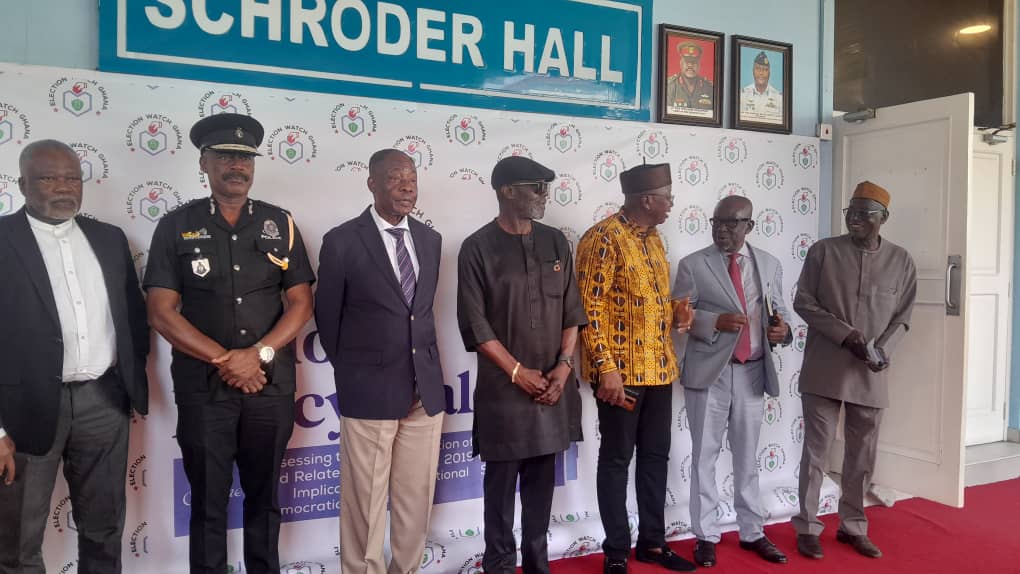
Election Watch Ghana has called for stronger and more consistent enforcement of the Vigilantism and Related Offences Act, 2019 (Act 999), warning that perceived impunity could undermine public confidence in Ghana’s democratic institutions.
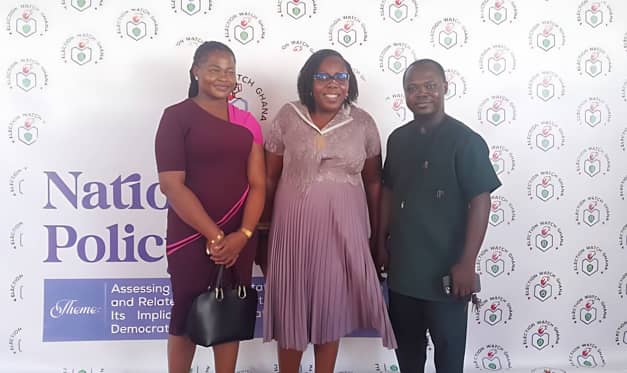
The Executive Director of Election Watch Ghana, Rose Austin, made the call at a National Policy Dialogue in Accra on Tuesday, August 25, 2026, focused on assessing the implementation of Act 999 and its implications for national security and democratic governance.
She said the enactment of the law seven years ago demonstrated a national commitment to preventing political competition from degenerating into violence, intimidation and organised partisan structures operating outside the authority of the state.
“Political power must be acquired, exercised, contested for and transferred through constitutional and peaceful means, not through force, intimidation or organized political violence,” she said.
Ms Austin, however, expressed concern about the effectiveness and consistency of the law’s implementation, particularly where political actors and affiliated groups are involved.
She said perceptions of selective enforcement, whether arising from institutional weaknesses or inadequate public communication, could weaken confidence in security and justice institutions.
“Where citizens perceive the law to be applied selectively, the credibility of the rule of law is weakened,” she said.
She warned that allowing political affiliation to shield perpetrators from accountability could entrench impunity and create conditions for the resurgence of political vigilantism.
According to her, vigilantism should not be treated solely as an electoral or partisan matter but as an issue of national security, public order, democratic governance and the rule of law.
She said organised political groups operating as parallel coercive structures could intimidate citizens, disrupt political activities and interfere with electoral processes.
Ms Austin urged political parties, security agencies, civil society organisations, traditional authorities, academia and the media to work together to address the problem.
She said the objective should go beyond issuing communiques and expressing concern to establishing “concrete and measurable actions” that can be followed up and subjected to accountability.
“Democracy is not sustained by election alone. It is sustained by the rule of law, institutional integrity, political tolerance and accountability, respect for human dignity, and the peaceful resolution of political differences,” she said.
She further warned that if political power became associated with the ability to mobilise force rather than persuade citizens, Ghana’s democratic system would be fundamentally weakened.
The dialogue was held under the theme: “Assessing the Implementation of the Vigilantism and Related Offences Act, 2019 (Act 999) and Its Implications for National Security and Democratic Governance.”