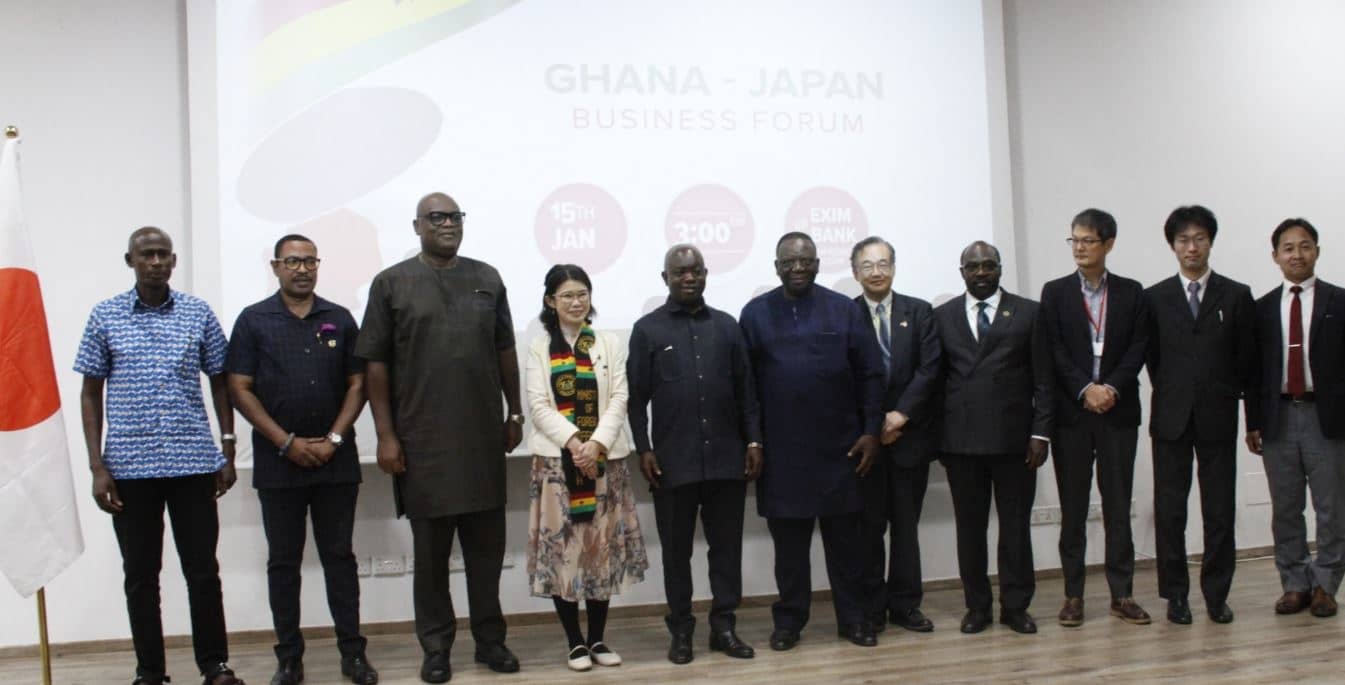
Ghana on Thursday urged Japanese companies to expand investment in the country, citing political stability, economic reforms and growing opportunities in manufacturing, agribusiness and trade, officials said.
Deputy Minister for Trade, Agribusiness and Industry Sampson Ahi told participants at the Ghana–Japan Business Forum in Accra that the government was seeking partnerships that deliver tangible commercial outcomes.
“This is a working meeting,” Hon. Ahi said, adding that success should be measured by “partnerships formed, projects shaped, and follow-up actions agreed.”
He said Ghana’s stability and youthful workforce complemented Japan’s strengths in innovation and long-term industrial planning, creating opportunities beyond the export of raw materials.
“When those strengths are put together, the result is value addition, jobs, and strong businesses that can compete,” Hon. Ahi said.
He said the government was focused on providing certainty for investors through predictable regulations, coordinated institutions and improved infrastructure.
“Investors do not only look for incentives; they look for certainty,” he said, outlining plans to expand industrial parks, modernise agribusiness and strengthen logistics and digital systems.
The Deputy Minister identified export-oriented manufacturing, industrial value chains and logistics as priority areas for cooperation with Japan.
Japan’s Ambassador to Ghana, Hiroshi Yoshimoto, said Ghana’s democratic governance and economic reforms had made it a dependable partner for Japanese investors, while reaffirming Japan’s support for infrastructure development and technology transfer.
Japan’s Foreign Minister, Kunimitsu Ayano, said closer cooperation between public and private sectors in both countries would help translate diplomatic relations into economic growth, particularly in industrial development, sustainable energy and logistics.
Ghana Investment Promotion Centre Chief Executive Simon Madjie said Ghana’s regulatory framework and investor support services, including government policies such as a 24-hour economy initiative, enhanced the country’s competitiveness. He said Ghana was the second-largest economy in West Africa.
The forum featured business-to-business meetings and sector discussions spanning agribusiness, energy, transport and digital infrastructure.