A significant military offensive by the United States and Israel against Iran has ignited one of the most dangerous regional conflicts in decades, with missile and drone exchanges now stretching across multiple Middle Eastern states and raising fears of a prolonged war.
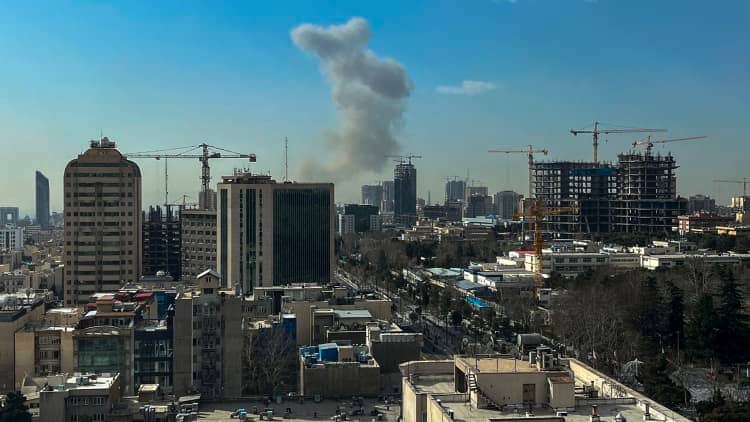
The conflict began on February 28, when U.S. and Israeli forces launched coordinated air and missile strikes targeting Iranian nuclear facilities, military installations and command centers in Tehran and other major cities. Officials in Washington and Jerusalem described the operation as a pre-emptive move to halt what they called imminent threats from Iran’s expanding missile and nuclear capabilities.
Among the most consequential developments was the reported death of Iran’s Supreme Leader, Ayatollah Ali Khamenei, during the initial bombardment. Iranian state media later confirmed his killing, a move analysts say has dramatically escalated tensions and hardened Tehran’s response.
Within hours, Iran retaliated with waves of ballistic missiles and armed drones targeting Israeli cities including Tel Aviv and Jerusalem, as well as U.S. military installations across the Gulf. Explosions were reported near American facilities in Bahrain, home to the U.S. Navy’s Fifth Fleet, while other projectiles were intercepted over parts of the Gulf region. Airspace closures disrupted commercial flights, and shipping activity slowed amid fears of further escalation.
The conflict widened further when Hezbollah, the Iranian-backed Lebanese armed group, launched rockets into northern Israel. Israeli forces responded with airstrikes inside Lebanon, opening another front and intensifying cross-border hostilities. Regional observers warn that additional proxy groups aligned with Tehran could enter the fray if the confrontation persists.
Beyond the battlefield, the war has rattled global energy markets. Concerns are mounting over the security of the Strait of Hormuz, a strategic chokepoint through which a significant portion of the world’s oil supply passes. Any sustained disruption there could send crude prices sharply higher and deepen economic uncertainty worldwide.
The United Nations Security Council convened emergency sessions as diplomatic pressure mounted for an immediate ceasefire. Several nations have urged restraint, warning that continued escalation risks dragging the broader Middle East into a direct, multi-state war.
Casualty figures remain fluid, with reports of dozens killed and hundreds wounded across Iran, Israel and neighboring states. Civilian infrastructure, including airports and commercial facilities, has suffered damage, heightening humanitarian concerns.
Military officials in Washington and Jerusalem have signaled that operations could continue in the coming weeks, while Iranian commanders have vowed sustained retaliation. With each new exchange, fears are growing that what began as a targeted strike has evolved into a full-scale regional confrontation with unpredictable global consequences.