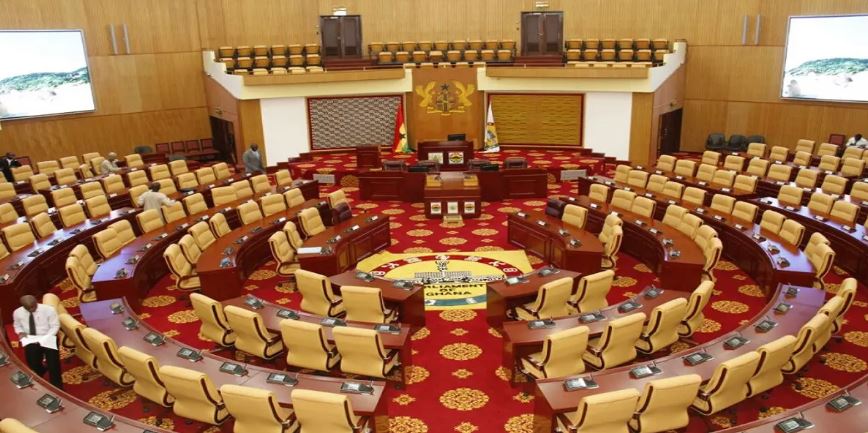
The opposition NPP has backed a proposal to prevent Members of Parliament from simultaneously serving as ministers, deputy ministers or regional ministers as part of proposed amendments to Ghana’s 1992 Constitution.
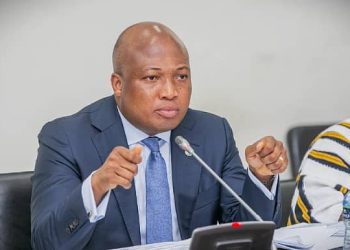
Presenting the party’s position on the proposed reforms on Thursday, September 17, 2026, Member of Parliament for Gushegu, Sulemana Tampuli Alhassan, said the NPP supported a clearer separation between the Executive and Legislature.
“The MPP accepts the recommendation of the CRC. We support a clearer separation between the executive and the legislature,” he said, referring to the New Patriotic Party.
According to Mr Tampuli, preventing MPs from serving in ministerial positions would give practical effect to the principle of separation of powers and enable Parliament to exercise stronger oversight over the Executive.
“It would prevent individuals from simultaneously exercising legislative and executive functions. It would strengthen Parliament’s ability to independently scrutinise and hold the executive accountable,” he said.
He added that the arrangement would strengthen institutional independence, checks and balances, and parliamentary oversight.
“In effect, if you want to take a career in parliament, you should do so. If you want to be an executive, you are also free to do so, but we cannot mix the two,” he said.
The NPP, however, supports a constitutional ceiling of 60 ministers and deputy ministers, slightly above the CRC’s proposed maximum of 57.
Mr Tampuli said a constitutional cap would limit excessive expansion of the Executive while giving the President sufficient flexibility to form a government.
“A maximum of 60 provides the president with reasonable flexibility while imposing a meaningful constraint on the size of government,” he said.
He said the cap could also promote efficiency, fiscal discipline and prudent use of public resources.
On local government, the NPP said it supports the election of Metropolitan, Municipal and District Chief Executives (MMDCEs), but rejected a proposal that candidates should be limited to those nominated by the President.
The party proposed that political parties should be allowed to sponsor candidates for MMDCE elections in the same manner as parliamentary elections.
“A fair system could create an equal democratic right among districts,” Mr Tampuli said.
He added that restricting candidates to presidential nominees could limit electoral competition and concentrate political power within the Executive.
The NPP, however, rejected the creation of deputy MMDCE positions to be elected on the same ticket as MMDCEs, agreeing with the government’s position that such an arrangement would create an additional public office and financial obligation.
On the size of Parliament, the party rejected both the CRC and government’s proposal to increase the maximum number of MPs from the current 276 to 300.
“Parliament should therefore not be expanded,” Mr Tampuli said.
“At a minimum, its current size should be maintained in the interest of efficiency, including management of public resources.”
The CRC and government have proposed a 300-member ceiling, with additional representation intended to take account of proportional representation and groups including women, young people and persons with disabilities. The NPP’s position differs from that proposal.
The party also backed stronger constitutional conflict-of-interest restrictions preventing MPs from serving on boards and procurement bodies of publicly funded entities.
Mr Tampuli said the proposal was consistent with the party’s position on separating legislative and executive responsibilities and strengthening Parliament’s constitutional oversight role.