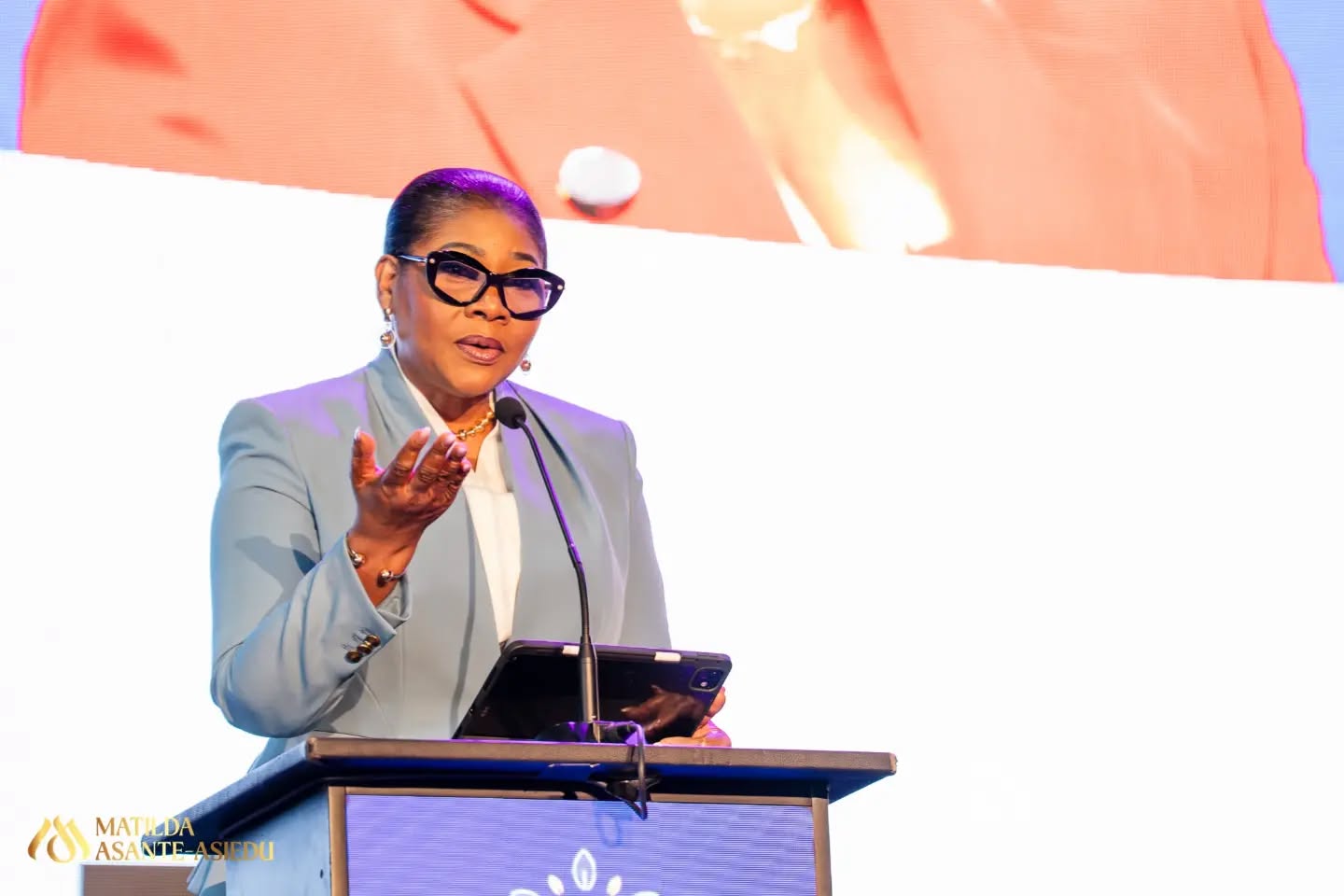
Second Deputy Governor of the Bank of Ghana, Matilda Asante-Asiedu, has challenged women in leadership to move beyond attaining positions of influence and focus on creating measurable impact in institutions, businesses, families and communities.
Speaking as Chairperson of the Executive Women Network (EWN) 10th Anniversary Conference at the Palms Convention Centre at La Palm Royal Beach Hotel on Friday, October 2, 2026, Mrs Asante-Asiedu said the next decade of women’s leadership must be defined by what leaders change around them.
The conference was held on the theme, “A Decade of Leadership, A Future Towards Holistic Impact.”
Reflecting on EWN’s 10-year journey, she said the network was founded on the conviction that women in leadership needed more than positions, but also communities and platforms to learn, connect and create opportunities for future generations.
She said women had made significant progress in Ghana and were increasingly occupying leadership positions across sectors including banking, energy, telecommunications, healthcare, education, agribusiness and fintech.
“Women in leadership are no longer observers in Ghana’s economy and growth agenda. We are decision-makers,” she said.
Mrs Asante-Asiedu, however, urged women leaders to assess their success by the difference they make rather than by titles or positions.
“Did an institution become stronger because of you? Did a younger colleague gain confidence because you encouraged her? Did you use your influence to make room for someone else?” she asked.
She said holistic leadership should recognise that women’s lives encompass careers, families, relationships, aspirations, health and financial security, adding that success should therefore not be measured solely by professional achievements.
The Second Deputy Governor also called on women to continuously acquire new skills to remain relevant in a rapidly changing world, particularly as artificial intelligence and technology transform workplaces.
She said recent engagements with boards of commercial banks on artificial intelligence and cybersecurity had reinforced the need for leaders to remain lifelong learners.
“The reality is that technology and artificial intelligence are changing how we work, and the skills that brought us this far may not carry us through the next ten years,” she said.
Mrs Asante-Asiedu further encouraged women to build assets, invest, establish businesses and create wealth as part of efforts to strengthen their financial independence.
She also called on institutions to create genuine pathways for women to advance into leadership, stressing the importance of sponsorship alongside mentorship.
“Mentors give guidance; sponsors give access, and without access, talent remains unseen. Advice is helpful, but advocacy is transformative,” she said.
She cited Ghana’s Affirmative Action (Gender Equity) Act, 2024, which provides a phased pathway towards gender parity in leadership and decision-making, with targets of 30 per cent by 2026, 35 per cent by 2028 and 50 per cent by 2034.
Mrs Asante-Asiedu said achieving those targets would require women prepared to take up opportunities, boards willing to open doors and broader societal support for women’s inclusion.
She described women’s advancement as an economic imperative, noting that women constitute just over half of Ghana’s population and that greater participation could help unlock significant economic potential.