A decisive vote at the United Nations General Assembly has underscored growing global support for reparative justice, even as key powers including the United States and Israel opposed the motion led by Ghana.
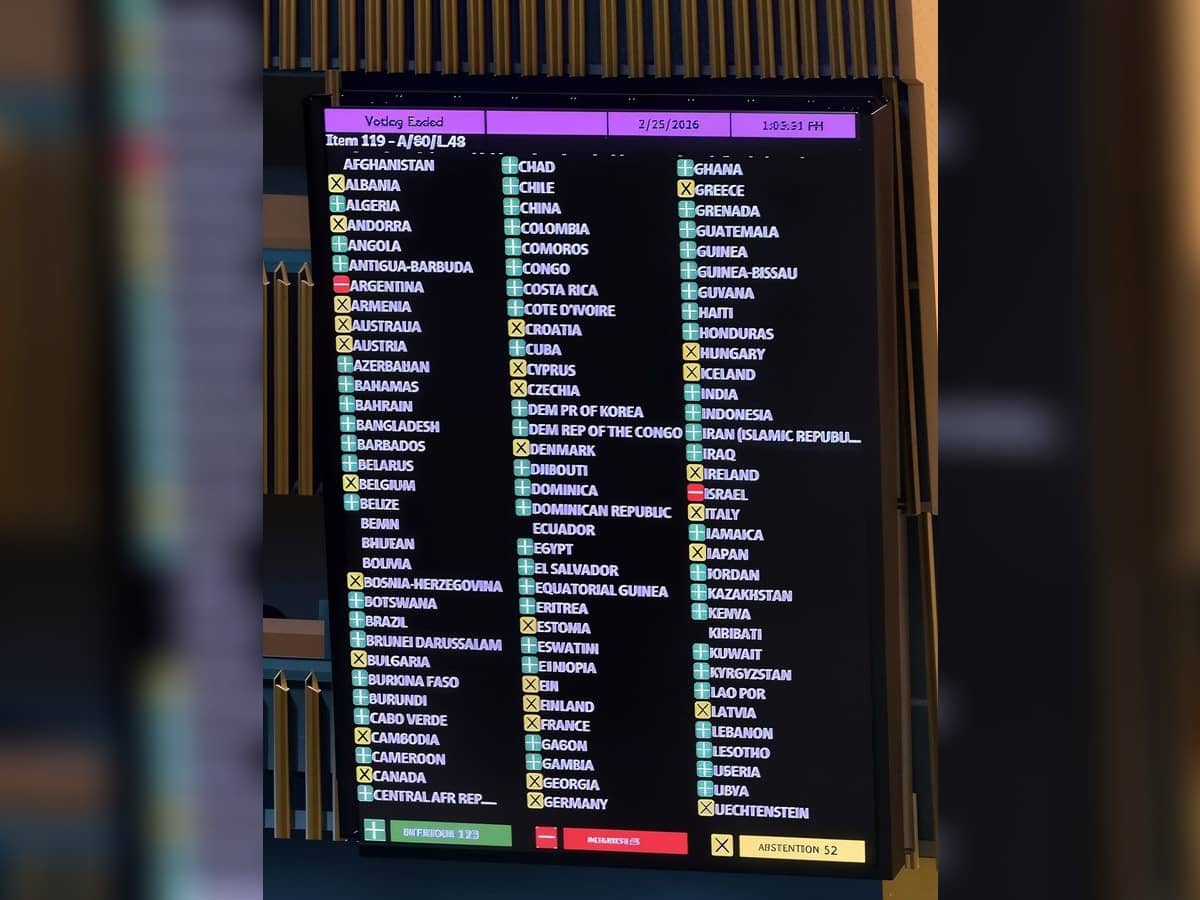
A voting board displayed at the Assembly on March 25, 2026, showed 123 countries backing the resolution, with three, including United States, Argentina and Israel, voting against, while 52 nations abstained.
The outcome marks a significant diplomatic win for President John Dramani Mahama and reinforces momentum behind calls to address the legacy of the transatlantic slave trade.
The resolution formally recognises the slave trade as “the gravest crime against humanity” and calls for structured global dialogue and concrete steps toward reparative justice. It also encourages formal apologies, institutional reforms, and efforts to tackle inequalities rooted in centuries of exploitation.
The voting pattern revealed broad support across Africa, the Caribbean, and much of the Global South, alongside backing from several European and Asian countries. However, opposition from the United States and Israel, along with abstentions from countries including the United Kingdom and parts of the European Union, highlights lingering divisions on how reparations should be approached.
During deliberations, the United States maintained its position that while it acknowledges the historical injustice of slavery, uncertainties remain over who should benefit from reparatory measures. “While we recognize the wrongs of the past, we are unclear on who the beneficiaries of reparatory justice would be, and therefore cannot support the resolution at this time,” a US representative stated.
Speaking on behalf of the African Union, President Mahama framed the resolution as a moral imperative, urging nations to act decisively in confronting history and restoring dignity to millions affected by slavery.
The development has been widely described as a milestone in international justice efforts. António Guterres welcomed the outcome but called for stronger action to dismantle systemic racism and inequality, stressing the need for inclusive development.
Foreign Affairs Minister, Samuel Okudzeto Ablakwa, said the vote could pave the way for a broader reparative framework to address both historical injustices and their lasting economic and social impact.
The resolution adds momentum to ongoing campaigns by African and Caribbean nations seeking accountability and long-term remedies for the enduring legacy of slavery.