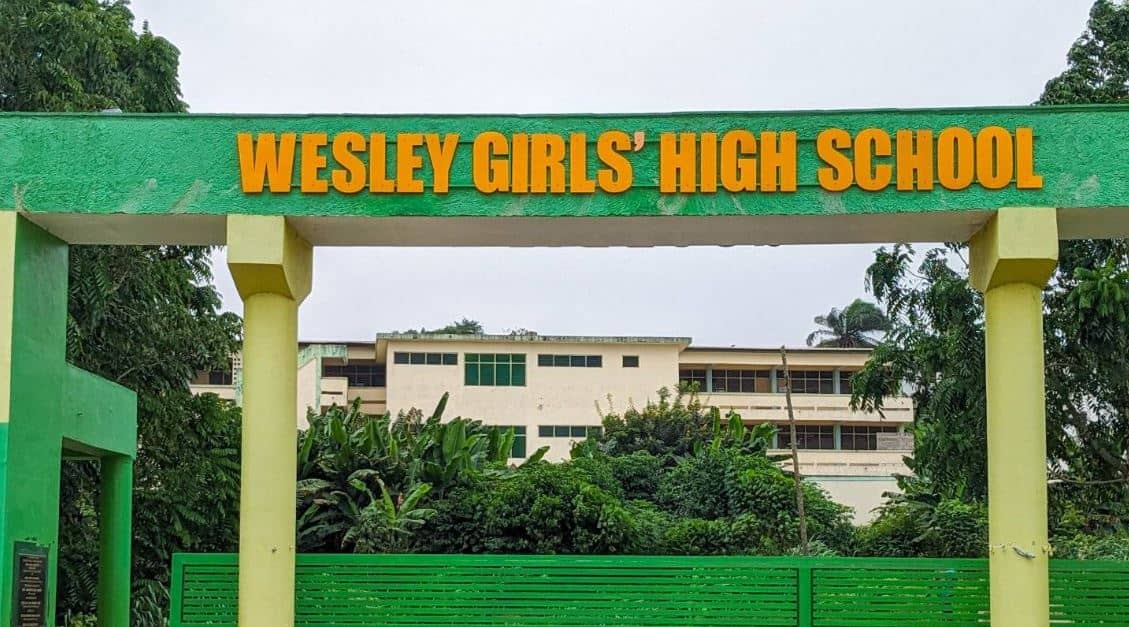
The Supreme Court has given the Board of Directors of Wesley Girls’ Senior High School in Cape Coast 14 days to respond to allegations made against the school in a suit challenging the constitutionality of some of its religious directives.
The plaintiff, Shafic Osman, contends that the school’s policy compelling Muslim students to attend Christian services and restricting them from practising their faith violates the 1992 Constitution.
During proceedings on Tuesday, November 25, 2025, the seven-member panel chaired by Justice Gabriel Pwamang noted that the school’s governing board must officially address the factual claims if it wishes the court to properly assess the issues.
The court also granted Deputy Attorney-General Dr Justice Srem-Sai permission to file an amended statement of case on behalf of the Ministry of Education. In the revised filing, the Attorney-General argues that Wesley Girls’ Senior High School is owned by the Methodist Church and therefore has the right to operate in accordance with the Methodist Christian faith. He further argues that the school’s access to government funding does not strip it of its religious identity or rights.
In a related development, Democracy Hub, represented by Oliver Barker-Vormawor, has applied to provide additional information to the court. However, the bench advised him to wait until the issues for determination are settled before filing.
Before adjourning the matter indefinitely, the panel cautioned all parties to refrain from discussing or analysing the case on social media.
Background:
In December 2024, lawyer Shafic Osman filed a case at the Supreme Court challenging the religious policies of Wesley Girls’ Senior High School in Cape Coast. He alleges that the school discriminates against Muslim students by restricting their ability to fast during Ramadan, perform daily prayers, wear Islamic dress such as the hijab, and attend Muslim religious gatherings.
The suit argues that these policies violate several provisions of Ghana’s 1992 Constitution, including freedom of religion, equality and non-discrimination, the right to manifest one’s religion, human dignity, and the right to education. Osman also cites international human rights and children’s rights under the Constitution, seeking a court declaration that the school’s “Institutional Faith Clause,” which mandates participation in Methodist Christian practices, is unconstitutional in a publicly funded institution. He is urging the Ghana Education Service to develop guidelines that allow for religious accommodation in schools.
The case has received public support from the Coalition of Muslim Organisations Ghana (COMOG), which sees it as a test of Ghana’s commitment to religious freedom in public education. Legal scholars and education advocates have also weighed in, noting that publicly funded schools should not privilege one religion over others.
The Attorney-General, however, argues that Wesley Girls is a Methodist mission school entitled to maintain its religious character despite receiving state funding.
Reports indicate that similar issues have arisen in the past, including allegations that Muslim students were prevented from fasting, praying during school hours, or wearing hijabs.