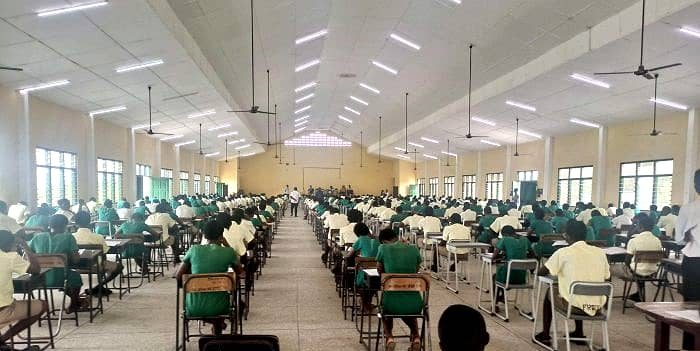
The YAFO Institute has warned that Ghana risks pushing more than 220,000 young people into illegal mining (galamsey) if the sharp decline in the 2025 WASSCE performance is not urgently addressed.
In a statement responding to the newly released examination results, the Institute said the poor outcomes—particularly in Core Mathematics and Social Studies—confirm long-standing concerns about the unintended consequences of the Free Senior High School (Free SHS) policy. According to the results announced by Education Minister Haruna Iddrisu, only 48.73% of candidates passed Core Mathematics, while Social Studies registered a 55.82% pass rate, the lowest in four years.
YAFO Institute said these figures translate into “hundreds of thousands of students who cannot meet tertiary admission benchmarks,” warning that the failures are no longer isolated occurrences but evidence of a system under strain. The decline, the group noted, reflects findings from its peer-reviewed study, Counting the Costs: The Unintended Consequences of Ghana’s Free Senior High School Policy on Household Poverty, which identified worsening structural conditions in secondary schools.
The research flagged multiple challenges affecting learning outcomes, including overcrowded classrooms, insufficient infrastructure, reduced contact hours under the double-track system, poor feeding, and increased financial pressures on households. These failures, the Institute said, have now “translated into weakened academic performance nationwide.”
YAFO Institute cautioned that the social consequences could be severe. The statement warned that “over 220,000 failed WASSCE students are likely to join the workforce of illegal mining to deepen the country’s environmental challenges as unemployment rate hikes.”
To address what it describes as a “dangerous trajectory,” the Institute recommended a full-scale review of the Free SHS policy, with an emphasis on educational quality rather than access alone. Other proposals include a national audit of SHS infrastructure and teaching resources, the restoration of regular end-of-term examinations, stronger monitoring and evaluation systems, abolition of the double-track system, standardisation of school resources, and partnerships with private schools to ease overcrowding.
It further called for a review of school prospectuses to cut unnecessary costs imposed on parents.
“Ghana must not accept the poor performance in the 2025 WASSCE results as normal. The results show that the Free SHS Policy reform is no longer optional – it is urgent, and students who are unable to progress have the potential to feed galamsey workforce,” said Nathaniel Dwamena, President of the YAFO Institute.
The Institute stressed that while Free SHS remains a vital social intervention, “without addressing its implementation failures, the programme risks delivering mass access to education without delivering actual learning.”







![Project Finance: Ghana’s Untapped Key to Infrastructure Development [ARTICLE]](https://sikamantimes.com/wp-content/uploads/2026/02/Eunice-Kaanye-350x250.jpeg)