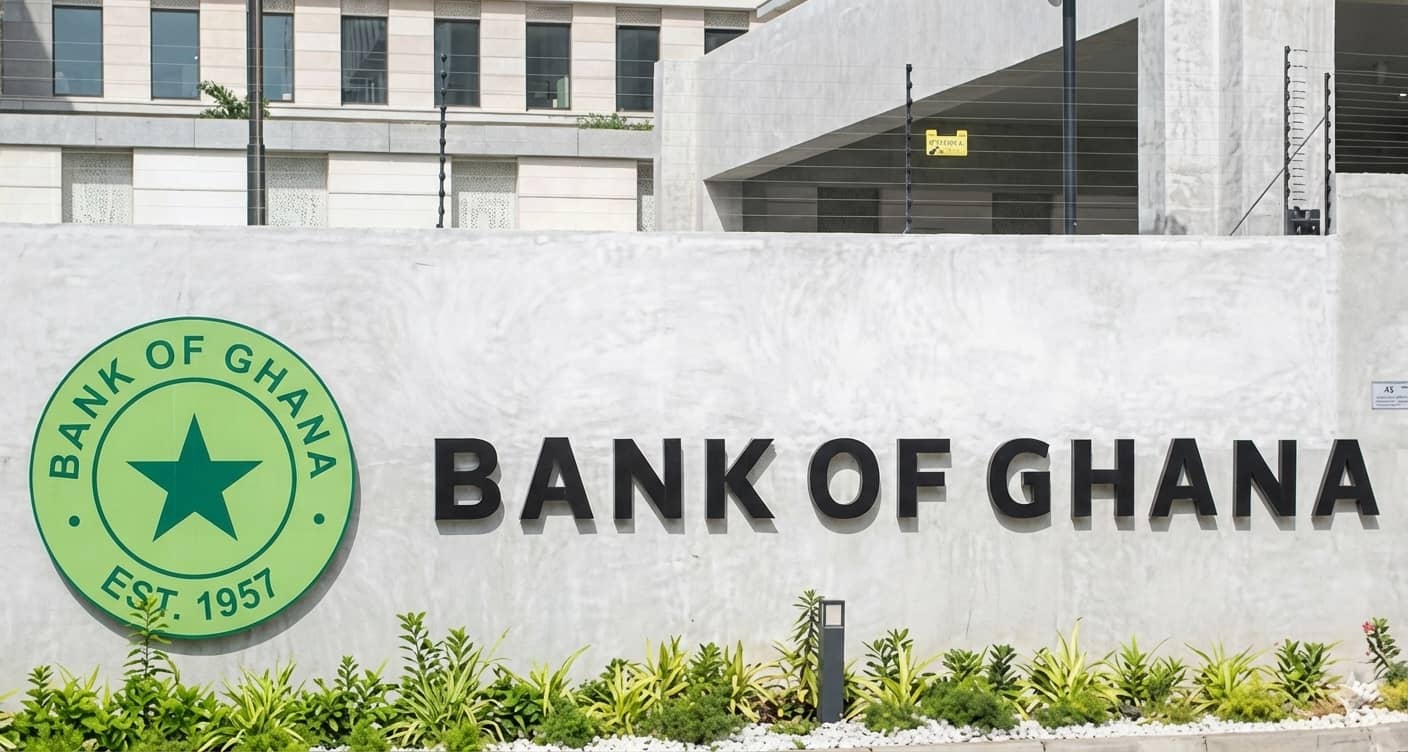
The Bank of Ghana has reduced its Monetary Policy Rate by 250 basis points to 15.50 percent, citing faster-than-expected disinflation, improved macroeconomic stability and strengthening economic growth.
The decision was taken at the 128th regular meeting of the Monetary Policy Committee (MPC), held from January 26 to 28, 2026, following what the central bank described as a significant turnaround in both domestic and external economic conditions.
“Based on the foregoing considerations, the Committee, by a majority decision, voted to lower the Monetary Policy Rate by 250 basis points to 15.50 percent,” the MPC said in its press release issued on January 28, 2026.
According to the Bank, headline inflation declined sharply from 23.8 percent in December 2024 to 5.4 percent in December 2025, supported by tight monetary policy, fiscal consolidation and currency appreciation. Inflation expectations across consumers, businesses and the financial sector remained well anchored, while core inflation — excluding energy and utility prices — also eased, signalling muted underlying price pressures.
The MPC noted that economic growth gained momentum in 2025. Provisional data from the Ghana Statistical Service showed real GDP expanding by 6.1 percent in the first three quarters of 2025, compared with 5.8 percent over the same period in 2024. Non-oil GDP growth accelerated to 7.5 percent, driven mainly by the services and agriculture sectors.
The Bank’s Composite Index of Economic Activity recorded 8.8 percent growth in November 2025, up sharply from 1.5 percent a year earlier, reflecting improvements in trade activity, private sector credit, industrial production and consumption. Consumer and business confidence surveys also pointed to improving sentiment, supported by easing inflation, currency stability and expectations of lower borrowing costs.
Money market conditions eased considerably during the year. The 91-day Treasury bill rate fell to 11.08 percent in December 2025 from 27.73 percent a year earlier, while average lending rates declined to 20.45 percent from 30.25 percent, following a cumulative 900 basis points reduction in the policy rate over the year. This supported a rebound in real private sector credit growth to 13.1 percent.
Fiscal performance improved markedly, with the overall fiscal deficit narrowing to 0.5 percent of GDP by end-November 2025, well below the 3.5 percent target. Public debt declined to 45.5 percent of GDP from 63.1 percent a year earlier.
The external sector also recorded strong gains, posting a provisional current account surplus of US$9.1 billion and a balance of payments surplus of US$3.98 billion. Gross international reserves rose to US$13.8 billion, equivalent to 5.7 months of import cover.
“With stability largely achieved, the focus of policy is gradually shifting toward consolidating these gains and supporting stronger real sector recovery, job creation, and improved financial intermediation,” the Committee stated.
The MPC cautioned, however, that sustaining the gains will require disciplined fiscal policy, strong coordination and vigilance against risks from utility price adjustments, commodity market volatility and geopolitical tensions.
The next MPC meeting is scheduled for March 16–18, 2026.






![Project Finance: Ghana’s Untapped Key to Infrastructure Development [ARTICLE]](https://sikamantimes.com/wp-content/uploads/2026/02/Eunice-Kaanye-350x250.jpeg)