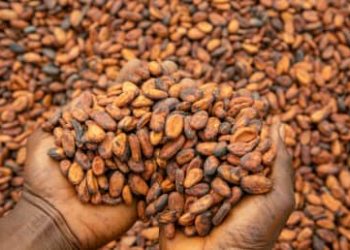
International buyers are increasingly turning away from Ghana’s cocoa due to higher prices compared with beans from other producing countries, leaving about 50,000 metric tonnes unsold, the Ghana Cocoa Board (COCOBOD) has disclosed.
COCOBOD Chief Executive Officer Randy Abbey said more than 530,000 tonnes of cocoa have been sold under the current financing arrangement, but buyers have been reluctant to take up the remaining stock because Ghana’s beans are considered uncompetitive.
“The buyers now find our beans as too expensive, and therefore they have shifted to other markets where they can get the beans far cheaper, because these are business decisions,” Mr Abbey said at a media briefing in Accra on Friday, February 6, 2026.
He noted that the unsold cocoa has directly affected farmers, some of whom are yet to be paid for their produce. “We have sold over 530,000 tonnes of the crop. We have another under 50,000 that we are yet to find buyers for, and that is when the buyers started shifting,” he said, adding that unpaid beans are likely part of the unsold stock.
Mr Abbey acknowledged what he described as a “major disruption” in the cocoa market, citing farmer distress, legacy debts and a strained funding model. “The situation is where we have beans but they are not buying; the beans are too expensive,” he said.
He explained that while international cocoa prices have risen to about $6,400 per tonne, the effective crop price is below $4,000, widening the gap between Ghana and competing origins.
Against this backdrop, COCOBOD is exploring a new funding model that prioritises value addition over the collateralisation of raw cocoa beans. “We are looking at a model that does not tie hands with respect to the collateralisation of the raw bean, because we want a funding model that also facilitates or supports value addition,” Mr Abbey said.
He said discussions are ongoing and assured that details would be made public, adding, “This is on top of the agenda,” while appealing to farmers for patience as COCOBOD, government and the Ministry of Finance work to resolve payment delays.