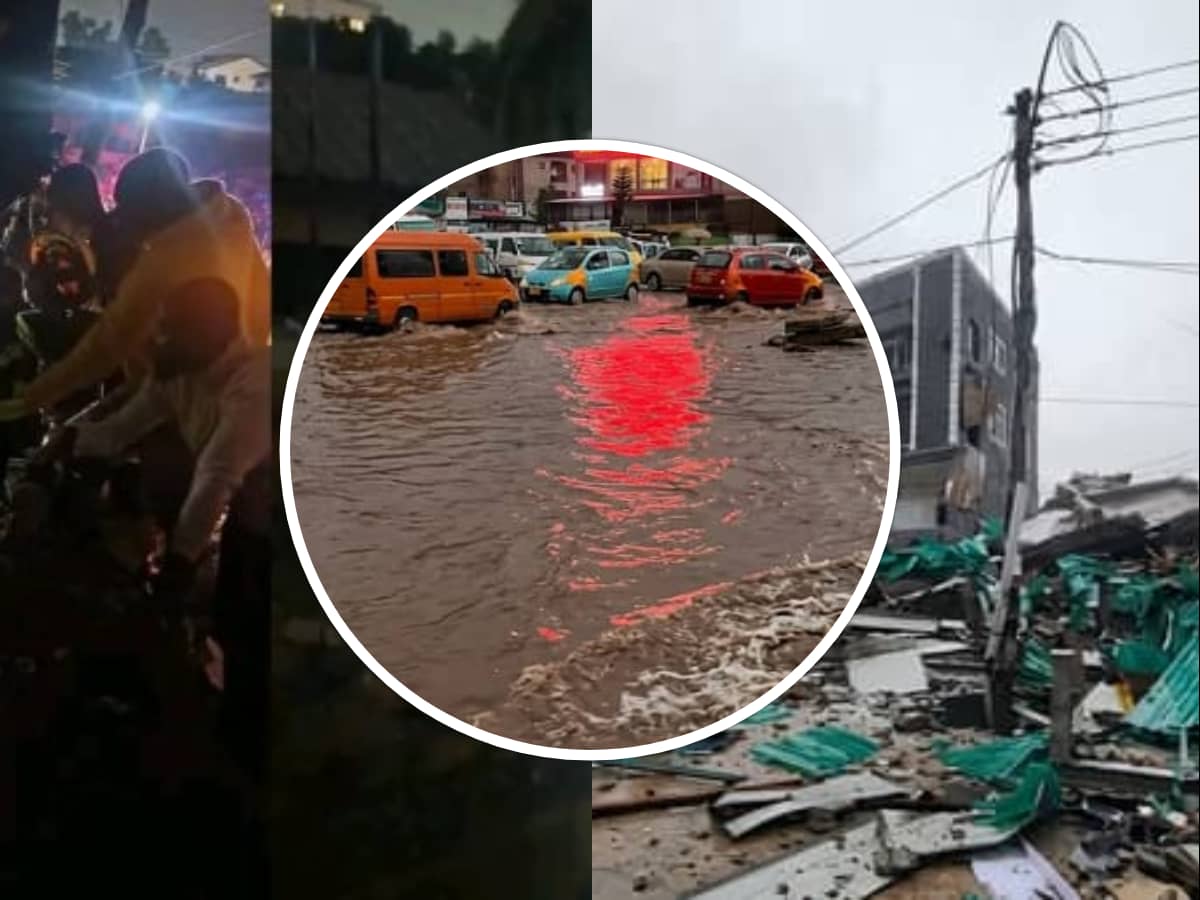
As the rains once again expose the vulnerabilities of our cities and towns, and as reports of building collapses continue to emerge, Ghana finds itself confronting a painful and recurring question: are local authorities adequately performing the responsibilities entrusted to them by law?
The recent collapse of a three-storey building at Avenor in Accra, which claimed lives and left others injured, has reignited concerns about development control, building inspections and enforcement of planning regulations. Reports indicate that emergency responders worked tirelessly to rescue victims trapped beneath the rubble, while investigations continue into the circumstances surrounding the disaster.
Unfortunately, the tragedy is not occurring in isolation. It comes against the backdrop of perennial flooding in Accra and several urban centres, a challenge that successive governments have spent decades attempting to address.
Over the years, governments of different political persuasions have invested significant public resources into flood mitigation projects. Major drainage works along the Odaw Basin, desilting exercises, the reconstruction of drains, the establishment of flood early warning systems, and various resilience projects supported by development partners have all sought to reduce the devastating impact of floods.
The most recent development was the ruling administration’s creation of a seven-member anti-flood team in March of last year.
Yet every rainy season, the nation witnesses flooded homes, submerged roads, destroyed businesses and, tragically, avoidable deaths.
This portal believes that while central government bears an important responsibility for national infrastructure planning and financing, it cannot single-handedly solve every localized developmental challenge across the country.
The reality of governance in a decentralized system is that many problems originate and manifest at the local level. Illegal structures do not suddenly appear overnight. Waterways are not obstructed in a single day. Buildings do not become structurally deficient without warning signs. These are issues that are often visible within communities long before they become national emergencies.
Indeed, the Local Governance Act, 2016 (Act 936), places significant responsibilities on Metropolitan, Municipal and District Assemblies (MMDAs). The Act mandates District Assemblies to be responsible for the overall development of their districts, promote local economic development, initiate infrastructure projects, manage human settlements, and oversee environmental management within their jurisdictions.
The Sikaman Times is of the considered view that these statutory responsibilities are not merely ceremonial. They constitute a direct obligation to ensure orderly development, enforce planning regulations, monitor construction activities and protect public safety.
Far too often, however, local authorities appear reactive rather than proactive.
When floods occur, drains are hurriedly desilted. When buildings collapse, inspection teams are assembled. When roads deteriorate beyond use, emergency patchwork begins.
The question remains: where were the enforcement mechanisms before these crises occurred?
The implications extend far beyond the immediate loss of lives and property.
Flooding and structural failures have the potential to erode decades of development gains. Every washed-out road represents public funds that could have been invested elsewhere. Every damaged bridge increases future budgetary pressures. Every flooded market disrupts economic activity. Every viral image of flooded streets damages Ghana’s reputation as an attractive destination for investment and tourism.
Moreover, government resources that could be channelled into schools, hospitals, digital infrastructure and job creation are repeatedly redirected toward emergency interventions and reconstruction.
This cycle is neither sustainable nor economically prudent.
We are of the opinion that strengthening local governance must become a national priority.
Fortunately, the Local Governance Act provides Assemblies with several funding mechanisms. Beyond the District Assemblies Common Fund, Assemblies are entitled to internally generated funds from rates, licences, fees, taxes, investments and other approved revenue sources. The law also permits them to receive grants, donations and, under certain circumstances, borrow to finance development projects.
Yet many Assemblies continue to depend heavily on central government allocations.
The Sikaman Times believes local authorities must become more innovative in mobilizing resources. Property rate administration should be modernized. Public-private partnerships should be explored. Local investment initiatives should be pursued. Revenue leakages should be aggressively tackled.
A stronger revenue base would improve the capacity of Assemblies to undertake routine inspections, maintain drainage systems, improve roads and strengthen development control functions.
Equally important is the need to revive and modernize the concept of town council “tankas.”
Historically, these local officers played an important role in sanitation enforcement. Today, their mandate could be expanded significantly.
Modern tankas should serve as community compliance officers tasked with identifying and reporting illegal construction on waterways, unauthorized developments, structurally deficient buildings, blocked drains and other violations of local regulations.
To ensure effectiveness, they could be directly incentivized through a share of fines recovered from defaulting individuals and property owners. Such a model would encourage vigilance while creating a grassroots enforcement mechanism that operates much closer to communities than centralized inspection units.
Furthermore, local authorities must deepen collaboration with residents and community groups.
Communities are often the first to identify blocked drains, deteriorating roads, unsafe structures and emerging environmental hazards. Assemblies that establish effective community engagement structures will be better positioned to address problems before they escalate into disasters.
Regular community clean-up exercises, participatory drainage maintenance programmes, neighbourhood monitoring committees and structured feedback channels could significantly improve local outcomes.
This portal believes that addressing Ghana’s flooding and building safety challenges requires both stronger local governance and continued support from central government. The two are not mutually exclusive; they are complementary.
Central government must continue investing in major infrastructure, strengthening regulatory frameworks and providing technical support. At the same time, local authorities must fully embrace their statutory mandate as the first line of defence against disorderly development and environmental degradation.
The recent tragedies should serve as a wake-up call.
Floods and collapsing structures are not merely acts of nature. In many instances, they are symptoms of governance failures, weak enforcement and inadequate planning.
If Ghana is to safeguard lives, protect public investments and preserve its development gains, the time has come for local authorities to move beyond rhetoric and demonstrate the proactive leadership that decentralized governance was designed to achieve.
The cost of inaction is simply too high.
DISCLAIMER: The views, comments, and contributions made by readers or contributors on this website do not necessarily represent the position or views of The Sikaman Times. The Sikaman Times will not be responsible or liable for any inaccurate or incorrect statements made by readers or contributors on this website.
*****
Never miss out on the news. Get your valuable breaking news and other vital content by following The Sikaman Times on WhatsApp Channel
*****