Government has announced a sweeping financial restructuring of the Ghana Cocoa Board (COCOBOD), including the conversion of GH¢5.8 billion in legacy debt and the launch of a forensic audit and criminal investigation into its operations over the past eight years.
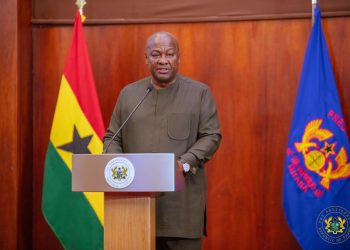
Addressing journalists at the Jubilee House, Finance Minister Cassiel Ato Forson described the cocoa regulator’s financial state as dire and unsustainable.
“Cocoa Board currently owes the Ministry of Finance 3.7 billion Ghana cedis… and the Bank of Ghana another 10-year loan of 1.38 billion Ghana cedis,” he disclosed.
According to him, Cabinet has directed the Ministry of Finance to seek parliamentary approval to transfer these liabilities to the central government and the Bank of Ghana in order to restore COCOBOD’s balance sheet.
“The debt conversion will restore positive equity and boost the international and local market to support the operations of the Ghana Cocoa Board,” he explained.
Dr. Forson revealed that the cocoa sector’s challenges were compounded by unprecedented production shortfalls in the 2023/2024 crop season. While COCOBOD projected an output of 800,000 tonnes and contracted 786,672 tonnes, actual production fell sharply to 432,145 tonnes—representing a deviation of over 45%.
“This resulted in a huge rollover contract of about 333,767 tonnes at an average price of US$2,661 per tonne. This resulted in a loss of over US$1 billion,” he said.
In response to what he termed “gross mismanagement,” Cabinet has directed the Attorney General to commission a concurrent forensic audit and criminal investigation.
“I repeat, Cabinet also directed the Office of the Attorney General to commission concurrent forensic audit and criminal investigation into the activities of Cocoa Board over the last eight years,” the Minister emphasized.
He further noted that road construction liabilities—amounting to GH¢4.35 billion after rationalization—would be transferred to the Ministry of Roads and Highways and the Ministry of Finance, as road projects accounted for a significant portion of COCOBOD’s financial distress.