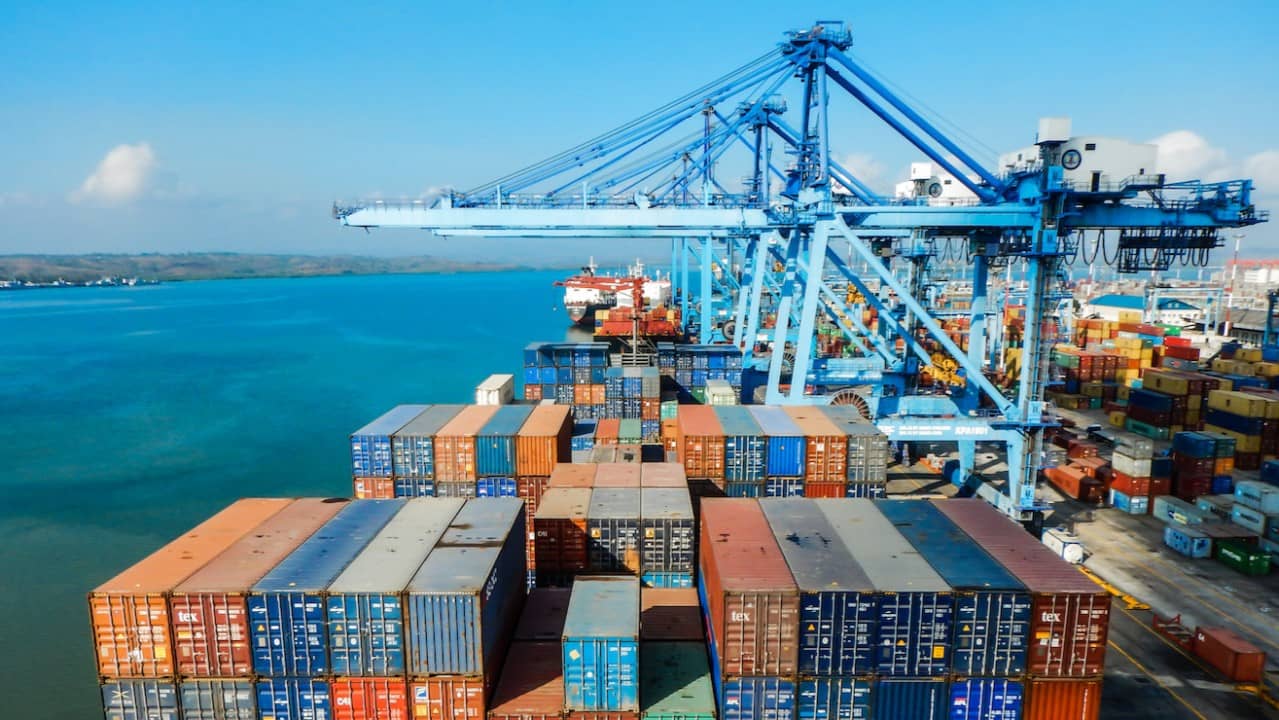
Ghana recorded a trade surplus of GH¢13.8 billion (US$1.3 billion) in the second quarter of 2026, although the surplus declined by about 70% from the first quarter as imports increased sharply while exports remained largely stable.
Government Statistician, Dr Alhassan Iddrisu, disclosed this on Thursday, October 2, 2026, while presenting the Ghana Statistical Service’s trade newsletter for April to June 2026.
According to him, Ghana exported goods valued at GH¢108.5 billion (US$9.6 billion) during the quarter, compared with imports worth GH¢94.7 billion (US$8.3 billion).
The resulting surplus was significantly lower than that recorded in the first quarter, with Dr Iddrisu attributing the decline primarily to a substantial increase in imports.
“Exports barely moved, but imports jumped by almost half,” he said.
Dr Iddrisu explained that the headline trade surplus was largely driven by prices rather than an increase in the volume of goods traded.
He said import prices rose by almost 23% during the quarter, driven largely by fuel.
“When we remove price changes and count only quantities, Ghana had a trade deficit of GH¢14.6 billion,” he said.
“This means our trade surplus came from higher prices, not more goods.”
Gold dominates exports
Gold remained the dominant contributor to Ghana’s export earnings during the quarter, generating GH¢78.4 billion (US$6.9 billion).
Dr Iddrisu said almost three out of every four cedis earned from merchandise exports during the period came from gold, highlighting the continued concentration of Ghana’s export earnings in the precious metal.
On the import side, higher fuel costs contributed significantly to the increase in the value of imports.
He also pointed to a sharp rise in imports of pump parts from South Africa, which contributed to Ghana recording a trade deficit with the African continent during the quarter.
Despite this, Ghana’s West African neighbours remained important markets for locally produced goods, with the region accounting for the widest range of products purchased from Ghana.
Call for export diversification
Dr Iddrisu said the latest figures underscored the need for Ghana to diversify its export base, add value to commodities locally and take greater advantage of the African Continental Free Trade Area (AfCFTA).
“For government, widen our exports, add value at home, and make full use of the African Continental Free Trade Area,” he said.
He also encouraged businesses to expand into regional markets, noting that Ghana’s neighbours were already purchasing a broad range of locally produced goods.
“For businesses, regional markets are already buying made-in-Ghana goods, so grow there,” he added.
For households, Dr Iddrisu cautioned that increases in global fuel prices could feed through to domestic prices and urged consumers to plan accordingly.