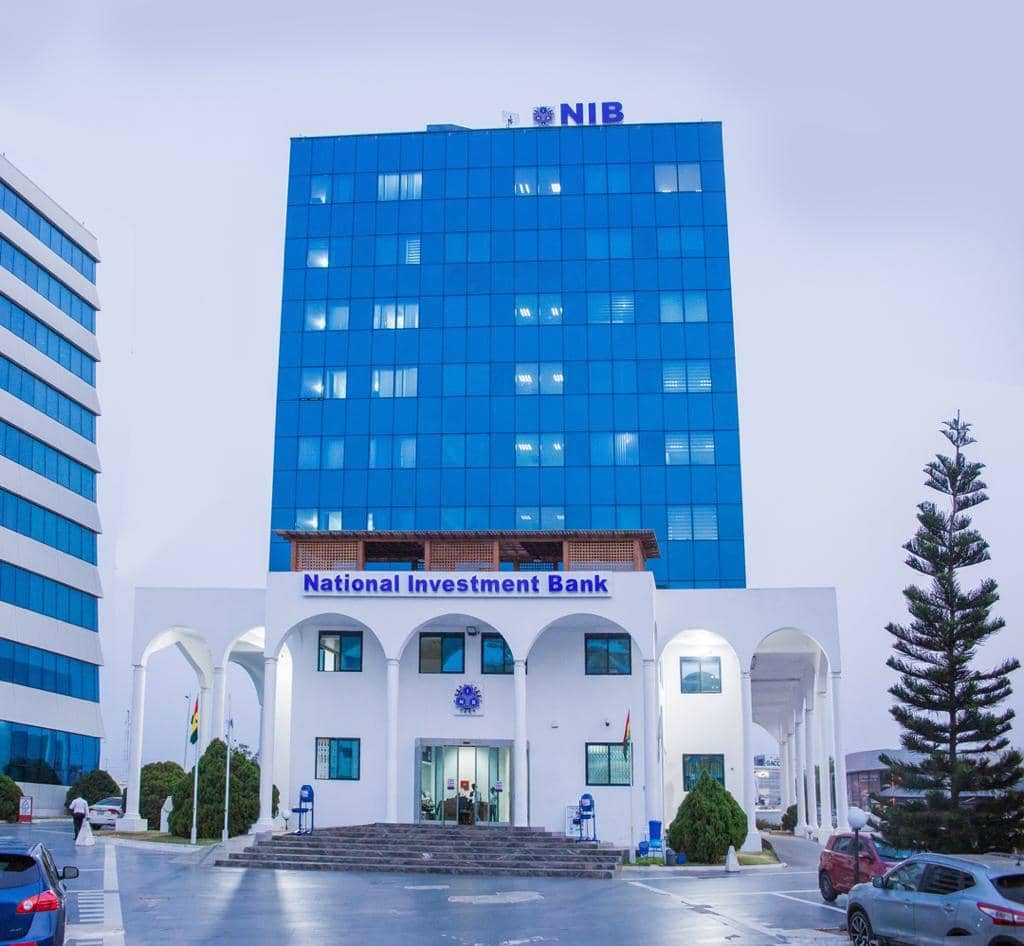
The full recapitalisation of National Investment Bank Limited (NIB) has contributed to improved capital adequacy across Ghana’s commercial banking sector, according to PricewaterhouseCoopers’ (PwC) second-quarter 2026 Quarterly Banking League Tables report.
The report said the Government of Ghana completed its structural intervention in the state-owned bank with GH¢1.97 billion in restructuring and recapitalisation funds.
The capital injection addressed longstanding balance sheet and solvency challenges at NIB, pushing its capital adequacy ratio (CAR) to 48.1%, well above the regulatory requirement.
NIB consequently ranked first among Ghana’s commercial banks on capital adequacy in the second quarter of 2026.
FBNBank Ghana followed with a CAR of 37.9%, while Standard Chartered Bank Ghana and Guaranty Trust Bank Ghana recorded ratios of 32.0% and 30.6%, respectively.
Across the 22 reporting commercial banks, the industry’s average CAR stood at 23.3% in the second quarter, down marginally from 24.7% in the first quarter but significantly higher than the 17.2% recorded in the same period of 2025.
Asset quality improves
The banking sector also recorded an improvement in asset quality during the quarter, with the average gross non-performing loan (NPL) ratio declining to 18.8%.
This compared with 20.6% in the first quarter of 2026 and 20.5% in the second quarter of 2025.
United Bank for Africa Ghana recorded the lowest NPL ratio among the banks at 1.7%, indicating a relatively stronger credit portfolio during the period.
The improvement in asset quality coincided with an increase in lending activity. The sector’s aggregate loan-to-deposit ratio rose to 27.9% in the second quarter, from 25.7% in the preceding quarter and 14.5% a year earlier.
Shift towards lending
The report also highlighted a gradual shift in banks’ balance sheets away from government securities towards lending and other operational assets.
Government securities accounted for 37.5% of total banking-sector assets in the second quarter, reflecting a decline as lower yields encouraged banks to pursue alternative assets.
At the same time, the ratio of net loans and advances to equity increased to 1.72 times, pointing to greater credit exposure as banks expand their lending activities.
PwC said banks would need to sustain strong solvency and risk-management frameworks as the operating environment evolves.
The firm recommended that banks build on recent recapitalisation gains by strengthening risk management, expanding fee-based revenue streams and modernising their business models to support long-term stability and profitability.