Ghana’s economic activity expanded by 6.8 per cent in August 2026, exceeding the 5.3 per cent growth recorded in the same period last year, as improved industrial performance and stronger services activity supported the economy.
The latest Monthly Indicator of Economic Growth (MIEG), presented by Government Statistician, Dr Alhassan Iddrisu, on Wednesday, November 11, showed that the country’s economic activity index increased to 115.4 in August 2026, from 108.0 in August 2025.
The growth rate, however, represented a slight moderation from the 7 per cent recorded in July 2026, although the economy maintained a stronger performance compared with the previous year.
Explaining the significance of the indicator, Dr Iddrisu described the MIEG as a monthly measure of economic activity that tracks changes in production after removing the effects of price movements.
A breakdown of the figures showed that all three major sectors of the economy recorded positive growth in August, although their performances varied.
The services sector expanded by 10.7 per cent, up from 7.1 per cent in August 2025, supported largely by information and communication.
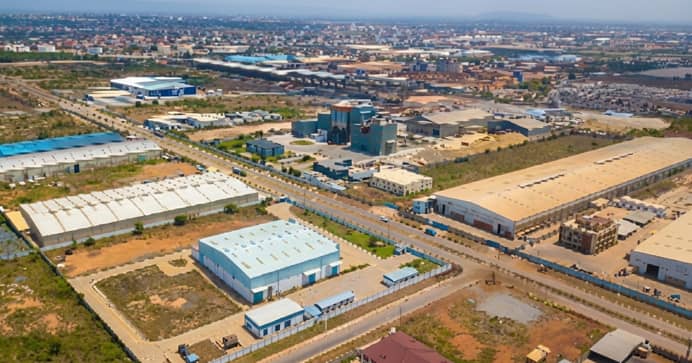
Industry recorded growth of 4.5 per cent, a significant improvement over the 0.8 per cent recorded in the same period last year.
Dr Iddrisu attributed the improvement in industrial activity mainly to manufacturing.
Agriculture, on the other hand, recorded a considerable slowdown, with growth declining to 2.6 per cent from 8.6 per cent in August 2025. Crops remained the leading driver of activity within the sector.
Despite the improved performance across the economy, the services sector remained the dominant contributor to overall growth, accounting for 69.9 per cent.
Industry contributed 21.2 per cent, while agriculture accounted for 6.8 per cent. Net indirect taxes made up the remaining 2.1 per cent.
The latest figures also showed that economic growth in August was slightly lower than the revised July estimate.
Dr Iddrisu disclosed that the July 2026 growth rate had been revised downward from 7.4 per cent to 7 per cent following the availability of more complete data.
“This is normal. Early estimates are updated as fuller information comes in,” he explained, adding that all the figures remain provisional.
On the broader economic outlook, the Government Statistician said the MIEG provides an early indication of the country’s quarterly GDP performance.
He noted that the MIEG and GDP both recorded growth of 6 per cent in the second quarter of 2026, demonstrating the close relationship between the monthly indicator and the quarterly national accounts.
For July and August combined, the MIEG recorded growth of 6.9 per cent, providing an early indication of the economy’s performance in the third quarter.