The Minority in Parliament has called for a bipartisan parliamentary investigation into a reported $214 million loss incurred by the Bank of Ghana (BoG) under the Gold-for-Reserves programme, warning that the figure could rise to nearly $300 million if left unaddressed.
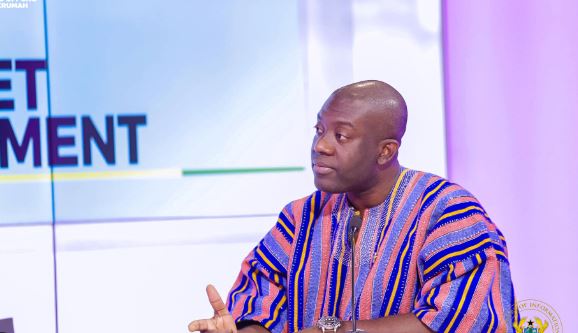
Addressing journalists in Accra on Monday, December 29, the Member of Parliament for Ofoase Ayirebi, Kojo Oppong Nkrumah, said the Minority is demanding the establishment of a parliamentary ad-hoc investigative committee with the power to subpoena all relevant documents and persons linked to the programme.
“We are demanding the following: a bipartisan parliamentary inquiry into the circumstances under which the Republic of Ghana has lost $214 million heading to $300 million to be done here by the Parliament of Ghana. We are asking for a parliamentary ad-hoc investigative committee with power to subpoena all contracts, licences, intermediaries including this power rock monopoly,” he stated.
Mr. Oppong Nkrumah said the proposed inquiry should compel the Bank of Ghana and the Ghana Gold Board (GoldBod) to publicly disclose key operational details of the programme, including fee structures, pricing formulas, aggregator selection criteria, and all foreign exchange arrangements associated with the transactions.
“Under this bipartisan enquiry we will be expecting the BoG and the GoldBod to publish the fees structure, the pricing formula, the aggregator selecting criteria and all foreign exchange arrangement that they have tied to this scheme which has led to this loss,” he added.
The Minority also raised concerns about the possible involvement of illegally mined gold in the programme. Mr. Oppong Nkrumah called for the suspension of mining permits in forest reserves and the introduction of strict traceability measures, warning that state funds may be used to purchase gold from illegal mining, commonly referred to as galamsey.
“One of the things we will be asking for is the suspension of permit in forest reserves and the introduction of serious measures on traceability because as at now we have every reason to believe that state money is being used to buy galamsey gold,” he said.
He stressed that accountability must follow the inquiry’s findings, adding that “where negligence or corruption is proven, prosecutions must follow and all recoverable funds must be given back to the state.”
The Minority’s call follows concerns raised by the International Monetary Fund (IMF), which described the reported losses as a potential risk to Ghana’s macroeconomic stability. The IMF attributed the losses to transactions involving artisanal and small-scale mining dore gold and referenced alleged “GoldBod off-taker fees.”
GoldBod has, however, rejected the IMF’s claims, describing them as inaccurate. In a response issued earlier this month, the Board’s Chief Executive Officer, Sammy Gyamfi, stated that GoldBod expects an income surplus of no less than GH¢600 million for the 2025 financial year and clarified that it does not charge off-taker fees.
According to Mr. Gyamfi, GoldBod’s role is limited to purchasing, assaying, and exporting gold on behalf of the Bank of Ghana, while all trading and sale agreements with off-takers fall under the central bank’s mandate.
He further noted that GoldBod has contributed more than $10 billion in foreign exchange in 2025 through the purchase of over 100 tonnes of artisanal and small-scale mining gold for the Bank of Ghana.
He added that the Board’s support in purchasing output from large-scale mining companies has helped strengthen Ghana’s foreign reserves and support the stability of the cedi.





![Project Finance: Ghana’s Untapped Key to Infrastructure Development [ARTICLE]](https://sikamantimes.com/wp-content/uploads/2026/02/Eunice-Kaanye-350x250.jpeg)