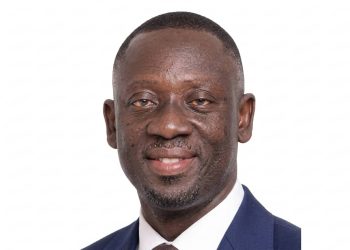
Ofoase-Ayirebi MP and lawyer, Kojo Oppong Nkrumah, has asked the Supreme Court to determine whether the Chief Justice acted within the Constitution by directing selected High Court judges to hear certain criminal cases during the 2026 legal vacation.
Mr Oppong Nkrumah filed the case on Friday, August 14, 2026, naming Chief Justice Paul Baffoe-Bonnie and Attorney-General and Minister for Justice Dominic Ayine as defendants.
He is invoking the original jurisdiction of the Supreme Court under Articles 2(1) and 130(1) of the 1992 Constitution and wants the court to determine the legality of the administrative warrants issued for the vacation sittings.
The disputed directives cover the legal vacation period from August 1 to September 30, 2026, during which selected judges have been assigned to hear designated criminal cases.
Mr Oppong Nkrumah’s main argument is that prioritising some criminal cases while leaving other pending cases outside the arrangement amounts to unequal treatment.
He is asking the Supreme Court to declare that the decision to facilitate the hearing of what have been described as “special criminal cases”, while other criminal matters remain unattended, amounts to selective justice and violates Article 17(1) of the Constitution.
He argues that the arrangement creates an arbitrary distinction between similarly placed criminal cases, accused persons and litigants.
The MP is consequently seeking declarations that the warrants issued by the Chief Justice are inconsistent with Articles 17(1) and (2), 23 and 296(a) and (b) of the Constitution and should be declared null and void.
Mr Oppong Nkrumah, however, says his challenge is not against the Chief Justice’s constitutional authority to administer the Judiciary or organise court sittings.
He accepts that the Chief Justice has broad administrative powers to ensure the effective operation of the courts but maintains that those powers must be exercised in accordance with the Constitution.
He argues that discretionary powers cannot be exercised arbitrarily and must be applied in a fair, reasonable and transparent manner.
The case therefore asks the Supreme Court to determine whether the selection of particular criminal cases for hearing during the legal vacation meets those constitutional requirements.
Mr Oppong Nkrumah has also raised concerns about the impact of the directives on lawyers and members of the Judicial Service who are required to work during the vacation.
He is asking the court to examine whether the directives comply with Articles 24(1) and (2) and 36(10) of the Constitution, particularly provisions concerning satisfactory, safe and healthy working conditions and workers’ welfare.
He is also challenging aspects of the High Court (Civil Procedure) Rules, 2004 (C.I. 47), to the extent that they permit the selection of cases for hearing during the legal vacation.