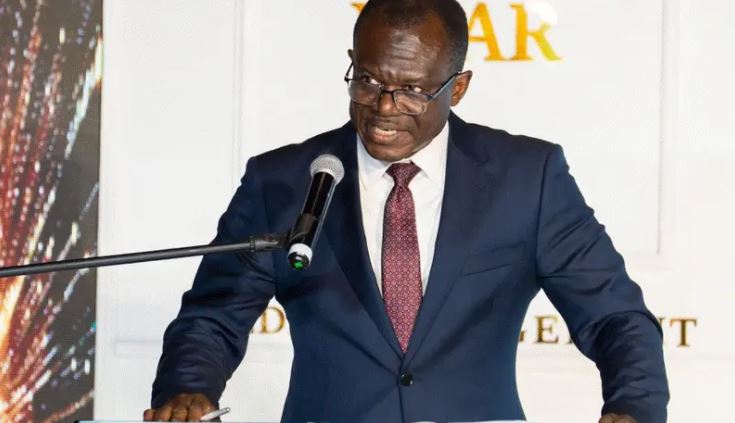
The First Deputy Governor of the Bank of Ghana, Dr. Zakari Mumuni, has called on the media to exercise accuracy, balance, and context when reporting on the central bank’s operations, emphasizing that responsible reportage is essential for maintaining market stability and public confidence.
Speaking at the Bank’s New Year media engagement at The Bank Square in Accra, Dr. Mumuni stressed that “central banking is built on trust, and trust is built on communication,” noting that words and reporting now play a direct role in shaping market expectations and economic behaviour.
Dr. Mumuni highlighted that Ghana’s economy has recently emerged from a period of “profound stress,” marked by entrenched inflation, weakened confidence, and unpredictable prices that have made planning difficult for households and businesses alike. He noted that the Bank of Ghana remained committed to its mandate of price stability, financial stability, and orderly markets, describing these goals as fundamental to protecting wages, savings, and business planning.
The Deputy Governor underscored the central bank’s unique position as a public institution with operational independence, cautioning that sensationalist or incomplete reporting can inadvertently amplify anxiety and market volatility. He particularly noted the impact of media coverage on the foreign exchange market, explaining that daily movements in the cedi are normal under a managed floating exchange rate regime but can trigger fear-driven behaviour if misrepresented.
“Currency stability is not an abstract macroeconomic achievement,” Dr. Mumuni said. “When the cedi stabilises, import prices ease, transport costs moderate, and households and businesses can plan with confidence. Stability benefits everyone.” He commended media coverage during the Bank’s Cedi@60 campaign, saying it had helped translate policy into public action.
Dr. Mumuni also addressed the reporting of central bank losses, emphasizing that such outcomes often reflect decisive policy actions taken in the public interest rather than financial recklessness. He concluded by urging the media to ensure that their stories illuminate rather than inflame, noting that every headline and analysis has the potential to shape expectations and influence the economy.
“Let us choose the path that builds trust, supports stability, and advances Ghana’s collective progress,” he said.


![Project Finance: Ghana’s Untapped Key to Infrastructure Development [ARTICLE]](https://sikamantimes.com/wp-content/uploads/2026/02/Eunice-Kaanye-350x250.jpeg)





![Project Finance: Ghana’s Untapped Key to Infrastructure Development [ARTICLE]](https://sikamantimes.com/wp-content/uploads/2026/02/Eunice-Kaanye-120x86.jpeg)