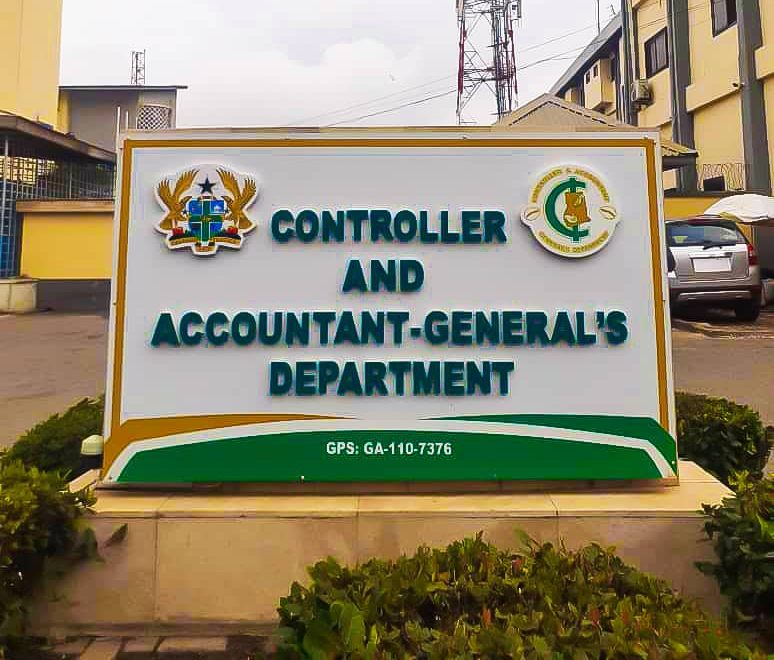
Workers across the public sector have expressed growing anxiety following the roll-out of an upgraded Government of Ghana (GoG) Employee Payment Voucher Validation Application by the Controller and Accountant-General’s Department (CAGD), amid concerns over access challenges, limited training, and possible delays to January salary payments.
The CAGD, in a circular dated January 19, 2026, announced that the upgraded system was designed to strengthen payroll checks, eliminate errors, and improve the overall validation process.
The circular, signed by the Controller and Accountant-General, Kwasi Kyei, indicated that the new platform introduces enhanced payroll validation procedures intended to ensure greater efficiency and accountability.
“Government of Ghana has upgraded the Employee Payment Voucher Validation Application to strengthen payroll checks and prevent errors in salary payments,” the circular stated. It added that detailed step-by-step instructional videos had been developed and circulated to validators who had completed and submitted their updated information to the department.
The department stressed that the upgraded application would be used for the validation and payment of January salaries and all subsequent salaries in 2026, urging institutions to ensure that their validator lists are fully updated to avoid disruptions. Validators who had not received access links or instructional materials were advised to urgently contact designated officials or regional offices for support.
Despite these assurances, feedback from public sector workers suggests significant operational challenges. Many workers reported uncertainty about how to confirm whether they had been successfully validated under the new system, with calls for automated notifications to improve transparency and reduce anxiety.
Others highlighted structural and technical issues, including difficulties locating management units on the platform, particularly in some basic schools and decentralised institutions. In several districts and municipalities, entire institutions were reported to be missing from the system, preventing validators from completing the required processes.
Concerns were also raised about the timing of the upgrade, with workers noting that the transition in January—traditionally a sensitive payroll period—had compounded pressure on validators and staff alike. Some reported that validation had not been completed weeks into the month, heightening fears of salary delays.
A recurring issue in the feedback was the absence of comprehensive training ahead of the rollout. Workers and validators indicated that instructional videos alone were insufficient, calling instead for in-person or regional workshops to properly familiarise users with the new validation dashboard and procedures.
In addition, some workers reported challenges accessing the portal, correcting personal details, and opening payslips, with complaints that payslip access had been unavailable since December. Others raised concerns about duplicate validation, incorrect contact details, and system error messages that had yet to be resolved.
While the CAGD has emphasised that prompt cooperation from institutions is essential to prevent delays in salary processing, workers say clarity, improved communication, and immediate technical support will be critical in restoring confidence in the new system as January payroll processing approaches.