President John Dramani Mahama has positioned Ghana’s recent economic and governance reforms as proof that decisive leadership can deliver results, urging the Global South to move from rhetoric to execution in rebuilding economies and institutions.
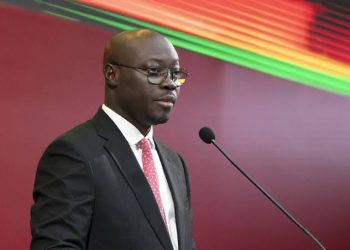
Addressing global leaders at the Accra Reset side event during the World Economic Forum in Davos, Mahama said Africa is facing “a pandemic of unfulfilled potential,” marked by youth unemployment, fragile health systems, and extractive economies.
“Millions of young people have no jobs. Health systems collapse at the first crisis. Economies extract our resources but build nothing long-lasting,” he said.
Drawing lessons from the global response to HIV/AIDS, Mahama questioned why similar urgency cannot be applied to structural poverty and dependency. “If we could mobilize the world to fight a disease, why can’t we mobilize to fight poverty, to fight dependency?” he asked.
He pointed to concrete reforms in Ghana as evidence that change is achievable. “In Ghana, we’re proving something important, that execution beats excuses,” Mahama said.
According to the President, his government has reduced public expenditure, cut the size of government to “a record low of 58 ministers,” digitized public services to curb corruption, renegotiated debt, and prioritized skills training for young people.
“This is a reset in Ghana agenda, and it’s working because we stopped talking about transformation and we started building that transformation,” he stated.
Mahama outlined five pillars for Africa’s future: investing in job-ready skills, regional industrial cooperation, collective negotiation on minerals and trade, domestic production of strategic goods, and strong accountability.
“No African country can industrialize alone by itself,” he said. “When we negotiate together on minerals, trade, and climate finance, we can be formidable.”
He challenged the notion that industrial policy is outdated. “Industrial policy isn’t old-fashioned, it is what will make us survive,” Mahama said, calling for African-led manufacturing of vaccines, medicines, and renewable technologies.
Rejecting aid dependency, Mahama said Africa is seeking partnership, not charity. “We didn’t come here to ask for charity. We came to propose a global partnership of the willing,” he told participants.
In a personal reflection on leadership legacy, Mahama said his ultimate goal is to create opportunity at home for Africa’s youth. “I want to leave a continent where young people don’t risk their lives crossing the Mediterranean because they will have opportunities at home,” he said.
He ended with a direct appeal to global leaders to support the Accra Reset vision, saying the next chapter of human progress must be built on shared prosperity rather than narrow national interests.