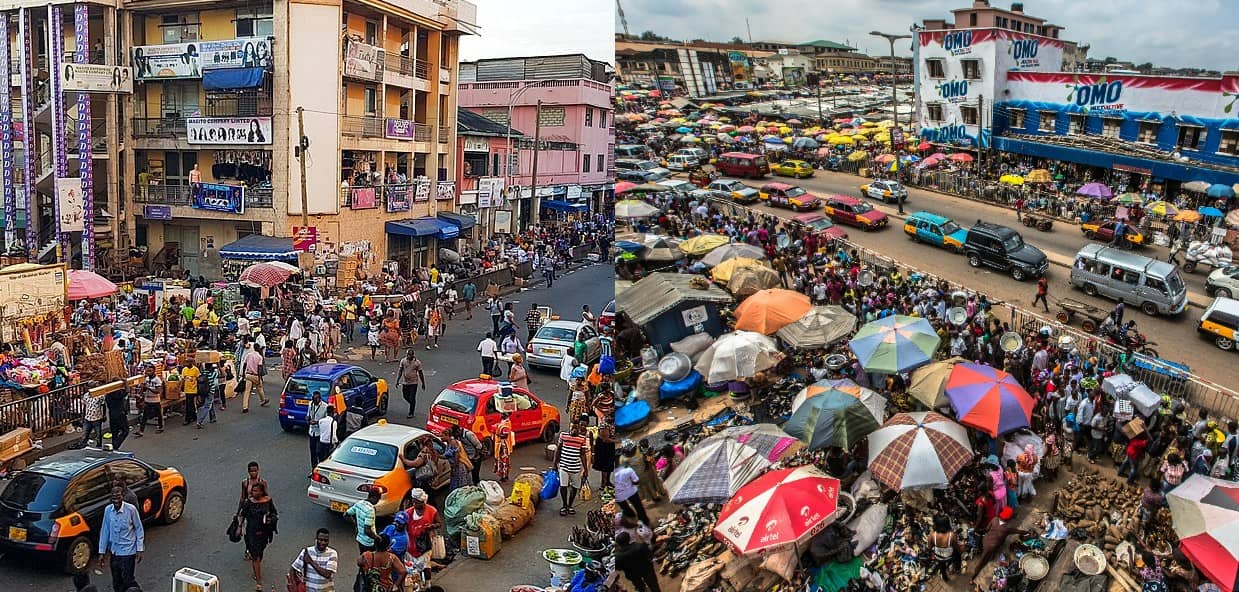
Built environment professionals have called for urgent reforms to Ghana’s metropolitan governance system, warning that fragmented administrative structures are undermining efforts to address worsening urban challenges, including flooding, congestion, sanitation, and infrastructure deficits.
The call was made at a Built Environment Professionals Breakfast Roundtable on “Greater Metropolitan Area Management in Ghana: Towards Integrated Planning, Governance and Infrastructure Delivery”, jointly organised by the Ghana Institution of Engineering (GhIE), Ghana Institute of Architects (GIA), Ghana Institute of Planning (GIP), and Ghana Institution of Surveyors (GhIS).
The forum brought together engineers, architects, planners, surveyors, governance experts, and urban development practitioners to examine strategies for managing rapidly expanding urban centres such as Greater Accra, Greater Kumasi, and Greater Sekondi-Takoradi.
Participants noted that while decentralisation has increased the number of Metropolitan, Municipal and District Assemblies (MMDAs), it has also contributed to fragmented governance structures that weaken coordinated planning and infrastructure delivery across adjoining urban areas.
Delivering the keynote address, Governance Expert and Lecturer at the Institute of Local Government Studies, Mr. Felix Agyei Amakye, emphasised the need for integrated metropolitan governance frameworks.
“Many of the challenges confronting Ghana’s metropolitan areas including traffic congestion, flooding, waste management, unplanned urban growth, and inadequate infrastructure cannot be effectively addressed by individual assemblies acting in isolation,” he said.
He stressed that effective metropolitan management must coordinate planning, transportation, housing, sanitation, infrastructure development, and environmental management across multiple jurisdictions.
Participants also called for stronger collaboration among local authorities, government agencies, traditional leaders, the private sector, civil society, and citizens to improve urban governance outcomes.
The forum further observed that although existing legal frameworks allow for inter-jurisdictional cooperation, weak implementation and limited institutional coordination continue to constrain their effectiveness.
They also highlighted the need for long-term metropolitan planning, improved land-use management, integrated transport systems, climate-resilient infrastructure, and stricter enforcement of development regulations.
In addition, participants referenced ongoing discussions on local governance reforms and proposed amendments to the Local Governance Act, 2016 (Act 936), urging the Inter-Ministerial Coordinating Committee on Decentralisation (IMCC) to broaden stakeholder engagement, particularly on the classification and creation of Metropolitan, Municipal and District Assemblies.
At the end of the roundtable, participants agreed to develop a Joint Position Paper outlining policy recommendations to strengthen metropolitan governance, improve infrastructure delivery, enhance urban resilience, and promote sustainable development.
They also committed to establishing a collaborative platform to sustain engagement on urban governance issues and reaffirmed their readiness to work with government, traditional authorities, development partners, academia, and civil society to advance integrated metropolitan planning across Ghana.