Having been in the advocacy space for some time, I have come to understand and consistently held the view that Ghana’s intellectual base is rapidly eroding. Over the weekend, this long-held view was confirmed when the results of the 2025 WASSCE were released. By all indications, the performance has been abysmal on all fronts.
According to the provisional figures:
131,097 students (30.27%) failed English Language.
220,008 students (50.54%) failed Core Mathematics.
161,606 students (39.87%) failed Integrated Science.
196,727 students (44%) failed Social Studies.
While intellectualism goes beyond academic performance, these results, in my view, reflect a weakening intellectual base in the country. This article therefore explores the broader issue of declining intellectualism in Ghanaian society.
Intellectualism Is Not Socially Rewarding
I have rarely encountered a society that treats critical thinkers and studious individuals with as much disdain as Ghana does. People often deride intellectualism, dismissing critical minds as merely “academic,” as though being academic implies an inability to achieve anything beyond theory.
In Ghana, intellectuals are often mocked with demeaning labels such as bookworm, book long, and other belittling expressions. We have subtly taught the younger generation that education and intellectual pursuit are unnecessary for success, thereby undermining the value of knowledge-based achievement. This thinking ignores the fact that societies that have advanced historically placed great value on intellectual capital.
The philosophers, thinkers, and scholars whose ideas laid the foundations of the developed nations we admire today are still celebrated. Their books continue to sell. Their theories shape educational curricula worldwide. Their statues are displayed in public squares. They are honoured—not ridiculed, as is too often the case in our society.
This quiet but widespread disregard for intellectualism is taking a heavy toll on our national development. Until intellectual pursuits become socially admired and encouraged, meaningful progress in our economy and society will remain elusive.
Intellectualism Is Not Financially Rewarding
Beyond social disregard, intellectualism is also financially undervalued. Academics are widely recognised as among the lowest-paid professionals. The tired notion that “the teacher’s reward is in heaven” continues to justify poor compensation in knowledge-based professions.
People consume ideas freely, rarely acknowledging—let alone paying for—them. As a consultant, I confront this reality daily. It is astonishing how easily people spend on material items yet hesitate to invest in books or expert insight.
In our society, innovation and original thinking go unrewarded. Friends reject paying for ideas. Families dismiss intellectual ventures. Investors are scarce. Our economy revolves around trading tangible goods rather than cultivating knowledge. Consequently, wealth rarely reflects intellectual capacity.
Elsewhere, power resides with thinkers and innovators who challenge the status quo. They are rewarded handsomely and accorded great respect. In contrast, many of our educated graduates remain unemployed and frustrated, often worse off than if they had never pursued formal education.
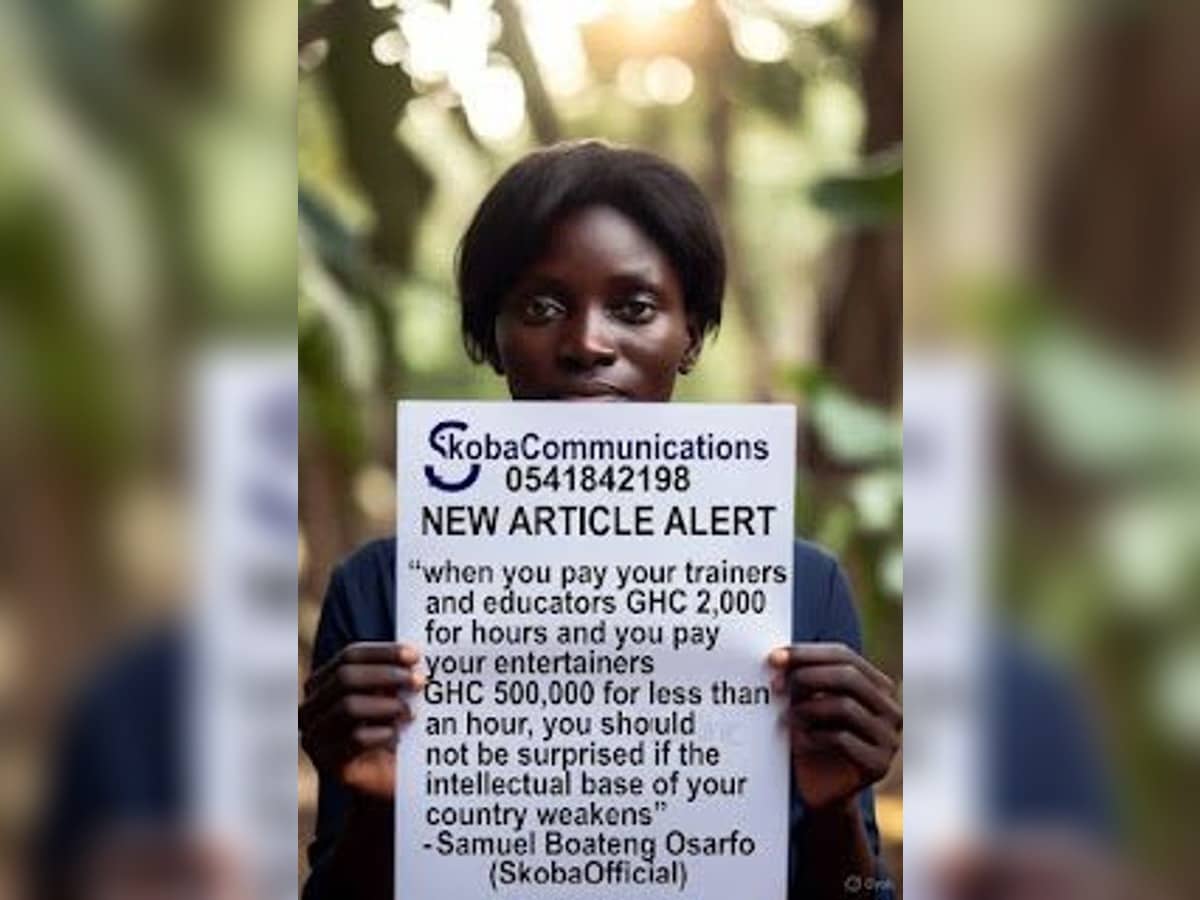
When entertainers earn GHS 500,000 for less than an hour’s work while educators earn GHS 2,000 after months of labour, it should come as no surprise that intellectualism is declining.
Intellectualism Goes Beyond Degrees
In Ghana, learning is often equated with the number of certificates one holds. While credentials matter, true intellectualism goes beyond academic attainment. It involves continuous learning, critical thinking, and curiosity beyond the lecture hall.
Intellectual growth thrives through reading widely, attending workshops, engaging in discussions, and contributing to social development. Until educated people embrace lifelong learning and assert the value of knowledge, this nation’s intellectual edge will continue to dull.
Conclusion
Let us make intellectualism socially and financially rewarding. Let us honour thinkers. Let us buy books. Let us attend lectures. Let us support platforms that foster idea-driven discourse. Let us stop creating societies that celebrate entertainers more than educators.
If you want to gauge just how weak our intellectual culture has become, start a non-entertainment-based intellectual platform—and watch how little attention it receives.
Samuel Boateng Osarfo
Marketing Communication Consultant | Author | Researcher
SkobaCommunications
0541842198
DISCLAIMER: The views, comments, and contributions made by readers or contributors on this website do not necessarily represent the position or views of The Sikaman Times. The Sikaman Times will not be responsible or liable for any inaccurate or incorrect statements made by readers or contributors on this website.
*****
Never miss out on the news. Get your valuable breaking news and other vital content by following The Sikaman Times on WhatsApp Channel
*****




![The Future of Non-Profit Funding: Navigating Financial Sustainability in a Shifting Economy [ARTICLE]](https://sikamantimes.com/wp-content/uploads/2026/03/ANPOS-ARTICLE-350x250.jpg)