Ghana is expected to channel US$10 billion into a new economic transformation programme between 2027 and 2030, as government seeks to move the economy beyond raw commodity exports towards industrial production, value addition and employment creation.
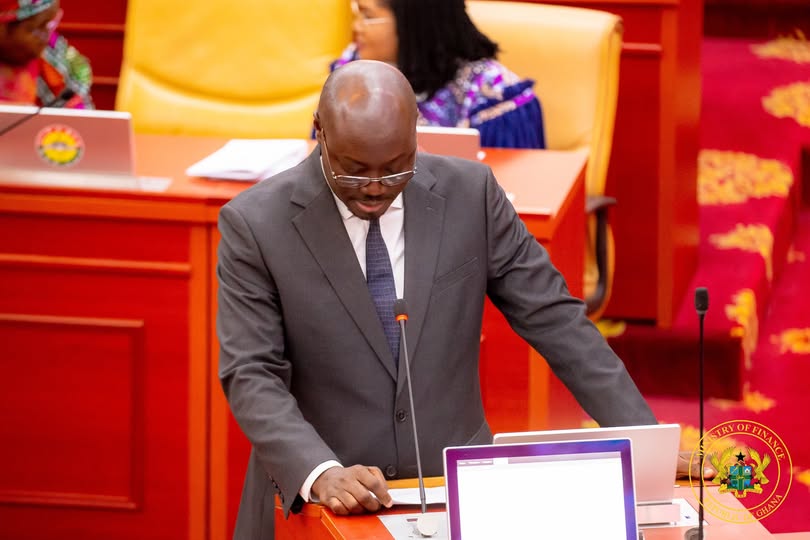
The proposed investment forms a central component of the 2027 Budget Statement and Economic Policy presented to Parliament by Finance Minister Dr Cassiel Ato Forson on Thursday, November 12, 2026.
The New Economy Programme is intended to use the macroeconomic stability achieved over the past two years as a foundation for building productive industries and creating sustainable jobs.
Dr Forson said the country’s next phase of development must focus on changing what Ghana produces, how it produces, what it exports and the value retained within the domestic economy.
“The next phase of the reset must therefore change the structure of our economy,” he told Parliament.
He explained that Ghana’s long dependence on raw commodities had contributed to economic vulnerability, with fluctuations in international commodity prices often affecting the exchange rate, inflation, interest rates and investment.
Under the programme, government has identified eight strategic pillars: macroeconomic stability and affordable finance, commercial agriculture, energy infrastructure, critical minerals value addition, tourism and creative arts, textiles and garments, pharmaceuticals and biomanufacturing, and the technology economy.
The programme will support investments in sectors considered critical to expanding domestic production and strengthening Ghana’s export capacity.
Among the major commitments are US$1.5 billion for critical minerals value addition, US$1 billion for tourism, culture and creative arts, US$1 billion for textiles and garments, and US$1 billion for pharmaceutical and biomanufacturing.
The energy pillar is expected to provide the infrastructure needed to support industrialisation, while the commercial agriculture component will strengthen food production, processing and market access.
The technology pillar is also intended to expand opportunities in digital innovation and technology-driven businesses.
Dr Forson stressed that the programme would not be measured simply by the volume of money invested but by its contribution to employment, productivity and national development.
“We will judge growth by the jobs it creates, the incomes it raises and the productive capacity it leaves behind,” he said.
He added that public investment must be carefully assessed to ensure that projects deliver economic value and attract private capital rather than displace it.
The government also intends to use the Ghana Sovereign Wealth Fund as an equity partner in viable projects under the 24-Hour Economy and Accelerated Export Development Programme.
The wider objective is to reduce Ghana’s dependence on imported finished goods, retain more value from its natural resources and build industries capable of competing in regional and international markets.