At least 100,000 young Ghanaians are expected to benefit from employment opportunities under the Youth Employment Agency (YEA) in 2027, following government’s announcement of plans to expand the agency’s employment modules.
The proposed expansion represents an increase from the 73,537 young people engaged through 13 employment modules in 2026.
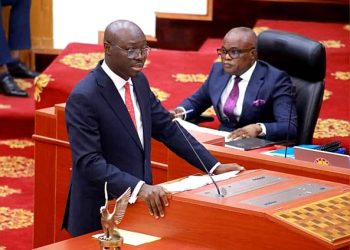
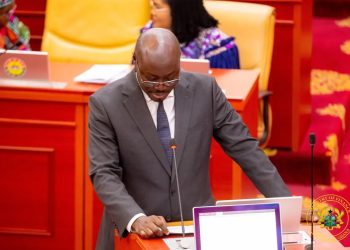
Finance Minister Dr Cassiel Ato Forson announced the target when he presented the 2027 Budget Statement and Economic Policy to Parliament on Thursday, November 12, 2026.
The expansion forms part of government’s broader efforts to address youth unemployment and improve the transition from education and training into the labour market.
“To advance job creation and employability, the Ministry, through the Youth Employment Agency, engaged 73,537 young people across 13 employment modules,” the Minister said.
“In 2027, the Ministry will expand its employment modules to cover at least 100,000 beneficiaries.”
The initiative is expected to widen access to employment opportunities while strengthening the agency’s role in developing the employability of young people.
Government is also targeting improvements in the transition from school to work through the National Service Authority’s Work Readiness and Leadership Programme.
The programme is designed to equip national service personnel with essential soft skills to improve their preparedness for the workplace.
According to the budget, the curriculum has been developed, with training expected to commence in November 2026.
In another intervention, government has developed a Youth Start-Up Bill aimed at establishing a comprehensive framework for the creation, development and promotion of start-up businesses.
The Ministry of Youth Development and Empowerment is also expected to complete the second phase of construction works on three Youth Resource Centres at Axim, Ho and Dunkwa-on-Offin in 2027.
The centres, being developed under the Aspire 24 initiative, will provide facilities including astro turfs, counselling centres and training facilities to support youth development.
Beyond direct employment programmes, government is seeking to expand opportunities through industrial investments under the New Economy and 24-Hour Economy programmes.
These include investments in textiles and garments, pharmaceutical manufacturing, commercial agriculture, technology and critical minerals processing.
The budget also reported that the Labour Department placed 11,474 registered job seekers in local vacancies through private employment agencies and public employment centres during the period under review.
Meanwhile, the Department of Co-operatives registered 760 co-operatives, trained 27,514 members and sensitised 937 communities and groups, with further programmes planned for 2027.