Ghana’s 2027 Budget contains ambitious plans for industrialisation, infrastructure development and job creation, but its reliance on state-directed investment, import restrictions and preferential procurement could undermine the government’s objective of building a private-sector-led economy, the ILEE Policy Institute has warned.
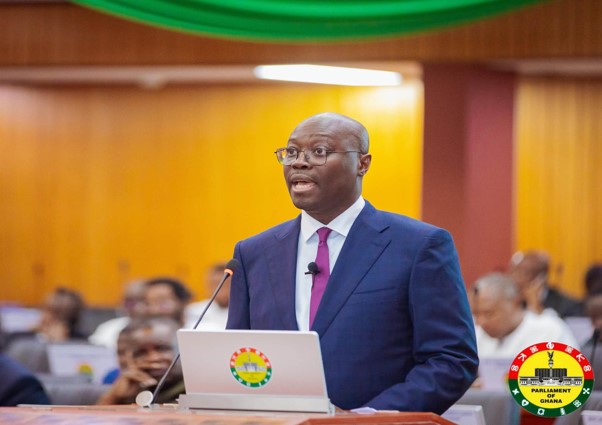
In an assessment of the 2027 Budget Statement, presented to Parliament on November 12, the think tank said the government must focus on translating recent macroeconomic improvements into sustainable private investment, productivity growth and improved living standards.
The budget, themed “The New Economy, New Ghana, Jobs and Prosperity”, outlines major interventions in agriculture, energy, critical minerals, technology, healthcare and infrastructure.
However, the institute argued that the success of the proposals would depend more on implementation, fiscal discipline and the role of private enterprise than on the scale of government announcements.
“The 2027 Budget builds on recent macroeconomic gains, but stability is a foundation for growth, not a substitute for it,” the institute stated.
It acknowledged improvements in key economic indicators, noting that inflation had moderated to 5.5 per cent by October 2026, while public debt stood at approximately 47.5 per cent of GDP.
The cedi, however, had depreciated by about 10.1 per cent against the US dollar year-to-date, while gross international reserves reached approximately 4.5 months of import cover by the end of September.
For 2027, government is targeting economic growth of 5.2 per cent, non-oil growth of 5.7 per cent, inflation of eight per cent and international reserves sufficient to cover at least six months of imports.
The institute cautioned that lower inflation and improved debt indicators should not be mistaken for a complete resolution of Ghana’s economic challenges.
“The real test is whether macroeconomic stability can be converted into sustained private investment, productivity growth and improved living standards,” it said.
On fiscal management, the institute expressed concern about the pressure of debt servicing on government expenditure, particularly the projected GH¢61 billion interest bill, comprising GH¢51.5 billion in domestic interest and GH¢9.5 billion in external interest.
It noted that total revenue and grants were projected at GH¢323.1 billion, against expenditure of GH¢375 billion on a commitment basis and GH¢389.2 billion on a cash basis.
The institute urged government to strengthen revenue mobilisation through improved tax administration, a broader tax base, reduced unjustified exemptions and measures to address revenue leakages, without placing excessive pressure on compliant businesses.
It also called for transparency and independent monitoring of major government programmes, including the GH¢27.8 billion Big Push programme and the GH¢30 billion New Economy programme.
On industrialisation, the institute supported efforts to increase local production and value addition but cautioned against excessive protectionism.
It argued that restrictions on food imports before domestic producers can supply affordable and quality alternatives could increase food prices and hurt consumers.
Similarly, it warned that restrictions on exports of critical minerals such as manganese, bauxite, lithium and gold must be carefully sequenced to avoid discouraging investment and creating opportunities for smuggling.
The institute also questioned the expansion of state ownership in the energy sector without addressing longstanding financial and governance challenges.
“Private-sector participation, transparent contracts and financially disciplined utility management should be central to reform,” it recommended.
On the broader economic direction, the institute identified a tension between government’s ambition to establish a private-sector-led economy and its reliance on state-directed investment, public ownership and preferential procurement.
“A genuinely competitive market economy requires predictable laws, secure property rights, open markets, access to finance, efficient regulation and the freedom for entrepreneurs to identify opportunities,” it said.
It maintained that government should concentrate on providing essential public infrastructure and creating an enabling business environment rather than determining which industries and businesses should succeed.
The institute outlined five priorities for government: protecting fiscal credibility, making the private sector the principal engine of industrialisation, prioritising productivity over protectionism, strengthening transparency and accountability, and measuring development through tangible outcomes.
It stressed that employment, household incomes, productivity, export diversification and access to quality healthcare should be used to assess the budget’s performance.
“Ghana’s development challenge is not a shortage of government programs. It is the persistent difficulty of converting public resources into productive capacity, competitive businesses and sustainable employment,” the institute said.
It concluded that the success of the 2027 Budget should ultimately be measured by whether it delivers more productive businesses, better-paying jobs, stronger institutions and improved living standards.
“A new economy requires more than new spending. It requires a new discipline in how the state governs, how markets function and how the nation creates wealth,” it added.