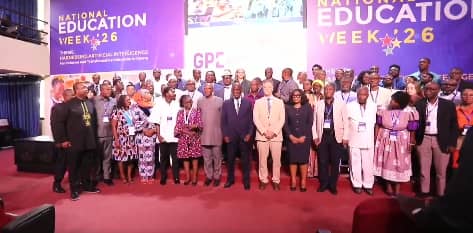
As artificial intelligence rapidly enters classrooms and lecture halls, education leaders, researchers and university panellists at the 2026 National Education Week have warned that Ghana cannot rely on AI to fix longstanding structural weaknesses or replace critical thinking.
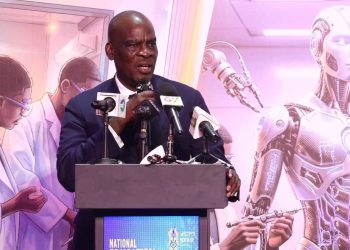
Delivering the keynote address, Dr. Ekua Bentil of the World Bank Group noted that generative AI is spreading faster than formal policies, reaching students and teachers directly and reshaping classrooms and global labour markets.
While highlighting the potential of tailored tools, offline-capable small language models and initiatives such as Rory, UNICEF’s AI-powered WhatsApp maths tutor in Ghana, she stressed that basic electricity, connectivity, teachers’ digital skills and evaluation evidence remain decisive.
Dr. Bentil urged policymakers to treat AI as a tool for human empowerment rather than a shortcut that erodes “cognitive struggle” and deep comprehension.
“With great power comes great responsibility. AI is powerful, but you, the policy makers here, are more powerful. The teachers are more powerful. What we do with this power is our responsibility. We owe it to Ghana’s children and youth,” she stated.
During a tertiary education panel moderated by Kwame Nyantekyi-Owusu, speakers examined how universities can prepare graduates for an AI-shaped workforce without sacrificing intellectual rigour or quality assurance.
Kwesi Crankson of Academic City University argued that institutions cannot ban AI outright but should instead teach its responsible use from Level 100. He cited introductory AI and Python courses, alongside a shift towards practical, project-based examinations, as ways of preparing students for the changing workplace.
“Use AI to generate something that will be the skeleton of whatever you are looking at, and then your understanding of the concept which we have taught you should be the flesh that you put onto the skeleton to get a full human being,” Crankson said.
Prof. Gordon Tetteh challenged universities to measure real-world value and graduate employability rather than focus solely on certificate completion. He called for stronger quality assurance, tracer studies and an emphasis on measurable problem-solving outcomes.
Meanwhile, Prof. Gordon Adomdza of CEIBS Africa emphasised that graduates need fluency in relevant tools, ethical judgement and an understanding of local contexts. He also noted that he chairs a Ghana Tertiary Education Commission (GTEC) committee working on a national policy for responsible AI use in tertiary education.
“Ghana needs the right AI for the right educational purpose under the right safeguards, producing measurable learning outcome, innovation and workforce value,” he observed.
Panellists and participants also called for greater representation of African realities and local data online to ensure AI systems reflect Ghanaian and broader African contexts accurately, rather than leaving communities behind.