The Christian Council of Ghana (CCG) has called for greater responsibility and theological integrity in the delivery of prophecies, following a wave of conflicting predictions surrounding the New Patriotic Party’s recent presidential primaries.
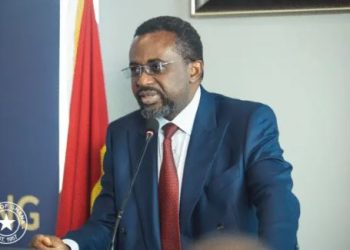
In a statement issued on Tuesday, February 24, 2026, signed by its General Secretary, Rev. Dr. Cyril Fayose, the Council expressed concern over the numerous prophecies that preceded the January 31 polls of the New Patriotic Party (NPP), which saw former Vice President Mahamudu Bawumia re-elected as flagbearer.
While some prophets correctly predicted the outcome, others forecast entirely different results—raising what the Council described as a troubling theological contradiction.
The CCG posed a pointed question: how can the same God reveal different outcomes of the same event to different prophets?
According to the Council, unchecked political prophecies risk portraying God as inconsistent, confused, or indecisive. “Is God concerned only with the outcomes of elections in Ghana?” the statement asked, urging religious leaders to also focus on issues of governance, socio-economic justice, and the welfare of citizens—particularly in the face of challenges such as the country’s persistent “no bed syndrome” in hospitals.
While affirming the constitutional right to freedom of religion under Article 21 of the 1992 Constitution, the Council stressed that religious liberty must be exercised with civic responsibility. It cautioned that prophecies capable of generating fear, panic, or social unrest may fall foul of the law.
The statement cited Section 208 of the Criminal Offences Act, 1960 (Act 29), which criminalises the publication of false statements likely to cause fear and alarm, carrying penalties of fines or up to five years’ imprisonment. It also referenced provisions in the Electronic Communications Act, 2008 (Act 775), which prohibit the transmission of false or misleading information via electronic platforms.
“Any prophecy that proves palpably false, misleading, and capable of generating fear or panic exposes its author to potential legal consequences,” the Council warned.
The CCG acknowledged that it does not exercise oversight over all prophets in the country, particularly those unaffiliated with bodies such as the Ghana Pentecostal and Charismatic Council (GPCC) and the National Association of Charismatic and Christian Churches (NACCC). Nonetheless, it urged religious leaders across the spectrum to uphold decorum and promote teachings that foster peace, patriotism, and ethical values.
The Council further called on prophetic voices to focus on confronting corruption, nepotism, intolerance, and poor governance, rather than limiting their messages to electoral outcomes.
Quoting 1 Thessalonians 5:20–21—“Do not treat prophecies with contempt but test them all; hold on to what is good”—the CCG emphasised that authentic prophecy must withstand scriptural scrutiny and promote the common good.