The need to improve, protect the public against incompetent and dishonest practitioners, and improve the quality of the service for those receiving it justifies the emergence of occupational licenses. In Ghana, most professions require permission to enter or licence, including teaching, whose licence commenced in 2018. This article would discuss how occupational licensure is becoming a barrier to poverty reduction and why teacher’s licensure should be abolished.
According to Kleiner M. Morris, occupational licencing is defined as a process where entry into an occupation requires the permission of the government, and the state requires some demonstration of a minimum degree of competency.
The subject of occupational licences has a long history in economics, as Adam Smith points out in his book, ‘Wealth of Nation’, the lengthening of apprenticeship programmes and limiting the number of apprentices per master, thus ensuring higher earnings for persons in these occupations.
Occupational licencing creates a regulatory barrier to entry into licenced occupations or professions, and this helps to protect the public interest by keeping incompetent and unscrupulous people from working with the public. Licensing protects the function of an occupation, such that it is illegal for any unlicensed individual to work as, or do any task conducted by, a licensed worker.
Occupational licences affect a number of occupations in Ghana, including Lawyers, Pharmacists, Nurses, Doctors, Architects, Accountants, and more recently, Teachers. Most sceptics have argued that the justification for an occupational licence includes an increase in quality and a greater level of training; however, in reality, improved quality is very thin and nonexistent.
In our case, the goal of achieving quality teachers and ensuring better teachers for students can be achieved through certification rather than an occupational license. Improving the quality of lecturers, learning facilities, and infrastructure in colleges of education would ensure the certification of quality teachers in Ghana. Therefore, by undergoing quality training and education as a prospective teacher, you must be well-equipped and reduce the tendency for barriers to poverty reduction.
The tendency for abuse by occupational licence regulatory authorities like the National Teaching Council may also exist. Regulations can also be motivated by rent-seeking, meaning that they serve the interests of those in the occupation or the government. The process of acquiring an occupational licence in Ghana is fraught with a myriad of challenges. General pertinent among them are uncoordinated or disjointed inspection by agencies, the absence of an electronic platform to aid the process of application, inadequate human resources at the respective agencies to facilitate efficient service delivery, a lack of awareness by applicants on the processes and procedures for application, and inadequate financial resources to facilitate service delivery—a situation compounded by the lack of retention of user fees, as such fees are paid into the Consolidated Fund.
In 1993, Dr. Mary Ruwart noted how licencing limited the number of taxi drivers and home child-care providers while increasing the prices charged by those still legally permitted to create wealth in those professions in the USA. The Chief Justice (CJ) of Ghana, Sophia Akuffo, openly declared amidst applause that she will not allow the “mass production” of lawyers. During her time as CJ, we witnessed the mass failure of LLB candidates in 2019, where out of 1820, only 128 passed to get admission to the Ghana School of Law. Prof. Stephen Kwaku Asare (Kwaku Azar) described this unfortunate incident of mass failure as’statistically anomalous, economically imprudent, legally problematic, ethically questionable, and proof beyond reasonable doubt that we have a classic case of regulatory failure’.
In addition, a media report in Ghana mentioned Dr. Richard Abrahamani Seidu, a neurosurgeon trained in China, who had settled to become a taxi driver just because he could not acquire a licence to practice in Ghana. Dr. Seidu has been battling a licence application since 2015 from the Medical and Dental Council. This real-life situation, among others, in access to occupational licences may have the tendency to reduce the income level of people, hence creating poverty.
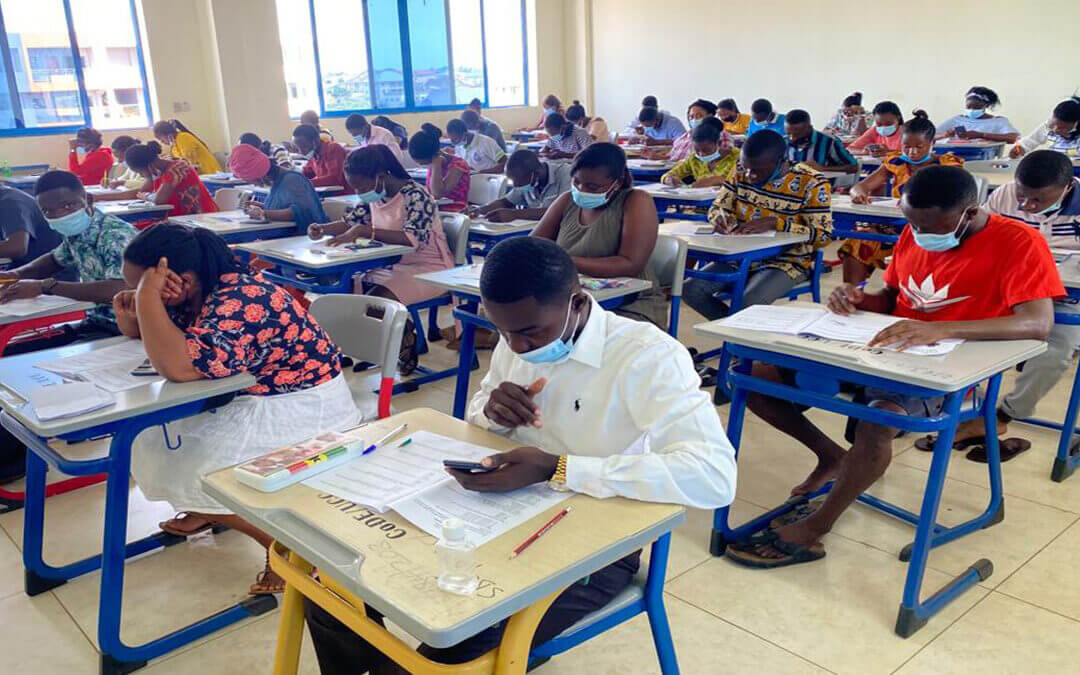
Perhaps we are ignoring the regulatory power and the tendency to abuse the same power by individuals who will be mandated to issue regulatory licences for occupations. In the case of our teachers, the National Teaching Council organises licensure exams, which require teachers who have graduated from colleges of education and universities to pay fees to register for the exams and pass them before practicing their profession.
Therefore, the call by John Dramani Mahama, leader of the opposition National Democratic Congress, to cancel the teacher’s licensure exams is one that would remove barriers and hinderances preventing prospective teachers from practicing their profession after years of education. This is also critical to reducing poverty by removing barriers, including abuse of power, corruption, and administrative bottlenecks.
We all agree with the fact that we need quality teachers. However, instituting a licence does not guarantee quality teachers. The art of teaching is a comprehensive endeavour, and a single sit-down exam falls short of ways to find quality teachers. How do you ensure the punctuality of teachers, prevent teacher absenteeism, quality of teaching methods, and presentation skills of teaching, among others? Therefore, having a holistic system that would check on teachers, ensure continuous monitoring, and overall maintain and improve the quality of teachers in Ghana is preferable to the licensure exams. The research work of Samuel Baah-Doudu, which surveyed about two thousand seven hundred and forty-two (2,742) prospective teachers, did not provide sufficient information to determine the extent to which the licencing exam enhances prospective teachers’ teaching skills and efficacy.
In conclusion, teachers must support what would allow greater freedom for their profession, and the cancellation of licensure examinations is a significant impediment to teachers’ freedom and right to work. It is critical to stress that the poor father, who has struggled to put his children through teacher training, would not be able to afford unofficial costs to acquire a licence or have any connections.
Article by
Nathaniel Dwamena

He is a free-market policy analyst and president of the YAFO Institute. He engages in activities that promote civil liberty and economic freedom in Ghana. He has a background in law, geography, and economics.



![Project Finance: Ghana’s Untapped Key to Infrastructure Development [ARTICLE]](https://sikamantimes.com/wp-content/uploads/2026/02/Eunice-Kaanye-350x250.jpeg)