Ghana has introduced a biometric tracking system as part of efforts to strengthen border security while facilitating legitimate trade under the African Continental Free Trade Area (AfCFTA), the Minister for the Interior, Hon. Muntaka Mohammed-Mubarak, has announced.
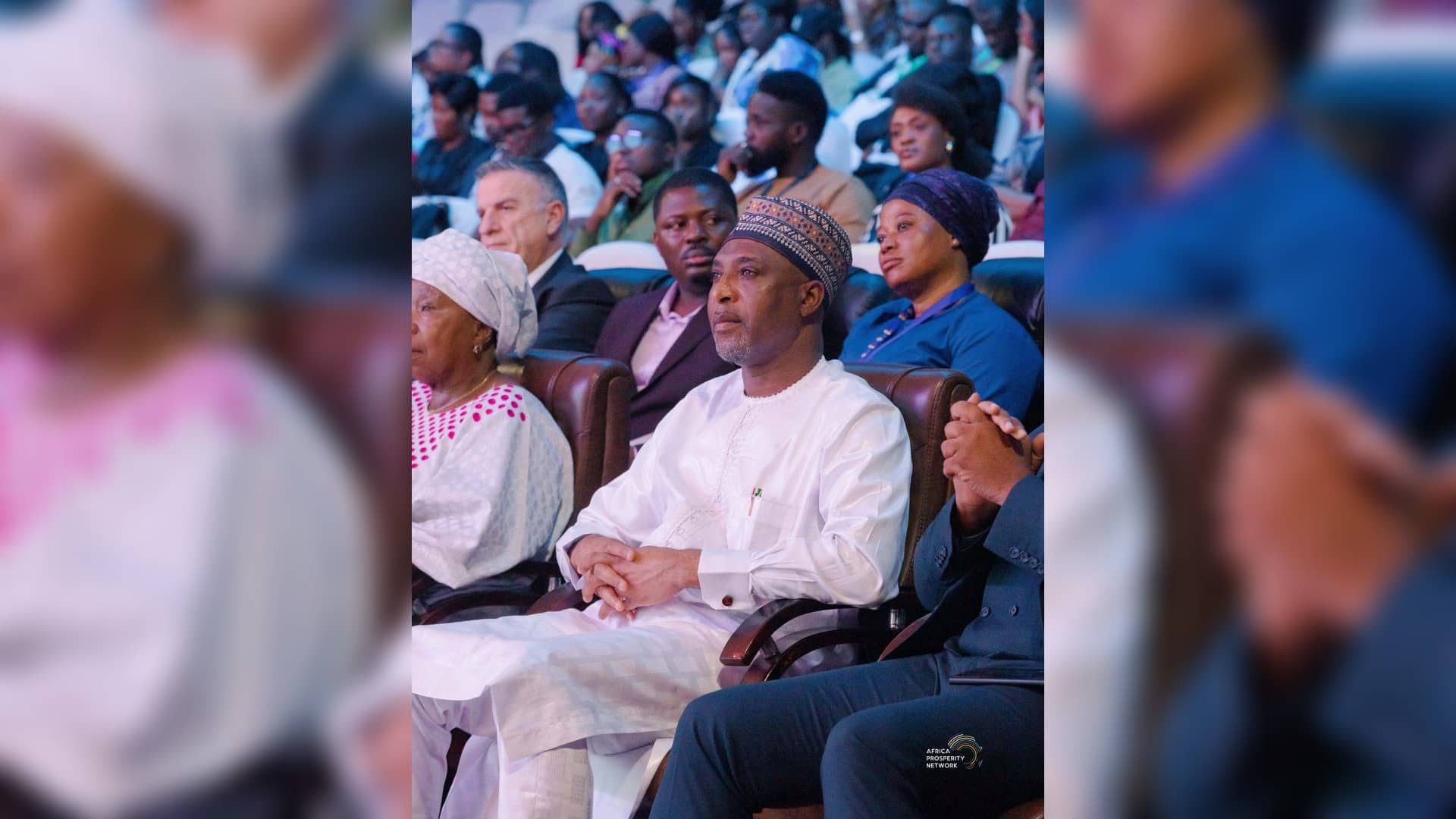
Speaking at the second day of the 2026 Africa Prosperity Dialogues (APD) at the Accra International Conference Centre (AICC) on Thursday, 5 February 2026, the Minister said Africa’s ambition to transform borders from barriers into bridges for shared prosperity must be matched with smarter, intelligence-driven border management.
“We meet at a time when the promise of the AfCFTA must move decisively from policy to practice… and from borders as barriers to borders as bridges for shared prosperity,” he said.
Hon. Muntaka rejected the view that security and free movement are competing goals, stressing that both are mutually reinforcing.
“Without security, trade cannot flourish, and without orderly mobility, integration cannot succeed,” he noted.
Using Ghana as an example, the Minister highlighted the scale of Africa’s border management challenges.
“In Ghana, we have 48 legitimate crossing points, yet there are over 250 unapproved crossing points,” he revealed, linking weak controls to threats such as trafficking, terrorism, narcotics trade, cybercrime, and other illicit flows.
To address these risks without undermining mobility, the government has rolled out a biometric passenger tracking system. Since November 2025, the system has enabled authorities to identify passengers boarding flights and their seating arrangements before takeoff. Plans are underway to extend the technology to land, sea, and other entry points, shifting enforcement from blanket controls to targeted, risk-based interventions.
“The answer lies in risk-based, intelligence-led border management,” Hon. Muntaka said, explaining that data analytics, real-time information sharing, and joint operations can support trade while intercepting security threats.
The Minister also drew attention to the difficulties faced by small and medium-sized enterprises (SMEs), particularly those led by women and young people, who form the backbone of cross-border trade.
He said delays, harassment, excessive documentation, and fragmented enforcement at borders continue to raise costs and weaken competitiveness.
“These frictions raise costs, weaken competitiveness, and undermine the very objective of AfCFTA,” he stated.
To reduce these barriers, the Interior Ministry is working with the Ministry of Trade, customs authorities, and security agencies to streamline procedures, establish grievance mechanisms, and promote regional cooperation. He cited harmonised protocols and one-stop border posts as practical measures already reducing delays and corruption.
Hon. Muntaka further called for a continental biometric identity system under the African Union, linking national digital IDs to shared standards to enable real-time traceability and efficient processing.
“A borderless Africa does not mean borderless security; it means smart borders,” he said.