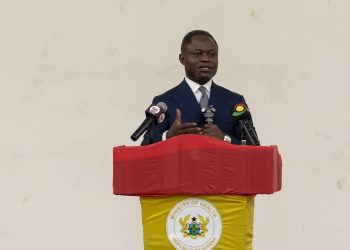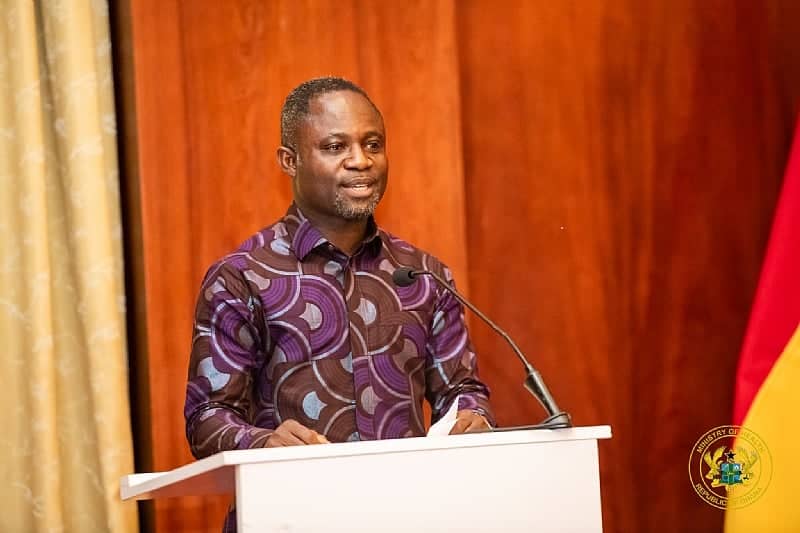
The government has increased the deployment of medical officers to underserved regions from 12 in 2024 to 100, Health Minister Kwabena Mintah Akandoh has disclosed.
The Minister said the move formed part of efforts to address disparities in access to medical services and ensure that health professionals were distributed more equitably across the country.
Speaking at a stakeholder engagement on Wednesday, Mr Akandoh said only 12 medical officers had accepted postings to eight underserved regions when he assumed office.
“When I took office, 12 medical officers accepted postings to eight regions,” he said. “What it means is that in a region they couldn’t even get more than two medical doctors.”
He said the government subsequently intensified efforts to deploy medical officers to underserved areas, resulting in the current figure of 100.
“As I speak to you now, we have 100 medical officers doing the same thing,” he said.
The Minister acknowledged concerns raised by medical officers about accommodation and other working conditions in the areas to which they had been posted.
He, however, said such challenges should be addressed alongside deployment rather than being used as a reason to delay the distribution of health professionals.
“There are legitimate issues, and I agree with them. Legitimate issues about accommodation. I agree with them,” Mr Akandoh said.
“But then, let’s be realistic. We cannot say that we solve all these problems before we deploy them to these areas. So whilst we are deploying them, government must also think about how we solve those problems.”
He said the government was therefore encouraging local authorities and Members of Parliament to support efforts to provide accommodation for medical officers posted to underserved communities.
The Minister disclosed that one institution had already offered to construct accommodation for doctors deployed to underserved areas.
He said the institution had committed to providing 10 two-bedroom units free of charge.
Mr Akandoh appealed to district-level authorities and legislators to replicate such initiatives to make underserved postings more attractive to health professionals.
He rejected suggestions that the postings were intended as punishment for medical officers.
“It is not a punishment,” he said. “We don’t have the right in punishing you.”
The Minister said the policy was necessary because communities in less-developed areas were entitled to the same access to healthcare as people in major urban centres.
He cited the contribution of rural communities to Ghana’s economy, arguing that people in such communities should not be denied access to medical care simply because they live far from developed urban centres.
Mr Akandoh also disclosed that the government was decentralising postgraduate medical training to reduce the need for health professionals to travel long distances to access specialist training.
He said training was being extended to locations including Wa, Bolgatanga and Ho, as part of efforts to improve access to postgraduate medical education.
The Minister said the combination of improved training, deployment and infrastructure was intended to strengthen healthcare delivery outside Ghana’s major urban centres.