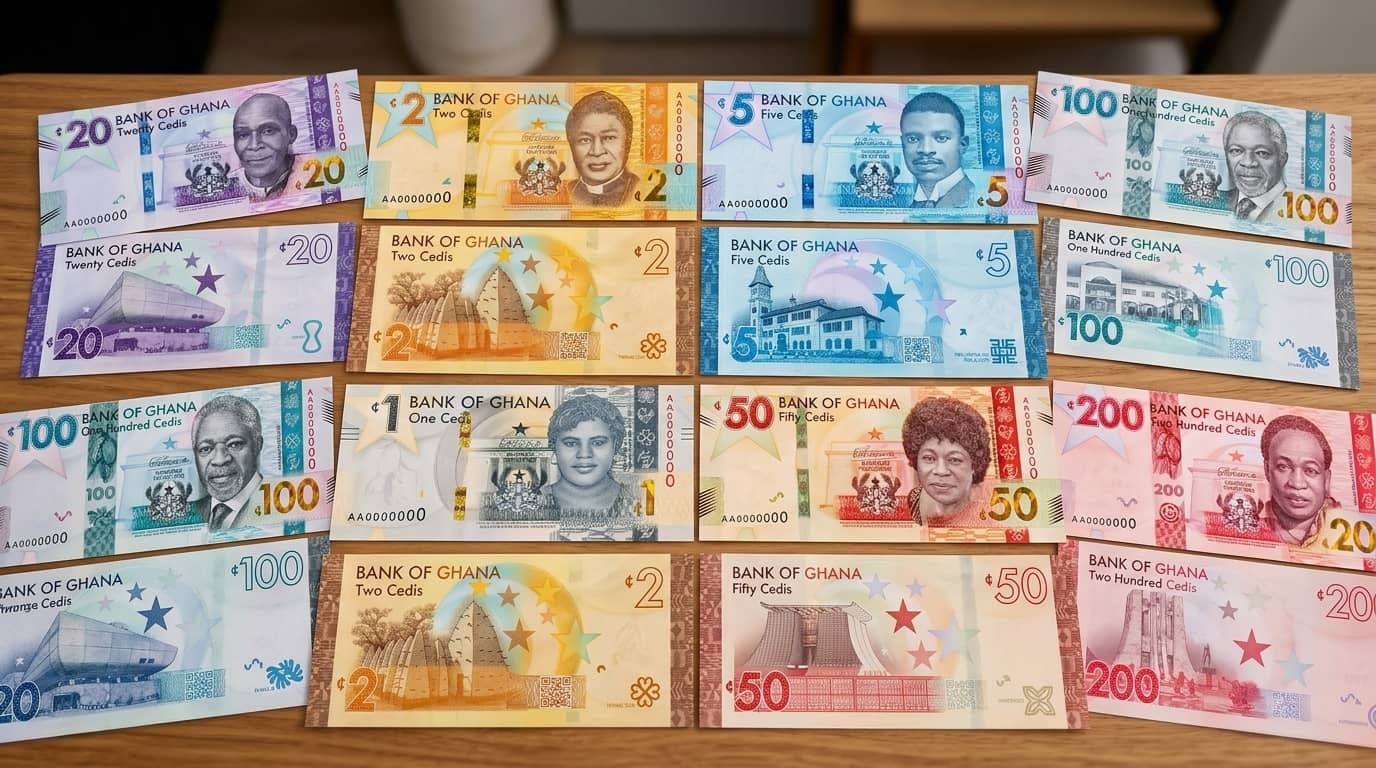
The Bank of Ghana (BoG) has unveiled a new series of Ghana Cedi banknotes featuring enhanced security features, improved durability and smaller, more portable designs as part of efforts to modernise currency management and strengthen public confidence in the national currency.
The new notes, known as the Ghana Cedi Heritage Series, were officially launched by President John Dramani Mahama on Thursday, November 12, 2026, at the Bank Square in Accra.
The series comprises GH¢1, GH¢2, GH¢5, GH¢10, GH¢20, GH¢50, GH¢100 and GH¢200 denominations.
Speaking at the launch, Governor of the Bank of Ghana, Dr Johnson Pandit Asiama, said the upgraded banknotes were designed to reinforce currency security, improve convenience in everyday transactions and promote national pride.
“The Heritage Series incorporates enhanced security features, and this is to strengthen protection against counterfeiting and to help the public to identify genuine banknotes more easily,” he stated.
According to him, the improved durability is intended to help the notes withstand Ghana’s climatic conditions and frequent handling, thereby extending their lifespan in circulation.
He added that the smaller sizes would make the notes easier to handle and carry, reflecting the changing needs of businesses and consumers.
Dr Asiama explained that the introduction of the new notes was not merely about changing their physical appearance but formed part of broader efforts to strengthen the systems supporting currency management.
He disclosed that the Bank had developed an Enterprise Currency Operations Management Software (ECOMS) entirely in-house to improve coordination and operational efficiency in currency management.
The software, he said, had attracted interest from other central banks seeking to learn from the Bank’s innovation.
The Governor also announced plans to establish new cash centres at the Bank’s Ho and Tamale regional offices to bring currency services closer to the public.
Additionally, the Bank is launching a Cedi application designed to help users understand the security features of the new banknotes and assist persons with visual impairments.
The Heritage Series will officially enter circulation on December 1, 2026, and will circulate alongside the existing banknotes, which will remain legal tender.
Dr Asiama stressed that the transition would be gradual to allow individuals and businesses to adjust without unnecessary disruption to economic activities.
“Permit me to emphasise that the existing series remain legal tender; they will circulate alongside the Heritage Series for a while,” he said.
On measures to combat counterfeiting, the Governor disclosed that the Bank was working with stakeholders on a new Currency Act to replace the Currency Act, 1964 (Act 242).
The proposed legislation is expected to strengthen provisions against counterfeiting, establish clear procedures for detecting and handling counterfeit notes, and provide legal backing for efforts to prevent the mutilation and abuse of banknotes and coins.
He warned that the proposed framework would introduce tougher penalties for offenders, stressing that “counterfeiting will soon become a very, very, very painful experience.”
The Bank will also embark on a nationwide public education campaign in major local languages to educate Ghanaians on identifying genuine notes and handling currency responsibly.
President Mahama, in his keynote address, commended the Bank’s leadership and staff for the initiative, describing the Cedi as an enduring expression of Ghana’s economic sovereignty.
He noted that the new notes were made of reinforced cotton paper and designed to last longer than the existing banknotes.
The President also highlighted the importance of maintaining physical cash alongside digital payment systems, particularly during disruptions to electronic payment networks.
He urged Ghanaians to protect the currency and demonstrate confidence in the national monetary system.
The launch forms part of the Bank of Ghana’s preparations towards its 70th anniversary in March 2027.