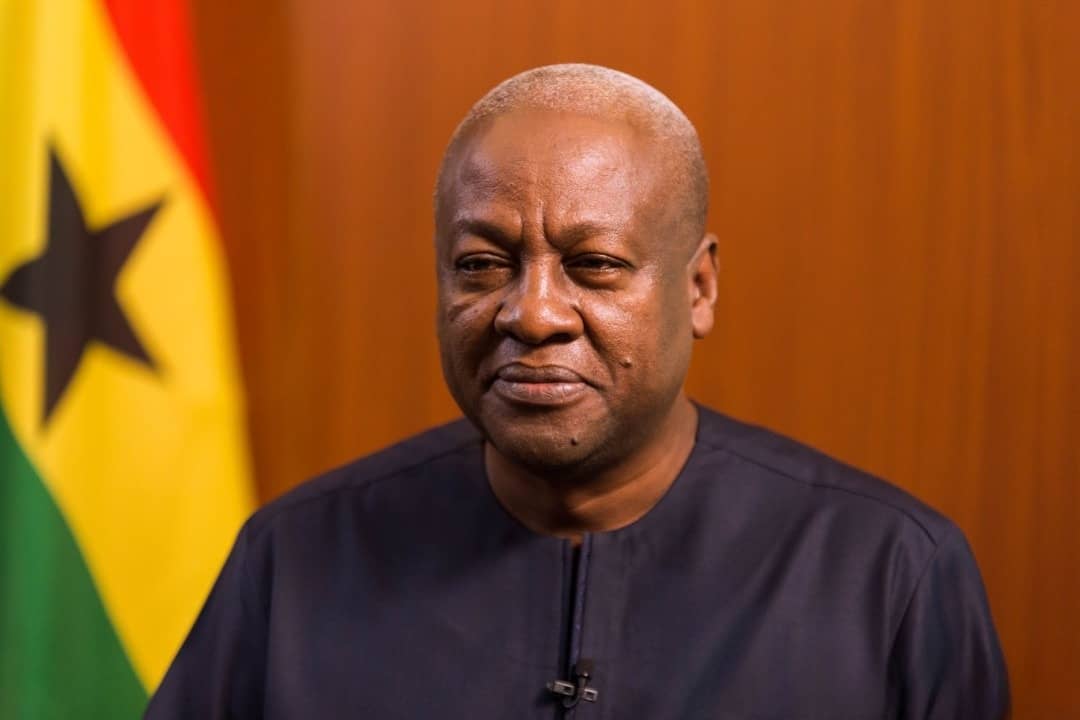
President John Dramani Mahama has strongly defended the introduction of the TraffiTech-GH automated traffic enforcement system, urging motorists unhappy with the penalties to comply with speed limits rather than complain about the cost of fines.
The President maintained that motorists who observe prescribed speed limits have nothing to fear from the system, insisting that the primary objective of the technology is to reduce road accidents and save lives.
“If it is too expensive, then do not speed, and so there is a solution to that. The maximum speed in town is 50km/h. However good the road is, you do the 50km/h. If you do that, you are fine, and you will not have to pay anything,” he said.
Mr Mahama made the remarks in an interview with the press on the sidelines of the 2026 Commonwealth Heads of Government Meeting (CHOGM) at Jumby Bay Island in Antigua and Barbuda.
His comments come amid growing public opposition to the implementation of TraffiTech-GH, with some motorists and transport operators questioning the timing of the rollout, the cost of penalties and the state of road infrastructure.
Some driver unions have also raised concerns about the system, arguing that government should address deteriorating roads, malfunctioning traffic lights, inadequate road markings and missing road signs before introducing automated traffic enforcement.
However, President Mahama rejected suggestions that the enforcement system should be delayed until Ghana’s roads are in perfect condition, arguing that road infrastructure improvements and traffic law enforcement could proceed simultaneously.
“My understanding is that TraffiTech has begun with overspeeding; they have not yet added the other components of jumping red lights, parking wrongly,” he said.
Responding to calls for government to fix the roads before introducing the technology, he added: “I mean, it doesn’t happen like that. The roads are not perfect in the UK, and yet they have speed cameras.”
The President nevertheless acknowledged the importance of transparency in the implementation of the system and directed the Ghana Police Service and other agencies responsible for its operation to install clear warning signs ahead of speed camera locations.
He said motorists must be adequately informed when approaching areas monitored by the cameras to ensure that the enforcement process is transparent.
“All I will urge is that the police and those implementing TraffiTech should put signs showing where the cameras are, because that is one of the things you need to do if you are introducing this kind of innovation,” he said.
“You need to put signposts, warning motorists, that there is a speed camera ahead. I think that transparency is important,” he added.
Mr Mahama further defended the system by highlighting the dangers of speeding, particularly to schoolchildren and other vulnerable road users.
He said the number of children knocked down by vehicles while returning from school, resulting in deaths and permanent disabilities, underscored the need for stronger measures to enforce speed limits.
“If you look at the number of children knocked down every year in Ghana when they are coming from school, you will understand why it is important for us to check over speeding. Children coming from school are knocked down and killed or permanently injured, and so it is important for us to check speeding,” he said.
The President maintained that road safety interventions should not be postponed on the grounds that the country’s road network requires further improvement, stressing that preventing avoidable deaths and injuries must remain a priority.
TraffiTech-GH, introduced by the Motor Traffic and Transport Department (MTTD) of the Ghana Police Service on November 1, 2026, uses automated camera technology to detect traffic violations.
The initial phase focuses on speeding offences, while other violations, including jumping red lights and illegal parking, are expected to be incorporated into subsequent phases.
The system forms part of efforts to strengthen traffic law enforcement through technology and improve compliance with road safety regulations.