President John Dramani Mahama has renewed Ghana’s call for reparatory justice for the transatlantic slave trade and racialised chattel enslavement, arguing that meaningful repair must extend beyond historical acknowledgement to reforms addressing economic inequalities affecting Africa.
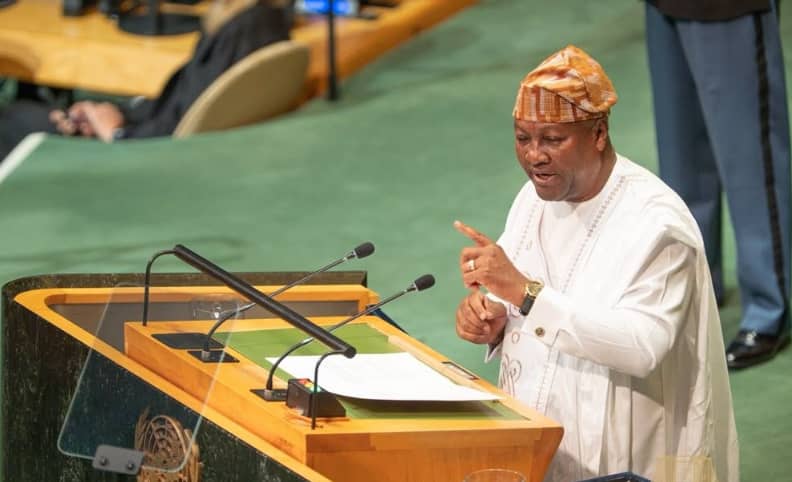
Addressing the 81st Session of the United Nations General Assembly in New York on September 24, 2026, Mr Mahama said Ghana’s campaign for international recognition of the historical crimes against Africans was intended to promote truth, acknowledgement and meaningful repair.
“True healing requires truth; truth requires acknowledgement; and acknowledgement must lead to meaningful repair,” he told the Assembly.
The President recalled that Ghana had tabled Resolution A/RES/80/250 at the General Assembly on March 25, 2026, on the International Day of Remembrance of the Victims of Slavery and the Transatlantic Slave Trade.
He said 123 countries voted in favour of the resolution, which affirmed that the transatlantic slave trade and chattel enslavement constituted the gravest crimes against humanity.
According to Mr Mahama, the consequences of the historical system remain visible in contemporary economic and social structures, including systemic racism and economic marginalisation.
“That resolution was not a mere gesture. It was adopted because the structural legacies of those historic crimes continue to fuel systemic racism, economic marginalisation, and a global financial architecture weighted against Africa and people of African descent,” he said.
He said Ghana welcomed positive moves by countries and institutions, including the Netherlands, Germany and France, to engage in discussions on reparatory justice and restitution.
However, he argued that reparations should also involve changes to international economic arrangements that continue to limit Africa’s ability to derive greater value from its resources.
“Real repair demands structural transformation,” Mr Mahama said.
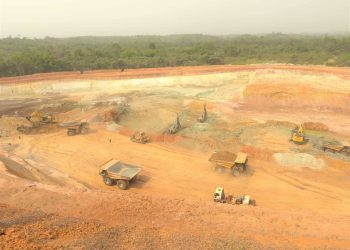
He identified unfair global trade regimes, predatory resource extraction, discriminatory credit ratings, unsustainable debt burdens and the continued export of raw materials from Africa without sufficient local value addition as areas requiring reform.
The President said Africa should be able to process its natural resources domestically, build industries and create jobs rather than remain primarily an exporter of raw materials.
He also linked the issue to reform of the international financial architecture, noting that developing countries often face significantly higher borrowing costs than industrialised economies.
“Africa does not seek charity. Africa seeks equal partnership anchored in mutual respect,” he said.
Mr Mahama said Ghana would continue to advocate for a global system in which historical injustices are acknowledged while contemporary economic relationships are restructured to promote greater equity, value creation and development opportunities for African countries.