The rapid growth of mobile money and digital financial services has improved access to financial transactions in Ghana but has not fully addressed the challenge of providing affordable credit to households and small businesses, the Bank of Ghana has said.
The Governor of the Bank of Ghana, Dr Johnson Pandit Asiama, said digital finance had transformed how Ghanaians save, transfer and receive money, but access to financing remained a major challenge for many individuals and businesses.
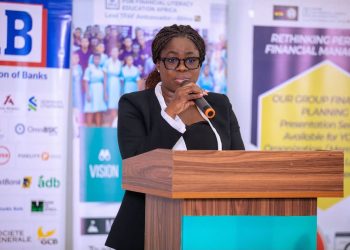
Speaking at a ceremony to commemorate 50 years of rural banking and the transition to community banking at Bank Square on Thursday, July 16, 2026, Dr Asiama said financial inclusion must go beyond access to payment platforms to include access to credit and other essential banking services.
“Mobile money, fintech and digital services have widened access enormously, and we should say so. But access is not the same as service,” he said.
According to him, many traders, artisans and emerging businesses continue to struggle to secure funding despite being within reach of formal financial institutions.
Community banks to bridge financing gap
Dr Asiama said the Bank of Ghana’s decision to transition rural banks into community banks was partly aimed at creating institutions that could respond more effectively to the financing needs of local communities.
He explained that the new framework would allow community banks to operate in both rural and urban areas, targeting groups that may not receive adequate attention from larger financial institutions.
“When national policy opens a financing window, or eases a pressure, or supports a sector, the benefit too often stops at the doors of the largest institutions. It should reach the trader, the artisan and the small business in every community,” he said.
The Governor noted that the introduction of Urban Community Banking would create opportunities for specialised institutions in cities where many small businesses still face difficulties accessing loans.
He cited possible examples such as East Legon Community Bank, Cantonments Community Bank and Airport Hills Community Bank, stressing that the objective was not simply to increase the number of bank branches but to establish institutions focused on local financing.
From rural banking to community banking
The shift to community banking forms part of reforms marking five decades since Ghana introduced the Rural Banking Programme with the establishment of Nyakrom Rural Bank in the Central Region in 1976.
Dr Asiama said the sector had grown significantly over the years, with 147 licensed institutions, about 1,000 branches, more than eight million customers and an asset base of approximately GH¢26 billion as of May 2026.
He said the achievements demonstrated the importance of locally owned financial institutions in expanding access to banking services.
However, he acknowledged that some institutions had failed over the years, affecting depositor confidence and highlighting the need for stronger governance.
BoG pushes for stronger institutions
The Governor cautioned that community ownership must be supported by professionalism, sound risk management and financial discipline.
“Community ownership cannot mean weaker governance. Local knowledge is not a substitute for risk management. And social purpose does not excuse financial indiscipline,” he said.
He added that existing rural banks would complete statutory name changes, corporate rebranding and regulatory adjustments by December 2026 as part of the transition.
Dr Asiama said the reforms were intended to build stronger community-focused financial institutions capable of supporting businesses, expanding credit access and contributing to Ghana’s economic development.
“Banking must reach people where they live, where they work, and where they build,” he said.