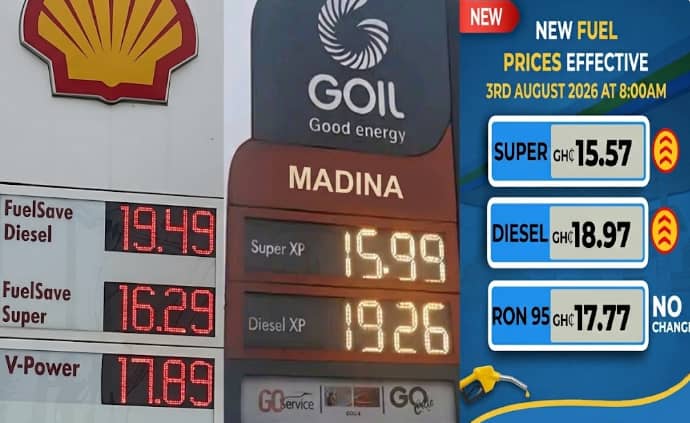
Fuel prices have risen sharply across Ghana, with motorists facing higher costs at the pumps following significant upward adjustments in the first pricing window of August 2026.
The National Petroleum Authority (NPA) and the Chamber of Oil Marketing Companies (COMAC) attributed the increases to higher international crude oil prices and movements in the cedi-dollar exchange rate.
Under the latest pricing window, diesel recorded the largest increase, with prices rising by between 12.5% and 18.3%. The NPA’s benchmark price floor for diesel was set at GH¢16.97 per litre, although some retail outlets have been selling the product at prices approaching GH¢18 per litre.
Petrol prices also increased by between 7.5% and 9.4%, with the new benchmark price floor set at GH¢14.53 per litre. Prices at some filling stations have moved closer to GH¢16 per litre.
Liquefied Petroleum Gas (LPG) prices recorded a comparatively smaller increase of between 4.1% and 8.5%, with the new retail floor set at GH¢11.06 per kilogramme.
The increases are expected to place additional pressure on households, businesses and transport operators, with concerns that higher fuel costs could translate into increased transport fares and add to inflationary pressures.
The upward adjustments have largely been linked to developments on the international oil market.
Escalating tensions between the United States and Iran have heightened concerns about disruptions to global oil supplies and increased freight insurance costs, particularly around the Strait of Hormuz, a major route for global energy shipments.
Global crude oil prices consequently rose from an average of about $71.90 per barrel to $88.62 per barrel, representing an increase of more than 23%.
The depreciation of the Ghana cedi against the US dollar also contributed to the higher domestic prices. The local currency weakened by about 1.41% during the relevant pricing window, moving from GH¢11.50 to GH¢11.66 to the US dollar.
The latest developments have also seen some Oil Marketing Companies (OMCs) revise their prices further after the initial August 1 adjustments.
Star Oil, for instance, increased its ex-pump prices again effective August 3, 2026, after revising its prices upwards on August 1, reflecting continued pressure on the domestic petroleum market.