The University of Ghana School of Law has launched the Ghana Supreme Court Review and a new book series, beginning with the publication of Administrative Law in Ghana, to strengthen legal scholarship and promote the study of Ghana’s legal system.
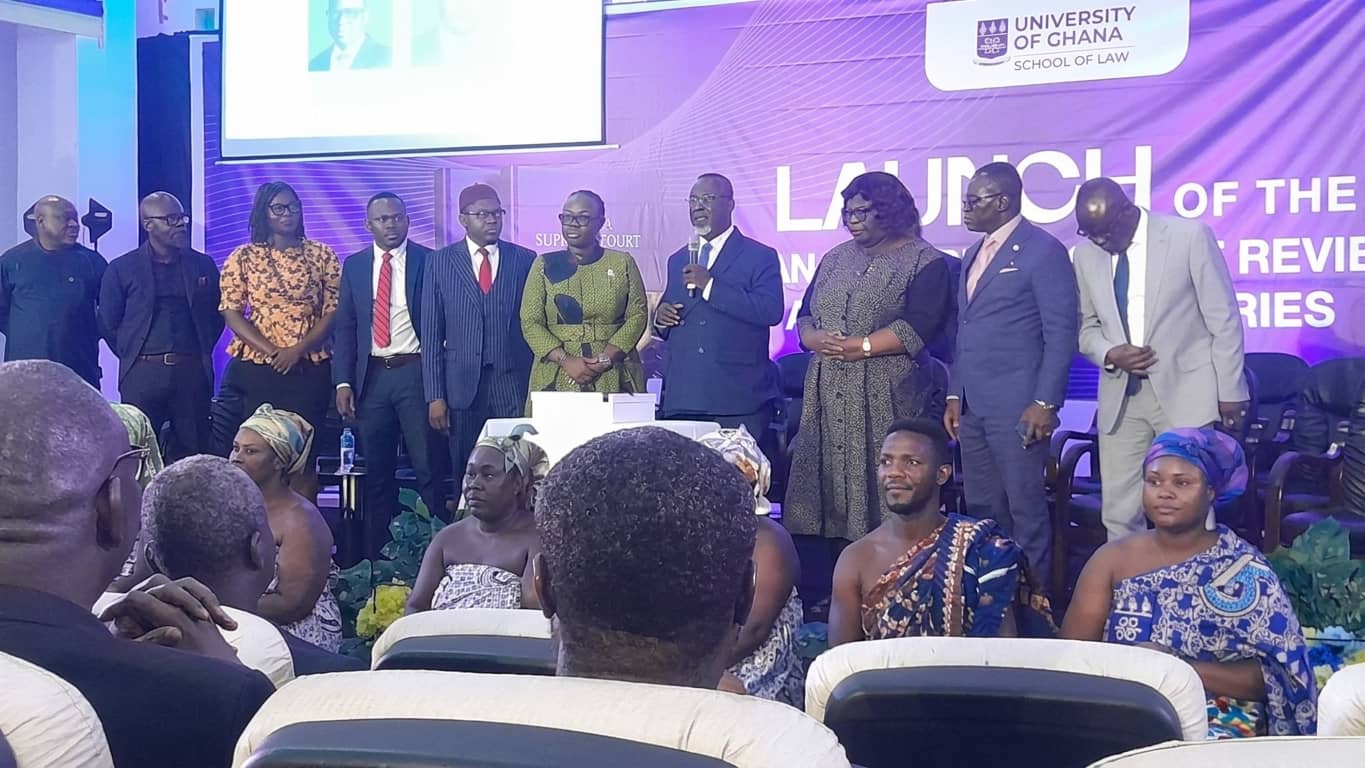
The publications were launched on Tuesday, October 20, 2026, at the University of Ghana School of Law Auditorium in Accra, bringing together members of the judiciary, legal practitioners, academics, government representatives and students.
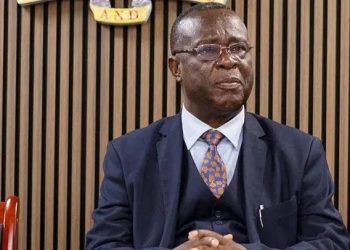
The Chief Justice, Justice Paul Baffoe-Bonnie, who was the special guest of honour, said the Ghana Supreme Court Review would provide a platform for independent and rigorous examination of Supreme Court decisions.
He said judicial judgments should be assessed on the strength of their legal reasoning rather than the identities of the parties or the popularity of the outcomes.
“The judicial rule may confer authority to decide. It does not confer immunity from reason,” he said, adding that constructive scholarly criticism could help courts reflect on their decisions and improve the development of the law.
Justice Baffoe-Bonnie also highlighted the importance of administrative law in protecting citizens from arbitrary exercises of public power.
He cited Articles 23 and 296 of the 1992 Constitution, which address fairness and reasonableness in administrative action and the proper exercise of discretionary powers.
He said administrative decisions involving education, employment and public services could have significant consequences for citizens, making legal safeguards essential to accountable governance.
The Dean of the University of Ghana School of Law, Professor Peter Atudiwe Atupare, said the two publications were intended to strengthen Ghanaian legal scholarship and provide locally grounded resources for students, judges, lawyers and public officials.
He described the Ghana Supreme Court Review as a companion to the judiciary rather than an attempt to undermine the courts.
“Its purpose is not to diminish our jurisprudence, but to deepen it, not to wound the court, but to walk beside it, so that with every turn, our law grows stronger, more coherent, and more truly our own,” he said.
Professor Atupare disclosed that Administrative Law in Ghana was produced by 14 contributors and comprised 33 chapters organised into six parts, spanning nearly 800 pages.
He said the publication covered areas including administrative oversight, taxation and revenue administration, and artificial intelligence.
According to him, the production process involved extensive research, editorial work and specialist reviews to ensure the quality of the material.
He also disclosed that the Ghana Supreme Court Review had received more than 40 submissions, of which about 32 were rejected as part of the editorial selection process.
Professor Atupare said additional books were being planned for the series, covering subjects including constitutional law, company and commercial law, conflict of laws, jurisprudence, land law and the law of torts in Ghana.
Chairing the ceremony, the Vice-Chancellor of the University of Ghana, Professor Nana Aba Appiah Amfo, said the publications reflected the university’s commitment to impactful research and making academic knowledge relevant to society.
She said universities had a responsibility not only to transmit knowledge but also to produce research that informed public policy, professional practice and institutional development.
Professor Amfo noted that Ghanaian legal scholarship should examine the country’s own institutions, experiences and legal traditions while remaining open to international and comparative perspectives.
She urged the School of Law to sustain the quality and relevance of the publications beyond the launch.
“The success of these publications will not be measured by the ceremony we hold today, but by the extent to which they are read, debated, cited, taught, and used to advance legal knowledge and practice,” she said.
She also encouraged students to engage critically with the publications and eventually contribute their own research.