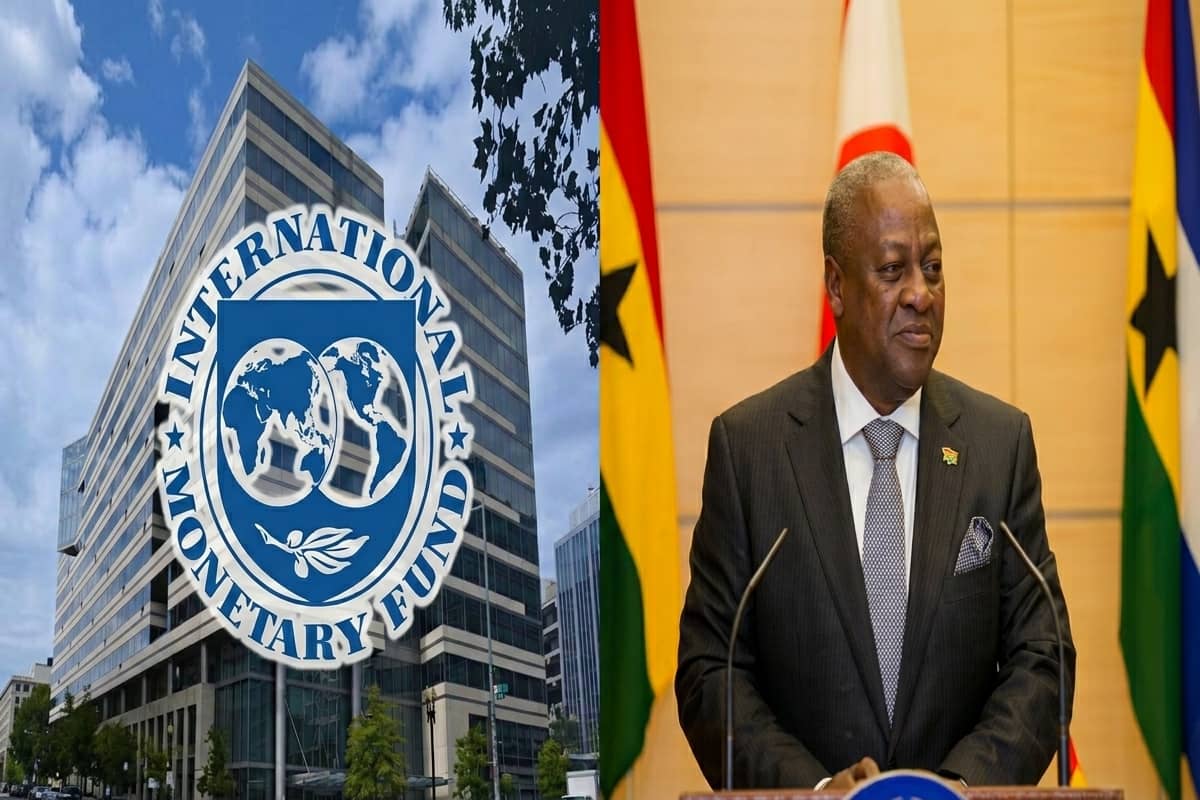
Ghana stands at a delicate economic crossroads. After three years of fiscal adjustment under the International Monetary Fund (IMF) programme, the country is beginning to see signs of macroeconomic stabilization: inflation has declined significantly, the cedi has regained relative stability, foreign reserves have improved, and debt sustainability indicators are recovering.
Yet history shows that Ghana’s greatest economic vulnerabilities often emerge not during crises, but in the period immediately following recovery.
As the country prepares to exit its IMF bailout arrangement and transition to a non-financing Policy Coordination Instrument (PCI), the key question is whether political ambition and social pressures will outweigh fiscal discipline. The answer could shape Ghana’s economic trajectory for the next decade.
Stability Returns – But Citizens Want More Than Macroeconomic Indicators
There is little dispute that Ghana’s IMF-supported programme has produced visible macroeconomic improvements. The IMF notes that inflation has declined rapidly, reserve buffers have strengthened, fiscal performance has improved, and debt ratios are falling faster than expected. Economic growth has also exceeded projections, supported by strong performance in gold exports, agriculture, ICT and construction.
For government officials, these indicators validate the difficult austerity measures implemented since 2023. Ghana has moved from economic crisis toward cautious stabilization.
However, outside macroeconomic circles, many citizens and businesses remain unconvinced that the recovery is translating into broad-based prosperity. Unemployment, especially among the youth, remains high. Small businesses continue to struggle with high lending rates, weak consumer demand and rising utility costs. Public frustration persists because lower inflation does not necessarily mean lower prices.
This disconnect between “macro success” and “micro hardship” has become one of the defining political and economic tensions of the post-IMF period. Public discussion increasingly reflects the view that while economic indicators may be improving, ordinary livelihoods remain under pressure. Concerns about the cost of living, weak job creation and the inclusiveness of economic gains continue to shape public sentiment.
This tension creates fertile ground for pressure toward expansionary spending.
The Manifesto Trap: Can Government Deliver Without Overspending?
The pressure on government is intensified by the scale of promises within its economic transformation agenda. These include the “24-Hour Economy” policy, the “Big Push” infrastructure programme, expanded industrialization initiatives, youth employment interventions and broader social spending commitments.
These policies are politically attractive because they respond directly to the country’s employment challenges and infrastructure deficit. However, they are also fiscally demanding.
The 24-Hour Economy policy alone implies significant public investment in energy reliability, transport systems, security services, industrial incentives and logistics support. The “Big Push” infrastructure agenda similarly requires substantial capital expenditure on roads, housing, rail, ports and digital infrastructure. Even where private-sector participation is expected, government financing obligations are likely to remain significant.
The challenge is not necessarily the policies themselves. Ghana requires structural transformation and productive investment. The issue is whether these programmes can be sequenced and financed responsibly.
The 2026 budget attempts to strike this balance. Official budget commentary emphasizes growth, jobs and economic transformation while also committing to preserve macroeconomic stability and debt sustainability.
However, Ghana’s political history raises concerns. Election cycles and post-crisis recoveries have often been followed by fiscal slippages, expenditure overruns and rising arrears. The IMF itself warned that programme performance weakened during the 2024 election period because of large spending overruns and delayed reforms.
The transition from an IMF bailout to a non-financing PCI arrangement may therefore become an important test. Unlike the Extended Credit Facility programme, the PCI will not provide new IMF financing. Instead, it is designed primarily as a framework for policy credibility and reform monitoring. According to the IMF, the PCI will focus on safeguarding debt sustainability, strengthening governance, improving fiscal transparency, reducing quasi-fiscal activities and supporting inclusive growth.
In effect, Ghana will be expected to maintain discipline without the direct leverage of IMF disbursements.
That may prove politically challenging.
Labour Pressures, Financial Sector Costs and the Corruption Question
Fiscal pressures are also emerging from several domestic fronts simultaneously.
One major challenge is the unfinished financial sector cleanup. Although substantial progress has been made in stabilizing banks and recapitalizing parts of the sector, vulnerabilities remain. The IMF continues to stress the need for recapitalization plans, stronger governance for state-owned banks and contingency measures for weak institutions.
These obligations carry fiscal implications, especially if government intervention becomes necessary for distressed financial institutions.
At the same time, public sector labour pressure is intensifying. Many public workers argue that years of IMF-era restraint have significantly reduced real incomes. Demands for wage adjustments, improved conditions of service and expanded recruitment are likely to increase as macroeconomic conditions improve. Teachers, nurses, civil servants and organized labour groups are already positioning for compensation reviews based on the perception that “the economy has recovered.” There also remains a backlog of employment placements for some public sector workers, particularly teachers and nurses.
This presents a classic post-stabilization dilemma: governments face pressure to distribute the gains of recovery quickly, even when fiscal space remains limited.
Adding to the challenge is growing demand for stronger anti-corruption enforcement and institutional accountability. If government expects public support for continued fiscal restraint, citizens will also expect visible action against waste, procurement abuses and financial leakages.
The IMF’s governance recommendations place significant emphasis on transparency reforms, stronger asset declaration systems and improved oversight of state-owned enterprises. However, anti-corruption institutions in Ghana have historically faced challenges including inadequate funding, political interference and weak prosecutorial outcomes. The Office of the Special Prosecutor (OSP) has recently come under public scrutiny following a High Court ruling directing it to derive its prosecutorial authority from the Attorney General’s office, although some civil society groups have strongly contested this interpretation.
Last week, the President signed the Value for Money Bill, which requires the establishment of an office to strengthen oversight and accountability in public expenditure.
Without meaningful investment in anti-corruption institutions, audit systems and procurement controls, public confidence in fiscal discipline may weaken. Citizens are less likely to accept continued austerity when perceptions of corruption remain high.
The Bank of Ghana Problem and the Real Test Ahead
Perhaps the biggest unresolved risk lies with the Bank of Ghana (BoG).
Although the central bank played a critical role in restoring macroeconomic stability, it also accumulated substantial losses during the crisis period. Questions remain regarding quasi-fiscal operations, foreign exchange interventions and the broader implications of the deterioration in the BoG’s balance sheet.
The IMF has repeatedly emphasized the importance of strengthening central bank independence, reducing quasi-fiscal activities and improving transparency in foreign exchange operations.
This matters because Ghana’s recent currency stability has become both an economic achievement and a political asset. Maintaining that stability will require disciplined monetary policy and continued fiscal restraint. Large-scale spending expansion financed through excessive borrowing or monetary accommodation could quickly reverse recent gains.
The post-IMF period therefore represents not merely the end of a bailout programme, but the beginning of a broader credibility test.
Can Ghana resist the temptation to treat stabilization as a return to unrestricted spending? Can the government pursue ambitious transformation policies without reopening debt vulnerabilities? Can public sector demands be managed without reigniting inflationary pressures? And can anti-corruption reforms become strong enough to sustain public confidence?
These questions will determine whether Ghana’s recovery becomes durable or cyclical.
The reality is that Ghana needs investment, jobs and infrastructure expansion. Austerity alone cannot deliver long-term prosperity. But neither can unchecked spending financed by fragile revenues and rising debt.
The country’s challenge is therefore not choosing between growth and discipline. It is whether policymakers can achieve both simultaneously — sustaining macroeconomic gains while carefully expanding productive investment and social support.
That balance, more than the IMF programme itself, may ultimately determine the success of Ghana’s economic reset
DISCLAIMER: The views, comments, and contributions made by readers or contributors on this website do not necessarily represent the position or views of The Sikaman Times. The Sikaman Times will not be responsible or liable for any inaccurate or incorrect statements made by readers or contributors on this website.