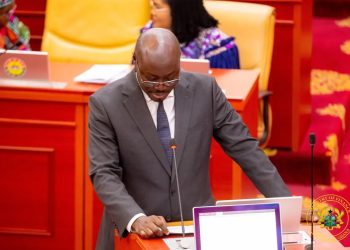
The government has outlined a series of tax administration and revenue mobilisation measures for 2027, with Finance Minister Dr Cassiel Ato Forson stating that the revenue gains recorded in 2026 were achieved without imposing new taxes.
Presenting the 2027 Budget Statement and Economic Policy to Parliament on November 12, 2026, Dr Forson said the government would continue to focus on expanding the tax base and strengthening domestic revenue mobilisation.
“The revenue performance in 2026 tells a compelling story. Ghana is expanding its tax base and strengthening domestic revenue mobilisation without imposing new taxes on our people,” he said.
He attributed the revenue performance to improved corporate profitability, stronger contributions from the mining sector and enhanced tax administration.
For 2027, the government has identified seven priorities for its revenue agenda: completing the modernisation of tax laws and regulations, rationalising customs concessions, implementing excise reforms, reviewing tax exemptions, strengthening revenue assurance through technology and data, advancing international tax cooperation and preparing a new Medium-Term Revenue Strategy.
As part of the proposed reforms, the government will undertake a comprehensive review of the Revenue Administration Act, 2016 (Act 915).
The review is expected to harmonise procedures for taxpayer registration, assessment, collection and enforcement across different tax types. It will also address tax dispute resolution, refunds and penalties, while providing greater certainty for taxpayers through binding rulings and clearly defined statutory timelines.
The Communications Service Tax framework will also be reviewed. The tax, imposed under the Communications Service Tax Act, 2008 (Act 754), has been amended several times, including an increase from six per cent to nine per cent in 2019 and a reduction to five per cent from September 2020.
The Finance Minister said the tax had never undergone a comprehensive review.
Government also plans to review concessionary import duty rates under Chapter 98 of the Customs Tariff Schedule. The review is intended to address outdated commodity descriptions, unclear tariff classifications and weaknesses in eligibility criteria that could create opportunities for abuse and revenue losses.
On revenue assurance, the government will upgrade the Publican AI Trade Solution to validate payments in real time, identify discrepancies and strengthen reconciliation. The system will also be extended to cover risk analysis across Ministries, Departments and Agencies.
A vehicle management module will be introduced to improve the valuation of imported vehicles and address undervaluation.
The Budget further proposes removing the cap on Communications Service Tax revenue allocated to youth employment and apprenticeship programmes, a measure expected to make an additional GH¢1 billion available for the programmes.
Government will also remove the cap on levies earmarked for the Ghana Export-Import Bank, with at least 40 per cent of the revenue from the Ghana EXIM Bank Levy expected to be dedicated to commercial poultry and feed production from 2027.