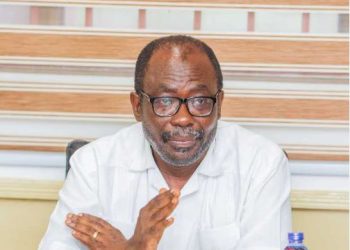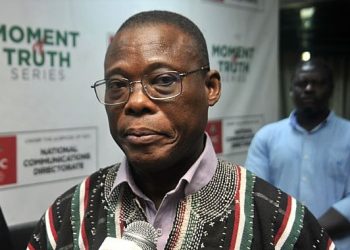
The Presiding Member of the Accra Metropolitan Assembly (AMA), Musah Ziyad, has defended the Assembly’s decision to temporarily eject traders from the 31st December Market to pave way for its redevelopment, insisting that the process has been properly communicated, legally backed and widely misconstrued by affected traders.
Speaking at a press briefing on Tuesday, 19 May, Mr Ziyad rejected claims that traders were forcefully removed without engagement, arguing that the AMA had conducted multiple consultations and even provided extended timelines to accommodate trading activities during the festive season.
“That’s why the media should get the album so that next time when somebody comes and says after the whole thing they didn’t give me back my shop, you can go through the album and see whether his name was there or not,” he said, insisting that the Assembly has a documented record of all affected traders.
He explained that the redevelopment project was initially scheduled to begin in August but was postponed after traders requested more time to sell during the Christmas season. According to him, the AMA extended the deadline to January and later to May before contractors moved in.
“They said they wanted us to give them more time so that they can sell their December festive period… We gave them until January to pack out,” he noted.
Mr Ziyad further stated that legal challenges mounted by the traders were dismissed by the courts, clearing the way for the redevelopment to proceed. He, however, accused some of the traders of acting in bad faith by simultaneously engaging different state institutions while also returning to court after earlier rulings.
“It’s an exercise in bad faith. When you do that, you are probate and reprobate. You say one thing today and tomorrow you say another thing,” he said.
Addressing concerns about future allocation of shops, he assured that a comprehensive “album” containing names, shop numbers, pictures and contacts of over 300 traders had been compiled to guide resettlement.
He also urged traders to support the redevelopment, stressing that Accra’s current market conditions were outdated and unsuitable for a modern capital city. Drawing comparisons, he referenced urban transformation in countries such as China and redevelopment projects like Kejetia in Kumasi as examples of necessary disruption leading to long-term gains.
“Development will definitely come at a cost… Accra cannot continue to be like this,” he said, adding that traders should view the process as a sacrifice for future generations.
The Assembly reiterated that the redevelopment aligns with the Mayor’s vision to modernise Accra’s markets into safer, organised and economically vibrant trading centres capable of improving sanitation, boosting commerce and enhancing urban planning.
It further appealed for calm and cooperation from traders, stressing that the project is designed not to displace livelihoods but to secure long-term economic benefits for market users and the city at large.