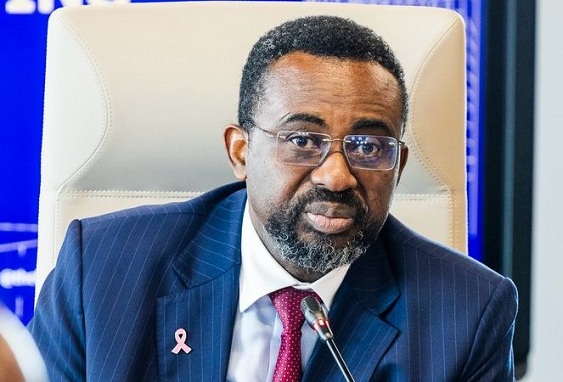
The Governor of the Bank of Ghana, Dr. Johnson Pandit Asiama, has warned that Ghana’s recent economic gains could come under pressure as the escalating conflict in the Middle East drives up global energy prices and threatens to push inflation higher again.
Opening the 130th Monetary Policy Committee (MPC) meeting in Accra on Monday, Dr. Asiama said the Ghanaian economy had shown significant improvement in recent months due to sustained reforms, but cautioned that worsening global conditions were creating fresh uncertainty for policymakers.
“We are meeting at a moment of heightened policy complexity,” he said, noting that while the domestic economy remains resilient, the external environment has become “increasingly difficult.”
According to the Governor, the conflict in the Middle East — particularly the closure of the Strait of Hormuz — has triggered a sustained rise in global crude oil prices, with direct implications for countries like Ghana that rely heavily on imported fuel.
He explained that the effects are already filtering through fuel costs, transportation expenses, import bills and ultimately consumer prices.
At the Bank’s previous MPC meeting in March, policymakers had debated whether the conflict would be short-lived or prolonged. At the time, the Bank projected crude oil prices could either fall back to around US$75 per barrel or remain elevated near US$100 per barrel depending on how events unfolded.
“Since then a clearer picture of the Middle East crises and its potential effects are emerging,” Dr. Asiama stated. “The conflict has not abated, and its economic consequences are now visible in the global data.”
He disclosed that the International Monetary Fund has already revised downward its 2026 global growth forecast from 3.3 per cent to 3.1 per cent due to the conflict’s impact on global demand and supply chains.
Despite these challenges, the Governor highlighted several positive developments within Ghana’s economy. These include an improved current account surplus in the first quarter of 2026, renewed investor confidence in government securities, and the successful issuance of a 7-year government bond.
He also pointed to government plans to raise US$1 billion through local-currency bonds to finance cocoa purchases for the 2026/27 crop season — a move aimed at reducing dependence on foreign borrowing.
Dr. Asiama revealed that inflation has risen for the first time since December 2024, partly due to external price pressures and domestic energy supply disruptions.
“The combination of domestic energy supply disruptions and external commodity price pressures could create a dual-channel inflation expectations problem,” he cautioned.
The Governor said the MPC would spend the next three days examining whether interest rates across the economy need adjustment to preserve recent gains while ensuring inflation expectations remain firmly anchored.
He stressed that maintaining a stable banking sector would also be crucial for supporting business activity and credit expansion.
Touching on Ghana’s relationship with the IMF, Dr. Asiama confirmed that IMF officials recently concluded discussions in Accra on the sixth and final review of Ghana’s Extended Credit Facility (ECF) programme, alongside negotiations for a new 36-month Policy Coordination Instrument (PCI).
He described the PCI as “a considered and credible next step” that would allow Ghana to maintain policy credibility while reducing dependence on IMF financing.
The proposed programme, he said, would focus on fiscal discipline, debt sustainability, financial sector stability, monetary policy reforms, and economic diversification.
Dr. Asiama added that ongoing reforms at the central bank would include strengthening liquidity forecasting, improving the inflation-targeting framework, and tightening oversight of the Domestic Gold Purchase Programme.