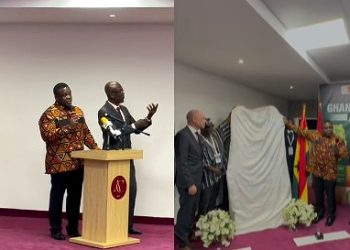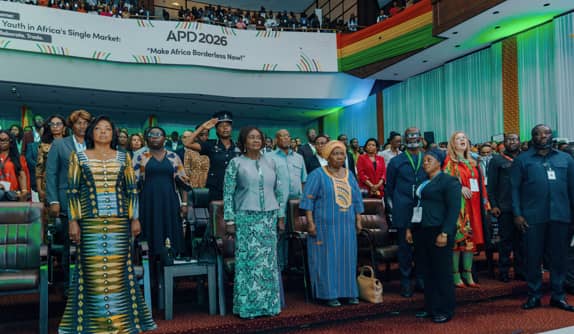
Speakers at the 2026 Africa Prosperity Dialogues (APD) in Accra have called for urgent and practical action to ensure that the African Continental Free Trade Area (AfCFTA) delivers real economic benefits for women and youth, warning that policy commitments alone will not drive inclusive growth without deliberate implementation.
The call was made during a panel session on “Building an Inclusive AfCFTA” held on Wednesday, February 4, 2026, at the Accra International Conference Centre, where policymakers, scholars, and business leaders converged to assess progress on the Protocol on Women and Youth in Trade.
From Policy to Impact
Dr. Joy Kategekwa, Director of the Regional Integration and Trade Coordination Office at the African Development Bank Group (AfDB), cautioned that without full implementation of the protocol, AfCFTA risked becoming “an instrument to spectate at” rather than a tool for transformation. She explained that the protocol was designed to place women and youth at the centre of trade policy by shifting away from top-down approaches to bottom-up strategies that legislate in their favour.
“The Protocol on Women and Youth in Trade ensures that governments invest in entrepreneurs, resolve bottlenecks, and move trade from the margins to the mainstream,” she said. Dr. Kategekwa noted that African women and youth are already active in sectors such as textiles, leather, design, and jewellery, but require targeted support to scale.
She stressed that success should be measured by outcomes, not agreements. “The true celebration should not be in signing treaties, but in the rise of intra-African trade volumes and value,” she said, adding that the AfDB’s Affirmative Finance Action for Women in Africa (AFAWA) was helping to provide targeted financing for women entrepreneurs. She warned, however, that “the risk of slippage is real if we treat the protocol as self-executing.”
Recognising Women’s Agency and Dignity
Professor Emerita Abena Busia, former Ghanaian Ambassador to Brazil, placed the debate within a broader historical and social context, highlighting the long-standing expertise of African women in trade. Recounting a 1992 flight along the West African coast, she described how market women onboard traded goods and foreign currencies with ease. “These women certainly knew trade. They were not at the table where policies were made, but they understood the world those policies created,” she said.
Prof. Busia questioned the readiness of institutions to implement the protocol effectively, asking, “We are very good at protocols and resolutions, but how do we follow through? What is the infrastructure to carry it out?” She also drew attention to systemic inequalities in governance and legal frameworks that undermine women’s agency, calling for reforms that affirm women’s dignity as “inviolable” in all aspects of trade.
Empowerment, Policy and Product Development
Dr. Amany Asfour, President of the Africa Business Council, reinforced the need for practical measures, proposing what she described as a “triad of empowerment” comprising personal empowerment, policy advocacy, and product development. “Personal empowerment programs are essential for women-led SMEs across all levels,” she said, pointing to the importance of training, financial inclusion, and capacity building.
On policy, she urged governments to adopt supportive measures such as reserving a share of public procurement for women-led businesses, citing Kenya’s 30 per cent allocation as a working example. She also emphasised value addition, highlighting missed opportunities across mining, agriculture, and fashion. “Knowledge and information are critical,” she said, noting cases where women earned minimal returns due to lack of awareness of the true value of their products.
The speakers agreed that for AfCFTA to be truly inclusive, the protocol on women and youth must move beyond paper commitments to measurable impact that empowers entrepreneurs and unlocks Africa’s full trade potential.