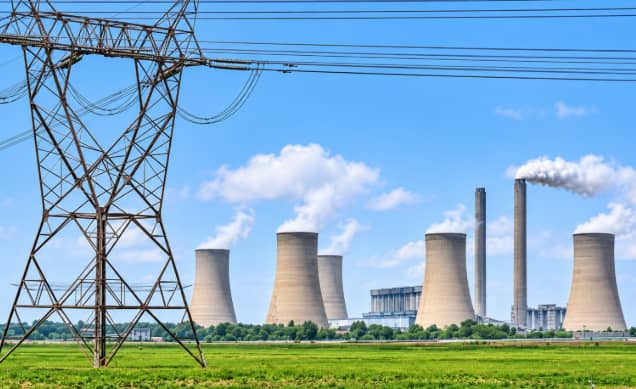
The Africa Sustainable Energy Centre (ASEC) has welcomed Ghana’s reported cooperation with Russia towards developing a 2,000-megawatt (MW) nuclear power plant, describing the initiative as a strategic move to strengthen energy security and support the country’s industrialisation agenda.
However, the Centre has cautioned that Ghana must improve its maintenance culture and accelerate investments in renewable energy to ensure a reliable, balanced and sustainable electricity supply.
In a statement issued on November 2, 2026, ASEC said nuclear power could diversify Ghana’s energy mix by providing dependable, low-carbon electricity to complement existing hydroelectric and thermal generation.
It noted that the proposed facility could also create opportunities for technology transfer, specialised skills development, local engineering capacity and broader industrial growth.
ASEC, therefore, called for Ghanaian universities, research institutions and engineering companies to be actively involved in the development of the nuclear programme to ensure that the country benefits from the technical and economic opportunities it presents.
The Centre, however, stressed that nuclear energy should complement rather than replace investments in renewable energy, particularly solar, wind, hydropower and battery storage.
It observed that Ghana’s considerable solar potential remained underutilised, despite the opportunities available for both large-scale electricity generation and distributed power systems.
Beyond the generation mix, ASEC identified the country’s maintenance culture as a major concern that must be addressed before embarking on a project of such magnitude.
“We cannot aspire to operate a world-class nuclear power facility while maintaining a third-class maintenance culture,” the statement said.
It argued that nuclear power required uncompromising standards of preventive and predictive maintenance, operational discipline and safety.
The Centre called on the government to address existing maintenance weaknesses across electricity generation facilities, transmission networks, substations, distribution infrastructure and gas processing facilities.
It further urged a shift from reactive maintenance practices towards data-driven asset management, supported by predictable maintenance budgets, skilled personnel, condition monitoring systems, adequate spare-parts management and institutional accountability.
On safety and regulation, ASEC called for strong and independent nuclear regulatory institutions, strict adherence to International Atomic Energy Agency (IAEA) standards, effective emergency preparedness and comprehensive arrangements for radioactive waste management.
It also urged the government to ensure transparency in project financing and procurement, assess the long-term financial implications of the proposed facility and strengthen transmission infrastructure to accommodate the additional generation capacity.
Among its recommendations, the Centre called for an integrated energy diversification roadmap that balances nuclear development with renewable energy investments, alongside stronger regulatory oversight and deliberate efforts to build local technical capacity.
It also emphasised the need to ensure that the project remained economically sustainable and served Ghana’s long-term national interests.
ASEC said the proposed nuclear development presented an important opportunity to improve energy security, accelerate industrialisation and advance technological development.
However, it cautioned that the country’s nuclear ambition must be matched with the necessary institutional preparedness and accountability.
“Ambition must be matched by preparedness, investment by accountability, and technological advancement by institutional discipline,” the statement said.
The Centre maintained that while it supported Ghana’s nuclear ambition, safety, maintenance culture, renewable energy development and the national economic interest must remain non-negotiable.