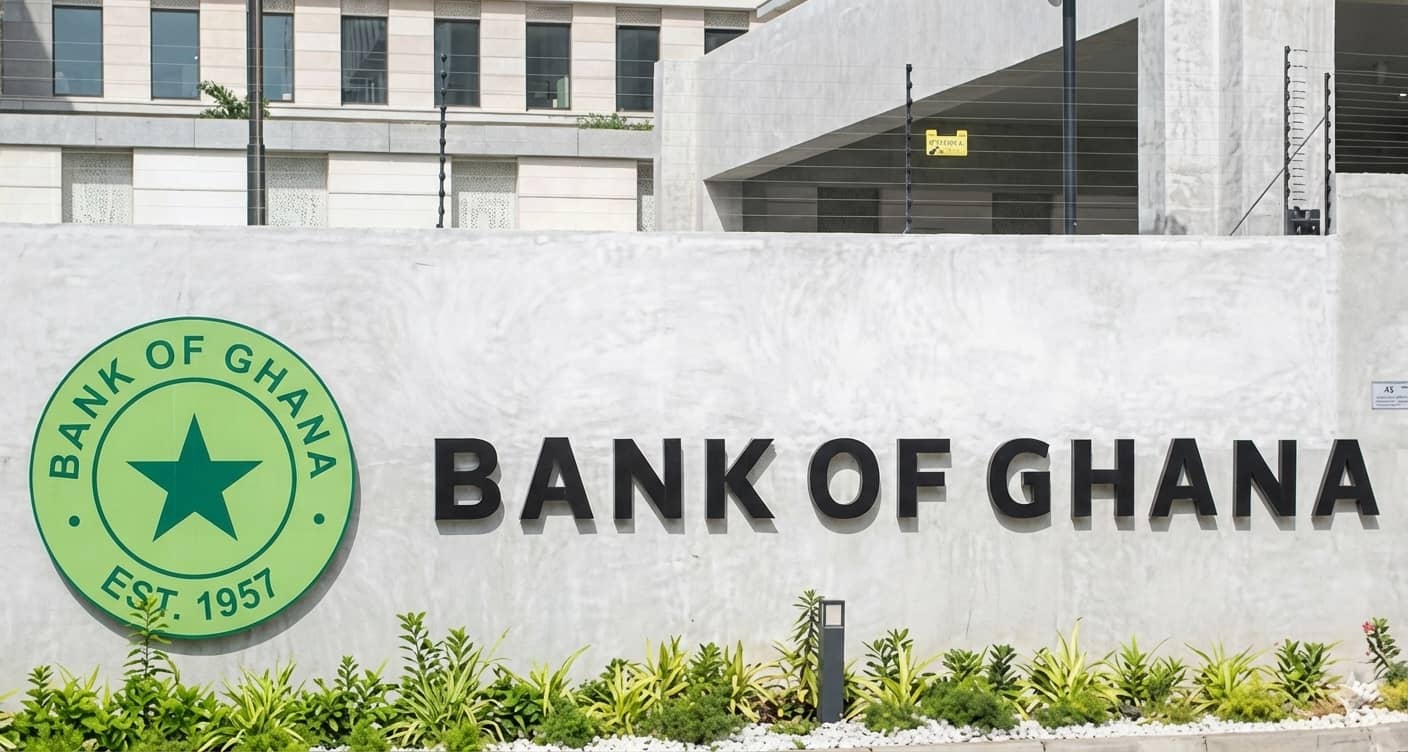
Borrowing costs in Ghana continued to decline in June 2026, with average commercial bank lending rates falling to 15.64 percent, reflecting the impact of the Bank of Ghana’s sustained monetary policy easing.
Latest data released by the central bank show the average lending rate declined from 15.83 percent in May and is down sharply from 27.0 percent a year earlier.
The Ghana Reference Rate—the benchmark used by banks to price loans—also eased to 10.02 percent, compared with 23.80 percent in June 2025.
The decline follows a series of reductions in the Monetary Policy Rate, which has been cut from 28 percent in June 2025 to 14 percent, where it has remained since March 2026.
Interbank rates also continued their downward trend. The weighted average interbank rate fell to 10.24 percent in June from 27.02 percent a year earlier, indicating improved liquidity conditions within the banking sector.
Treasury bill yields remained at historically low levels despite recording modest increases during June. The 91-day bill rose slightly to 5.27 percent from 4.91 percent in May, while the 182-day and 364-day instruments increased to 7.21 percent and 11.29 percent, respectively.
Meanwhile, deposit rates remained largely unchanged. Savings deposits were maintained at 5.0 percent, while three-month and six-month time deposits stayed at 10.5 percent.
The Bank of Ghana noted that the Ghana Reference Rate is determined by the weighted average of the 91-day Treasury bill rate, the Monetary Policy Rate and the interbank overnight rate.
The continued moderation in lending costs is expected to support private sector credit and economic activity, although banks may remain cautious in extending credit amid evolving macroeconomic conditions.