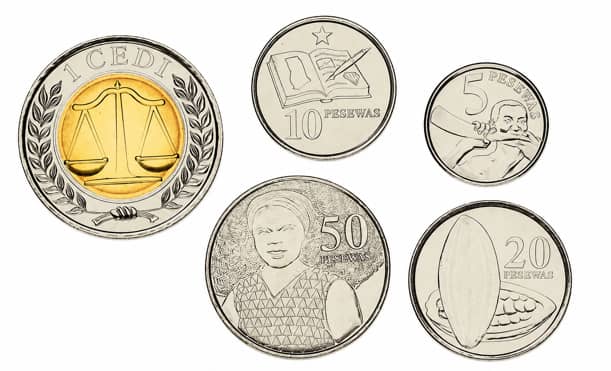
The Bank of Ghana has warned that individuals and businesses that refuse to accept Ghana cedi coins as payment for goods and services risk arrest, prosecution, fines, or imprisonment under the country’s currency laws.
In a public notice issued on Wednesday, July 22, 2026, the central bank expressed concern over the widespread and persistent refusal by traders, transport operators, and other business entities to accept the 1, 5, 10, 20 and 50 pesewa coins, as well as the GH¢1 and GH¢2 coins.
The BoG stressed that all coins issued by the Bank remain legal tender and have neither been demonetised nor withdrawn from circulation.
It said no trader, transport operator, business entity or individual has the discretion to reject the coins on grounds of inconvenience, low value or personal preference.
“The Bank wishes to remind the general public that all coins issued by the Bank of Ghana remain the lawful currency of the Republic of Ghana and must be accepted and treated in accordance with the Bank of Ghana Act, 2002 (Act 612), as amended, the Currency Act, 1964 (Act 242), and other laws in force,” the notice stated.
The central bank explained that refusing to sell goods or provide services simply because a customer is paying with legal tender coins constitutes an offence under the Currency Act, 1964 (Act 242), unless the particular coin or note has ceased to be legal tender.
According to the BoG, anyone convicted of the offence faces a prison term of up to three years, a fine, or both. It further noted that business owners who instruct employees to reject coins are equally liable under the law and may face the same penalties as those directly committing the offence.
The notice also states that a person found committing the offence may be arrested without a warrant.
The Bank said it would collaborate with the Ghana Police Service and other law enforcement agencies to ensure strict enforcement of the law.
It urged traders, transport operators and the general public to stop rejecting coins, warning that persistent offenders could face legal sanctions.
The BoG also encouraged members of the public who encounter businesses or individuals refusing to accept legal tender coins to report such incidents to the nearest Bank of Ghana office, the Ghana Police Service, or through the Bank’s official communication channels.
The latest directive follows an earlier notice issued on July 14, 2026, which cautioned against the misuse, abuse and illegal handling of Ghana cedi banknotes and coins. While that notice focused on the physical abuse and defacement of the currency, the new directive addresses what the central bank describes as the equally serious issue of the unlawful refusal to accept coins.
The Bank called on all individuals, businesses and institutions to support efforts to protect the integrity of Ghana’s currency by accepting and handling all denominations responsibly and in accordance with the law.