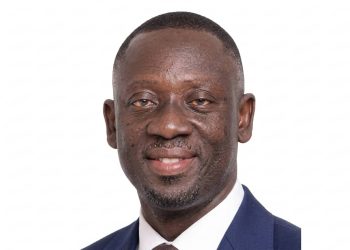
The Coalition of Domestic Election Observers (CODEO) has called on Electoral Commission (EC) Deputy Chairperson Emelia Affi Agbenyo to resign over her documented political engagement with the National Democratic Congress (NDC) during the 2024 general election campaign.
The coalition has also urged President John Dramani Mahama to ask Ms. Agbenyo to step down, arguing that her appointment risks undermining public confidence in the independence and impartiality of the Electoral Commission.
In a press statement issued on October 15, 2026, CODEO said the appointment and swearing-in of Ms. Agbenyo on October 12 had raised concerns about the credibility of the electoral management body.
While acknowledging the President’s constitutional authority to make appointments to the Commission, the coalition said the perceived political affiliations of its members could compromise public confidence in the institution.
CODEO cited Ms. Agbenyo’s role as a spokesperson for the NDC’s governance sector during the party’s 2024 election manifesto campaign, which the party publicly announced in August that year.
It also referred to her social media posts supporting the NDC’s campaign and its then presidential candidate, Mr. Mahama, including posts published in September and October 2024.
According to the coalition, the concerns are not about Ms. Agbenyo’s professional qualifications or technical competence, but about whether her appointment can command confidence in the Commission’s neutrality across the political divide.
CODEO said public confidence in the EC had suffered in recent years, citing Afrobarometer findings that placed trust in the institution at its lowest levels in 2024.
The coalition further questioned the role of the Council of State in the appointment process, arguing that the absence of a transparent mechanism for assessing how it discharges its constitutional responsibilities undermines public accountability.
Under Article 70(2) of the 1992 Constitution, the President appoints members of the Electoral Commission on the advice of the Council of State.
CODEO said it had consistently advocated a broader consultative process for appointing EC leadership, including during the appointments of Charlotte Osei in 2014 and Jean Mensa, Dr. Bossman Asare and Samuel Tetteh in 2018.
The coalition also recalled its 2023 call, alongside the STAR-Ghana Foundation and the Civic Forum Initiative, for the resignation of Dr. Peter Appiahene over concerns about his alleged partisan affiliation with the New Patriotic Party (NPP).
It said the latest appointment raised questions about the consistency of President Mahama’s position on electoral reforms.
In March 2023, Mr. Mahama, then in opposition, criticised the appointment of persons he described as “known party activists” to the Electoral Commission and called for an amendment to Article 43(2) of the Constitution to require parliamentary approval of new commissioners.
CODEO said the principles Mr. Mahama advocated while in opposition should also guide appointments under his administration.
Beyond Ms. Agbenyo’s resignation, the coalition called on the government to introduce transparent, merit-based appointments and stronger safeguards against actual or perceived partisan influence.
It also urged the Council of State to establish processes that would enable citizens to obtain information on how it carries out its constitutional responsibilities.
The coalition said the Constitutional Review Committee had recommended an open, competitive and merit-based appointment process involving a reformed Council of State, the Public Services Commission and prior parliamentary approval.
However, it noted that the government’s position paper rejected the proposed changes to the existing appointment arrangement, although it indicated that the President could adopt transparent, merit-based procedures.
CODEO urged the government to reconsider its position and pursue reforms that would introduce independent scrutiny, clear selection criteria and meaningful parliamentary oversight.
The coalition said protecting the independence of the Electoral Commission required not only constitutional safeguards but also a commitment from political leaders to ensure that the institution remained impartial and credible, regardless of which party was in power.