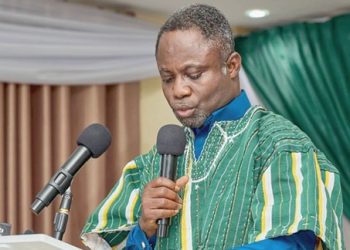
The Director-General of the National Communications Authority (NCA), Rev Ing. Edmund Yirenkyi Fianko, has warned that contractors who damage fibre optic cables during construction works may soon face penalties amounting to three times the cost of repairs.
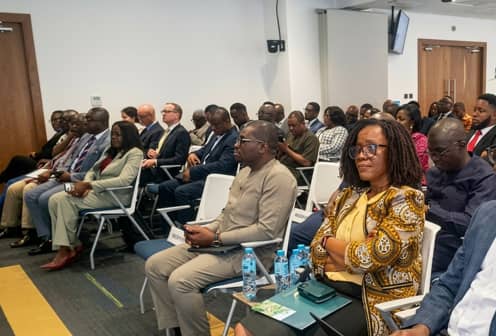
Speaking on Monday, 18 May, at the launch of the NCA’s 30th anniversary celebrations, he stressed that telecom infrastructure is a shared national asset that requires collective protection from all stakeholders.
“So, yes, the networks invest in the rollout of the telecom infrastructure, but the infrastructure is providing services to all of us,” he said. “One tower goes up and hundreds of people are suddenly connected to telephony and internet services.”
He explained that while telecom sites are supported with backup power systems such as generators and battery banks, fibre optic cables remain highly exposed and vulnerable to accidental damage during construction activities.
“Sometimes the fibre cables are cut, either by contractors, by building contractors, etc. And any time a cable is cut, you have a number of sites disconnected and the services will deteriorate,” he noted.
Rev Ing. Fianko emphasised that the solution lies in early engagement and coordination between contractors and network operators. “What we are saying is this is a shared responsibility. Those who are doing construction work must be mindful,” he said.
He urged contractors to notify operators or contact the NCA before commencing projects.
He added that even where contact details are not known, contractors should reach out to the regulator for guidance. “If you are a contractor and you cut the fibre cable, you will pay three times the cost to serve as a deterrent,” he warned, whiles intimating that proposals are being advanced for parliamentary approval.
He also highlighted Ghana’s telecom progress, noting that penetration has risen from less than 1 per cent at the inception of the NCA to over 127 per cent today. “We have more telephone lines than persons resident in Ghana,” Rev Ing. Fianko said.
He described the sector’s transformation as one of Africa’s most significant.