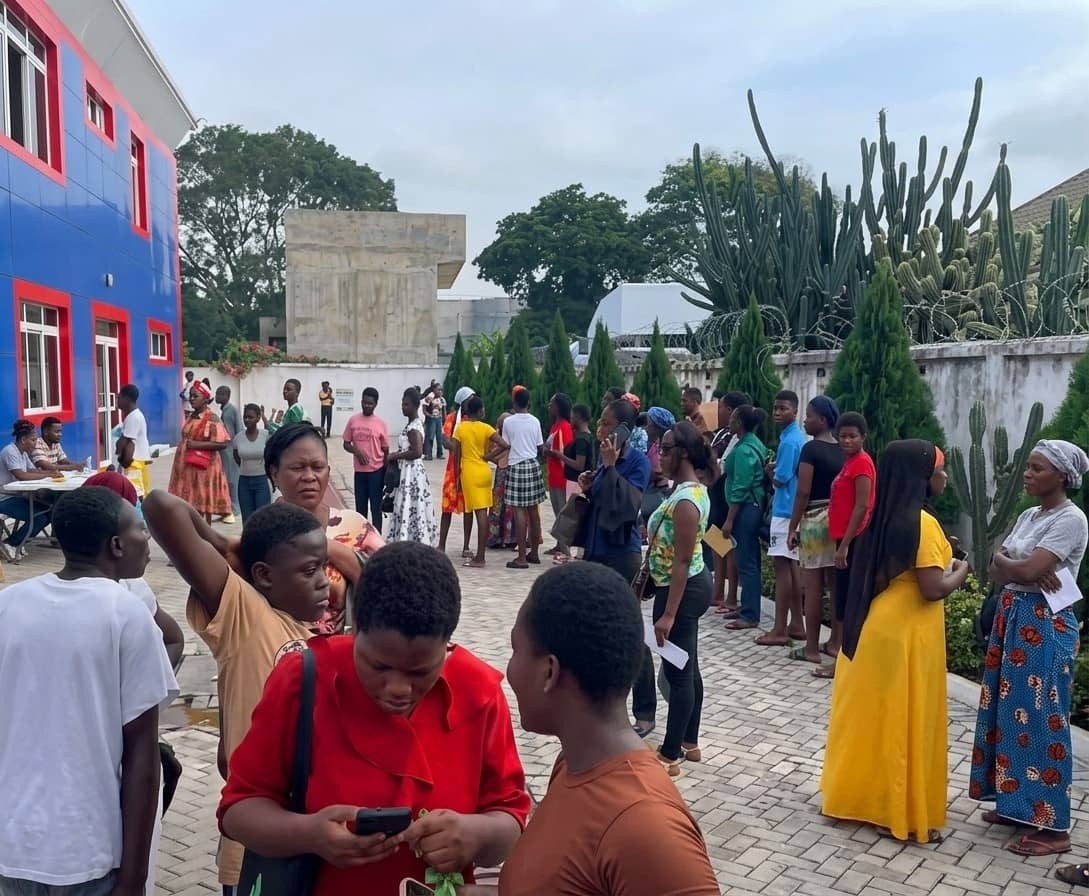
The Computerised School Selection and Placement System (CSSPS) was introduced in 2005 to address longstanding weaknesses associated with the manual placement of Basic Education Certificate Examination (BECE) candidates into second-cycle institutions. Its objectives were straightforward: improve transparency, promote equity, reduce human errors, eliminate bottlenecks and make the placement process faster and more efficient.
More than two decades later, Ghana must ask a fundamental question: has the CSSPS fully achieved what it was established to achieve?
The answer, in our view, is both encouraging and uncomfortable.
The system has undoubtedly evolved. It now processes hundreds of thousands of candidates electronically, matches candidates to schools and programmes, and provides an online platform for checking placement outcomes. In the 2026 exercise alone, 527,932 candidates had secured placement into second-cycle and technical institutions by September 7.
But the continued recurrence of placement difficulties including disputes over school choices, programmes, day and boarding status, vacancies and self-placement suggests that the problem is no longer simply whether Ghana has a computerised system. The more important question is whether the entire placement architecture is sufficiently computerised, integrated, transparent and predictable.
This Portal believes it is time to confront that question honestly.
The day-and-boarding problem cannot be ignored
One of the recurring difficulties in the placement exercise is the mismatch between what candidates select and what schools have available.
The 2026 guidelines require candidates to rank eight schools and indicate their preferred programmes and residential status. Candidates can indicate boarding and day preferences within the prescribed limits.
This is logical. But the system must go a step further.
A candidate’s choice is not merely a school name. It is effectively a combination of:
School + Programme + Residential Status.
A school may have available spaces but have no boarding vacancies for a particular programme. Conversely, it may have day vacancies while a candidate who selected boarding is not matched.
That distinction must be at the heart of the algorithm.
We are therefore of the opinion that the CSSPS should publish, before candidates make their selections, sufficiently clear information on school, programme and residential capacity. Candidates should not be encouraged to make choices based simply on the existence of a school when the relevant boarding or day capacity may be exhausted.
The current experience demonstrates the importance of this distinction. The reported 2026 figures show substantial vacancies in some categories alongside very high demand for particular schools and categories. 527,932 candidates had secured placement, illustrating the scale of the exercise, but aggregate national vacancies do not necessarily solve a candidate’s inability to secure a preferred school, programme or residential status.
In other words, a vacant seat somewhere in Ghana is not necessarily a solution to a candidate seeking a specific programme and residential arrangement.
The algorithm must understand this.
Protocol allocations must enter the system before the algorithm runs
There is another issue that deserves much greater public attention: protocol allocations.
The 2026 official school-selection guidelines acknowledge a protocol system under which a percentage of a school’s declared vacancies may be allocated to stakeholders, including certain alumni, staff, missions, traditional authorities and other identified interests.
We are not necessarily opposed to every form of approved special allocation. There may be legitimate policy reasons for accommodating certain categories of candidates.
But The Sikaman Times wishes to state emphatically that no allocation that can affect the availability of places should be made outside the core placement architecture.
If protocol places are part of government policy, they must be declared, quantified, verified and entered into the system before the main placement algorithm is run.
The system should know, for example:
Approved capacity: 200
Protocol allocation: 20
Available CSSPS capacity: 180
The algorithm should then work with the 180 available places.
What should not happen is for the computer to run on the assumption that 200 places are available, candidates are ranked and processed accordingly, and adjustments are subsequently made manually because some places have been reserved or allocated elsewhere.
That undermines confidence in a computerised system.
Every exception should therefore have a rule, every rule should be encoded, and every allocation should leave an electronic audit trail.
If it is part of the policy, it belongs in the system. If it is not in the system, it should not alter the outcome after the system has run.
Self-placement should not become the permanent escape route
The current CSSPS architecture provides self-placement for candidates who are not placed automatically. The official CSSPS platform expressly directs unplaced candidates to select schools and programmes with available vacancies.
While self-placement may have practical value as an emergency mechanism, we believe that Ghana should be working towards eliminating the need for it as a routine component of national placement.
We must also be careful about language.
A candidate who is not matched to any of his or her selected schools has not necessarily failed. The candidate may have achieved the required academic standard but simply competed unsuccessfully for a highly demanded combination of school, programme and residential status.
That candidate remains part of the education system and deserves an equitable placement outcome.
The answer should therefore not be to tell such a candidate to log into another portal and compete again for whatever vacancies remain.
The better solution is for the national algorithm itself to accommodate inclusion.
Before the system is run, every candidate should have a complete hierarchy of feasible alternatives based on their academic profile, selected programmes, geographical considerations and available school capacity.
If Choice 1 is unavailable, the system should automatically examine Choice 2. If Choice 2 fails, it should examine Choice 3, and so forth.
Where all selected choices fail, the system should be capable of making an inclusive fallback placement based on predetermined rules rather than effectively telling the candidate: now go and find somewhere yourself.
Self-placement should ultimately be a contingency mechanism, not a structural pillar of the CSSPS.
Solution centres should become a thing of the past
Perhaps the clearest indication that the placement process still has weaknesses is the recurring need for physical solution or resolution centres.
In previous placement exercises, parents and candidates have physically converged at resolution centres with complaints involving self-placement, changes of school, changes between day and boarding, and programme changes.
The Sikaman Times holds the view that this should not be the normal state of affairs in a genuinely mature digital public-service system.
A national placement system processing more than half a million candidates should not require parents to travel to Accra or other centres to ask officials to correct what should be machine-readable and electronically resolvable issues.
The system should provide:
- A clear placement result;
- The reason a preferred choice was unsuccessful;
- The candidate’s ranking position where appropriate;
- The capacity available at the time of processing;
- The programme and residential status considered;
- The candidate’s fallback placement;
- A secure electronic appeal mechanism;
- A defined response timeline; and
- A complete audit trail.
Where an error genuinely occurs, there should be an electronic correction mechanism rather than a queue of anxious parents outside a physical centre.
Computerisation must mean more than putting a portal online
This is ultimately the central issue.
Computerisation is not achieved merely because candidates submit choices online or because placement results can be checked through a website.
A truly computerised CSSPS should mean that the rules, vacancies, preferences, programme capacities, residential capacities, approved exceptions and fallback mechanisms are all incorporated into one transparent decision-making architecture.
The human role should principally be to establish policy, validate data, supervise the system and investigate exceptional cases, not to routinely override the outcome generated by the rules.
This Portal therefore calls for a comprehensive review of the CSSPS architecture before subsequent placement exercises.
Government should publish the major parameters governing the algorithm, including how capacity is calculated, how day and boarding vacancies are treated, how programme capacity is determined, how protocol allocations affect available places, how ties are resolved and how candidates who miss all selected schools are automatically accommodated.
There should also be an independent post-placement audit every year.
Beyond the Algorithm: Ghana’s Category A Culture
But there is another dimension to the placement debate that must not be ignored: our own cultural attitudes towards senior high schools.
The CSSPS does not operate in a social vacuum. In Ghana, certain schools have acquired a prestige that goes beyond their formal classification. The expression “Category A school” has, in the public imagination, become almost synonymous with academic excellence, social status and future opportunity.
Consequently, some parents and candidates approach placement with an expectation that anything outside a select group of highly sought-after schools represents failure.
This attitude deserves serious reflection.
The 2026 placement figures are instructive. According to the Ministry of Education, 313,283 candidates selected Category A schools as their first choice, against 76,417 declared vacancies. By contrast, Category B schools had 250,366 declared vacancies and Category C schools had 468,652. The Ministry therefore described the challenge not principally as a shortage of spaces, but as a mismatch between where candidates wanted to go and where vacancies existed.
The numbers tell an important story.
Ghana does not necessarily have a shortage of secondary-school places. We have, in significant measure, a concentration of demand around a relatively small group of schools.
The Sikaman Times believes this is where parents and society must also accept some responsibility.
A child who is placed in a credible school with an appropriate programme and the necessary facilities has not failed simply because the school does not carry the perceived prestige of a Category A institution.
Indeed, the tendency of some families to reject an automatic placement because they expected a particular “big-name” school can itself contribute to the pressure on the system. When a candidate refuses an available placement and subsequently seeks another school through self-placement, the issue is no longer simply one of system capacity. It becomes a question of expectations, perception and social status.
We must be careful, however, not to use this cultural reality as an excuse for shortcomings in the CSSPS. Government must provide a fair, transparent and technically sound placement system. But parents must equally recognise that choice has consequences in a competitive allocation system.
If hundreds of thousands of candidates compete for tens of thousands of places in a limited number of highly demanded schools, the fact that a candidate does not receive one of those schools cannot automatically mean that the system has failed.
The answer cannot always be to move the candidate manually into the preferred school.
That would undermine the very principles of merit, fairness and equal treatment that the CSSPS was established to promote.
We are therefore of the opinion that Ghana needs a broader public conversation about what constitutes a “good” senior high school.
Academic excellence is important, but so are the quality of teaching, discipline, programme availability, technical and vocational opportunities, facilities, location, leadership and the ability of a school to develop a child’s particular talents.
A Category C or Category B school should not automatically be regarded as an inferior educational destination. Nor should a Category A label be interpreted as a guarantee of superior outcomes for every individual student.
The CSSPS itself requires candidates to make eight choices and to consider school, programme, residential status and available vacancies. That structure implicitly recognises that responsible selection requires realistic alternatives, not eight versions of the same highly competitive aspiration.
This is also why the advice given to parents before the 2026 selection exercise—to make realistic choices and consider the competitiveness of boarding placement—was important.
The Sikaman Times therefore believes that the education authorities, schools and the media must do more to change the narrative from “Category A or failure” to “the right school, the right programme and a fair opportunity to succeed.
Ghana has had the CSSPS since 2005. We should by now be moving beyond annual firefighting.
The objective must be a system in which a parent does not need a connection, an intermediary, a protocol contact or a trip to a solution centre to secure what the rules already say their child should receive.
The Sikaman Times is of the firm opinion that every child who qualifies for second-cycle education deserves a fair, transparent and predictable pathway into it.
The answer is not to abandon computerisation. The answer is to complete it.
DISCLAIMER: The views, comments, and contributions made by readers or contributors on this website do not necessarily represent the position or views of The Sikaman Times. The Sikaman Times will not be responsible or liable for any inaccurate or incorrect statements made by readers or contributors on this website.